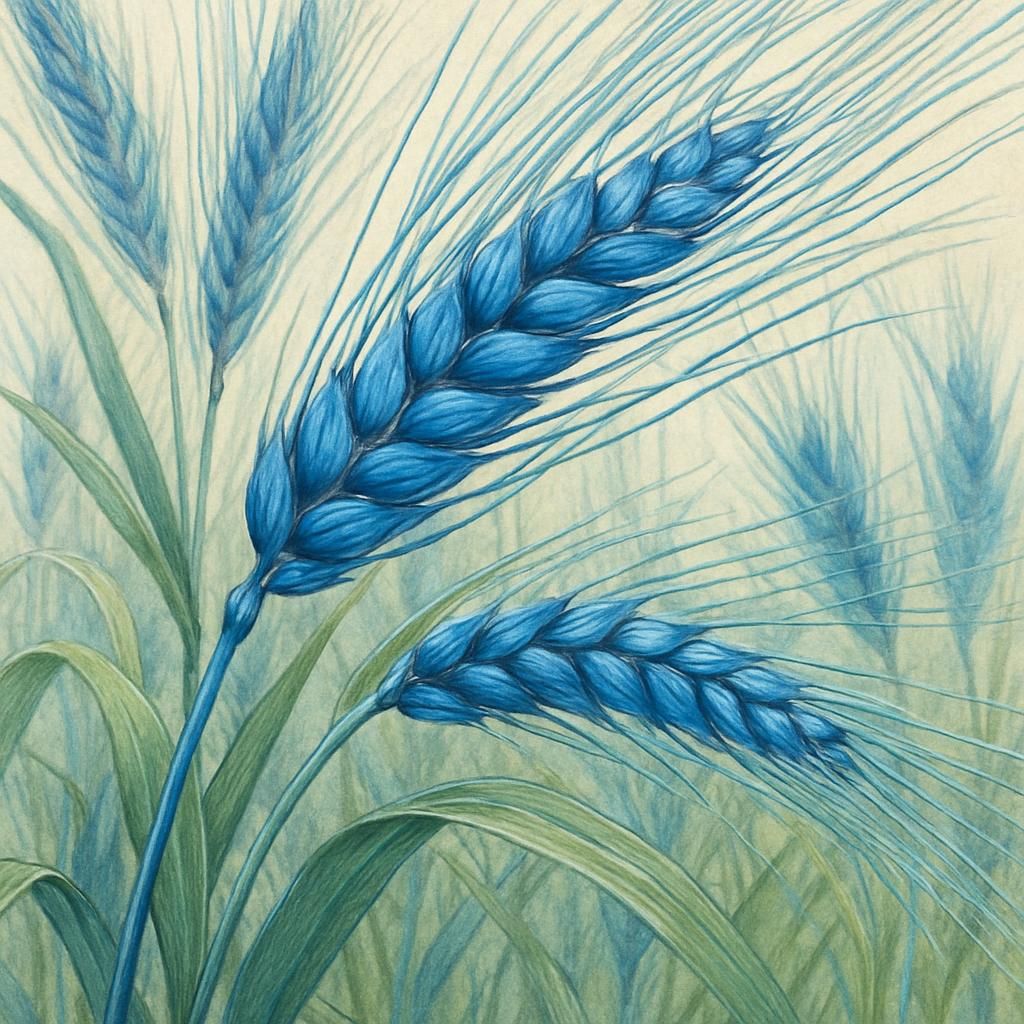
Introduction to Barley (Himalayan Blue)
Barley (Himalayan Blue) is a captivating cereal crop renowned for its vibrant blue-hued grains. This variety is not only visually stunning but also nutritionally rich, making it a valued addition to a diverse range of dishes, including stews and breads. Its genetic lineage traces back to the Himalayan region, giving it a unique ability to thrive in cooler and variable climates.
Botanical Profile of Barley (Himalayan Blue)
Himalayan Blue barley belongs to the family Poaceae. It features slender stems and its grains are closely packed, usually forming a bushy head. The grains' distinctive blue color results from anthocyanins, pigments that also contribute to antioxidant properties.
Soil, pH, and Climate Requirements for Barley (Himalayan Blue)
To ensure optimal growth, Himalayan Blue barley requires specific soil and climatic conditions.
| Condition | Ideal Range |
|---|---|
| Soil Type | Well-drained loam |
| Soil pH | 6.0 - 7.5 |
| Temperature | 12 - 25°C |
| Rainfall | 500 - 750 mm annually |
Step-by-Step Planting & Propagation
- Site Selection: Choose a location with full sunlight exposure.
- Soil Preparation: Till the soil to a depth of 15-20 cm and remove weeds. Incorporate organic matter to enhance soil structure and fertility.
- Sowing: Plant seeds in furrows 2-3 cm deep and 12.5 cm apart, allowing for adequate spacing.
- Irrigation: Water lightly to keep the soil moist but well-drained.
Care & Maintenance regimes for Barley (Himalayan Blue)
Proper care ensures robust barley development.
| Factor | Schedule |
|---|---|
| Watering | Moderate; every 7-10 days |
| Fertilizer | NPK 10-10-20 at planting; side-dress N in mid-cycle |
| Pruning | Not required; manage weeds regularly |
Pests, Diseases & Organic Management
Barley (Himalayan Blue) can encounter several pests and diseases:
- Pests: Spider Mites, aphids
- Diseases: Fusarium, powdery mildew
Organic management includes:
- Use neem oil or insecticidal soap to control pests.
- Apply sulfur or potassium bicarbonate to combat fungal infections.
For more effective pest control strategies, refer to the blog post Fall Pest Siege: 9 Organic Defenses to Shield Small Farms from Invading Armies.
Harvesting, Curing & Optimal Storage
- Harvesting: Barley reaches maturity approximately 90-100 days after planting, when grains harden and straw turns yellow.
- Curing: Post-harvest, let the barley dry thoroughly in a sheltered area for at least one week.
- Storage: Store grains in airtight containers. Keep in a cool, dark, and dry environment to maintain quality.
Companion Planting for Barley (Himalayan Blue)
Barley can benefit from companion planting. Suitable companions include legumes like Peas, which fix nitrogen, and herbs like Thyme, which can repel certain pests. However, avoid planting with plants that share similar pathogens, such as Wheat.
Additionally, explore strategies for companion planting further in the blog post Spring Companion Planting: 8 Organic Pairings to Maximize Small Farm Yields.