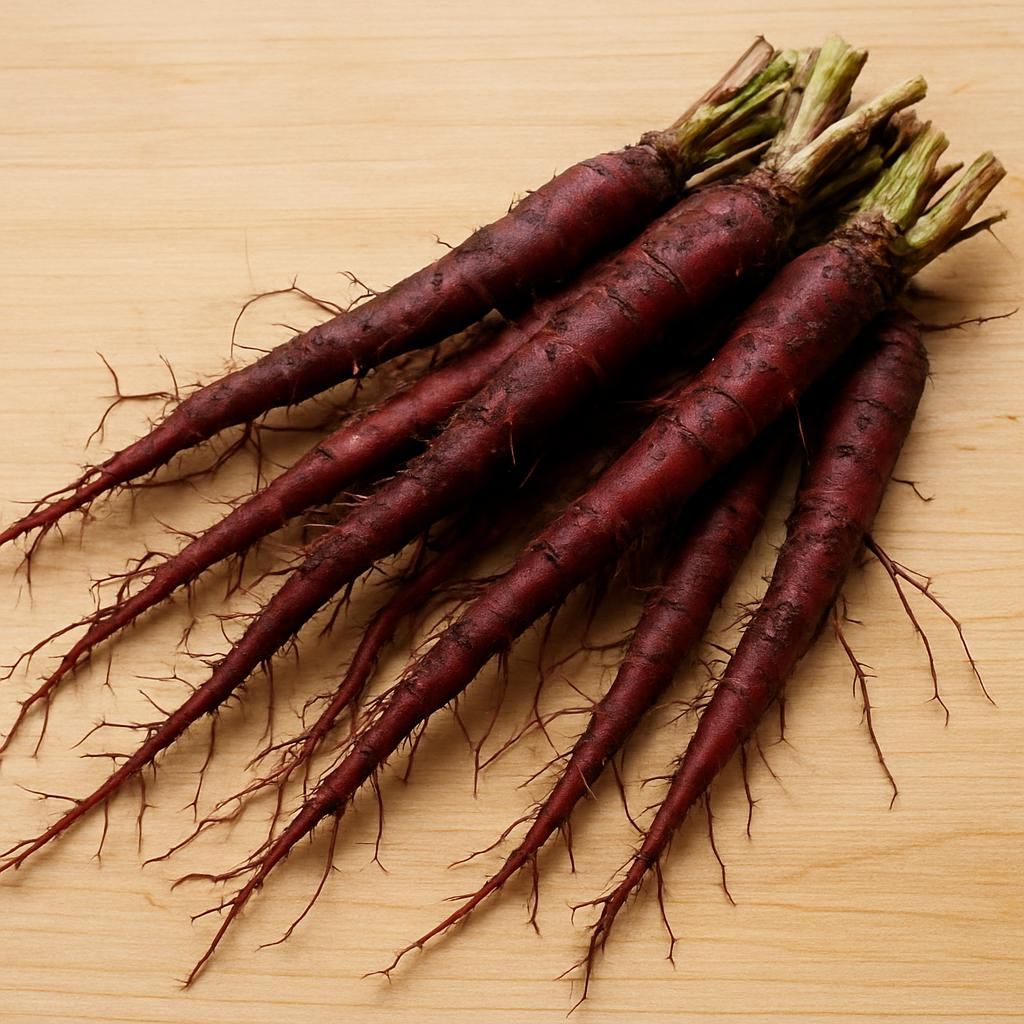
Introduction to Alkanet Root
Alkanet root (Alkanna tinctoria) is a hardy biennial belonging to the Boraginaceae family, historically valued across the Mediterranean and Western Asia for its vibrant natural dye and therapeutic properties. The thick, dark red taproot contains alkannin and shikonin compounds that yield intense red-purple pigments used in textiles, cosmetics, and traditional herbal preparations. Today, small-scale and commercial growers cultivate alkanet root for niche dye markets, herbal product lines, and as a low-maintenance perennializing crop in regenerative systems.
Botanical Profile of Alkanet Root
Alkanna tinctoria develops a stout, fleshy taproot up to 30 cm long and 2–4 cm thick with a deep burgundy interior when mature. In its first year the plant forms a basal rosette of lanceolate, hairy leaves 15–25 cm long. During the second spring it sends up branched flowering stems reaching 30–60 cm, bearing bright blue to violet flowers in scorpioid cymes. After seed set the aerial parts die back, leaving the root to overwinter. The species is closely related to Lithospermum erythrorhizon but distinguished by its shorter corolla and Mediterranean distribution.
Soil, pH, and Climate Requirements for Alkanet Root
Alkanet root thrives in well-drained, sandy-loam to loamy soils with good aeration and moderate fertility. Heavy clay soils should be amended with coarse sand or raised beds to prevent waterlogging and root rot.
| Parameter | Ideal Range | Notes |
|---|---|---|
| Soil Type | Sandy loam to loam | Avoid compacted or waterlogged soils |
| Soil pH | 6.0–7.5 | Slightly acidic to neutral; tolerates 5.8 |
| Temperature Range | 15–28 °C daytime | Hardy to –15 °C once established |
| Annual Rainfall | 400–800 mm | Supplemental irrigation in dry periods |
| USDA Hardiness Zones | 5–9 | Performs best in Mediterranean climates |
| Sun Exposure | Full sun to partial shade | At least 6 hours direct sun daily |
| Elevation | 0–1500 m | Higher elevations may delay flowering |
Step-by-Step Planting & Propagation
Alkanet root is primarily grown from seed, though root division of mature plants is possible. Direct sow in early spring or autumn when soil temperatures reach 10–15 °C. Prepare seedbeds by incorporating 5–8 cm of well-rotted compost and raking to a fine tilth. Sow seeds 5 mm deep in rows spaced 45–60 cm apart; thin seedlings to 20–30 cm within the row once they have four true leaves. For accelerated production, start seedlings indoors 6–8 weeks before last frost and transplant at the same spacing. Germination occurs in 10–21 days. Maintain consistent moisture during establishment but avoid saturation.
Care & Maintenance regimes for Alkanet Root
Consistent weed control and moderate fertility management are essential. Mulch with 5–8 cm of organic material to suppress weeds and conserve moisture. Alkanet root has modest nutrient demands; over-fertilization reduces root quality and dye intensity.
| Task | Schedule | Rate / Method |
|---|---|---|
| Watering | Weekly during active growth | 25–40 mm per week; deep infrequent irrigation |
| Fertilizer | Early spring & post-harvest | 5-5-5 organic at 200 g/m²; avoid high nitrogen |
| Pruning / Deadheading | Remove spent flower stalks | Cut to basal rosette after seed collection |
| Mulch Renewal | Spring & autumn | 5 cm layer of compost or leaf mold |
| Weeding | Every 3–4 weeks | Hand pull or shallow hoe; avoid root disturbance |
Pests, Diseases & Organic Management
Alkanet root is relatively pest-resistant but may attract aphids and slugs during wet springs. Monitor leaf undersides and apply insecticidal soap or neem oil at first sign of infestation. Root-knot nematodes can be managed through crop rotation with marigold and solarization. Fungal issues such as powdery mildew and Botrytis occur in humid conditions; improve airflow and apply potassium bicarbonate sprays. Practice strict sanitation by removing crop debris after harvest.
Harvesting, Curing & Optimal Storage
Harvest roots in the second autumn when foliage begins to yellow, typically 18–24 months after sowing. Loosen soil carefully with a fork to avoid damaging the taproot. Wash roots gently, trim tops to 2 cm, and air-dry in shade for 48 hours. Cure in a well-ventilated space at 20–25 °C and 60–70 % RH for 7–10 days until the interior is firm and dark. Store whole dried roots in paper bags or airtight glass jars away from light and moisture; properly cured roots retain dye potency for 3–5 years.
Companion Planting for Alkanet Root
Alkanet root benefits from association with deep-rooted legumes such as clover and hairy vetch that fix nitrogen and improve soil structure. Aromatic herbs including thyme and rosemary deter aphids and improve biodiversity. Avoid planting near shallow-rooted brassicas that compete for surface nutrients. Interplanting with nasturtium provides additional aphid trapping and visual interest while maintaining the low-fertility conditions alkanet prefers.