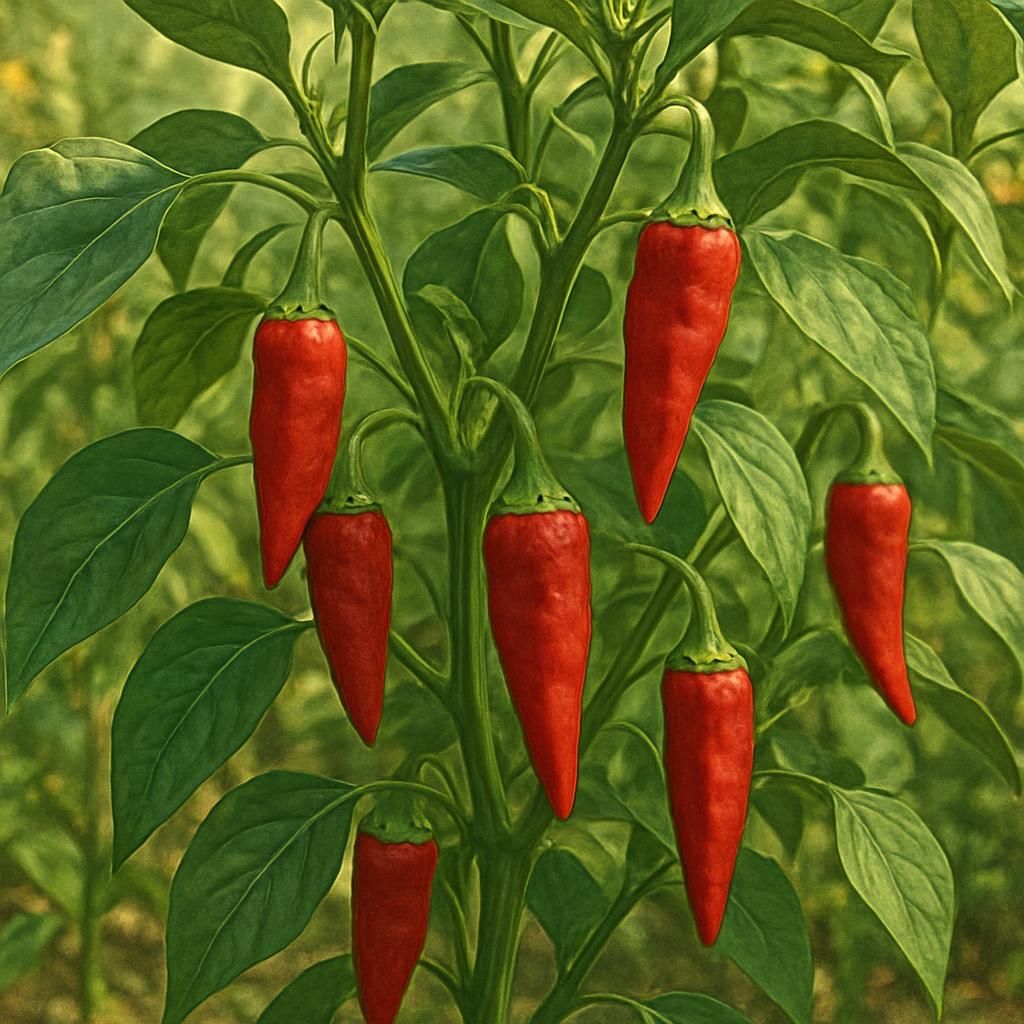
Introduction to Aleppo Pepper (Halaby)
The Aleppo Pepper, also known as Halaby, is a cultivated variety of Chili Pepper famous for its rich, fruity, and mildly spicy flavor profile. It originates from the city of Aleppo in northern Syria and has gained international recognition in cuisines worldwide.
Botanical Profile of Aleppo Pepper (Halaby)
Aleppo Pepper belongs to the species Capsicum annuum, which is part of the Solanaceae family. The peppers are bright red and ripen to a deep burgundy, typically growing about 10 cm long and 2.5 cm wide. The plant produces elongated, tapered fruits and grows to a height of approximately 60 to 90 cm.
Soil, pH, and Climate Requirements for Aleppo Pepper (Halaby)
Aleppo Peppers prefer well-drained, nutrient-rich soil. They thrive under full sun in warm climates, making them ideal for regions with long, hot summers. Here is a table of their ideal growing conditions:
| Condition | Ideal Range |
|---|---|
| Soil Type | Well-drained, loamy |
| Soil pH | 6.0 - 6.8 |
| Temperature | 18°C - 30°C (65°F - 86°F) |
| Sunlight | Full sun (6-8 hours) |
| Watering | Moderate, consistent |
Step-by-Step Planting & Propagation
- Seed Selection: Choose high-quality seeds from a reputable supplier.
- Germination: Start seeds indoors 8-10 weeks before the last frost date.
- Soil Preparation: Prepare garden beds with well-draining soil enriched with compost.
- Transplanting: After the last frost, when seedlings have 2-3 sets of true leaves, harden them off before transplanting.
- Spacing: Plant seedlings 30-45 cm apart in rows spaced at least 60 cm apart.
- Support: Stake plants or use cages to support growth and fruit weight.
Care & Maintenance Regimes for Aleppo Pepper (Halaby)
Consistent care ensures healthy growth and optimal yields. Below is a maintenance schedule:
| Task | Frequency |
|---|---|
| Watering | 1-2 times a week, depending on rainfall |
| Fertilizing | Every 3-4 weeks with a balanced fertilizer |
| Pruning | Remove lower leaves to prevent disease |
Pests, Diseases & Organic Management
Aleppo Peppers are susceptible to pests like Spider Mites and diseases such as Powdery Mildew. Implementing organic management practices like introducing beneficial insects, using neem oil, and maintaining plant health through proper spacing and sanitation can mitigate these issues. For more detailed organic solutions, visit our blog on Crop Diseases Under the Microscope: 9 Organic Fixes for Small Farm Resilience.
Harvesting, Curing & Optimal Storage
Harvest Aleppo Peppers when they turn bright red. Cut carefully at the stem to avoid damaging the plant. Air-dry the peppers or use a dehydrator for longer storage. Once dried, they can be ground into flakes or powders for culinary use. Store them in an airtight container to maintain flavor and potency.
Companion Planting for Aleppo Pepper (Halaby)
Companion plants such as Basil, Eggplant, and Onion can deter pests and improve plant health. Learn about the benefits of using organic pairings for optimal growth in our blog post on Summer Companion Planting: 10 Organic Pairings to Boost Small Farm Resilience.