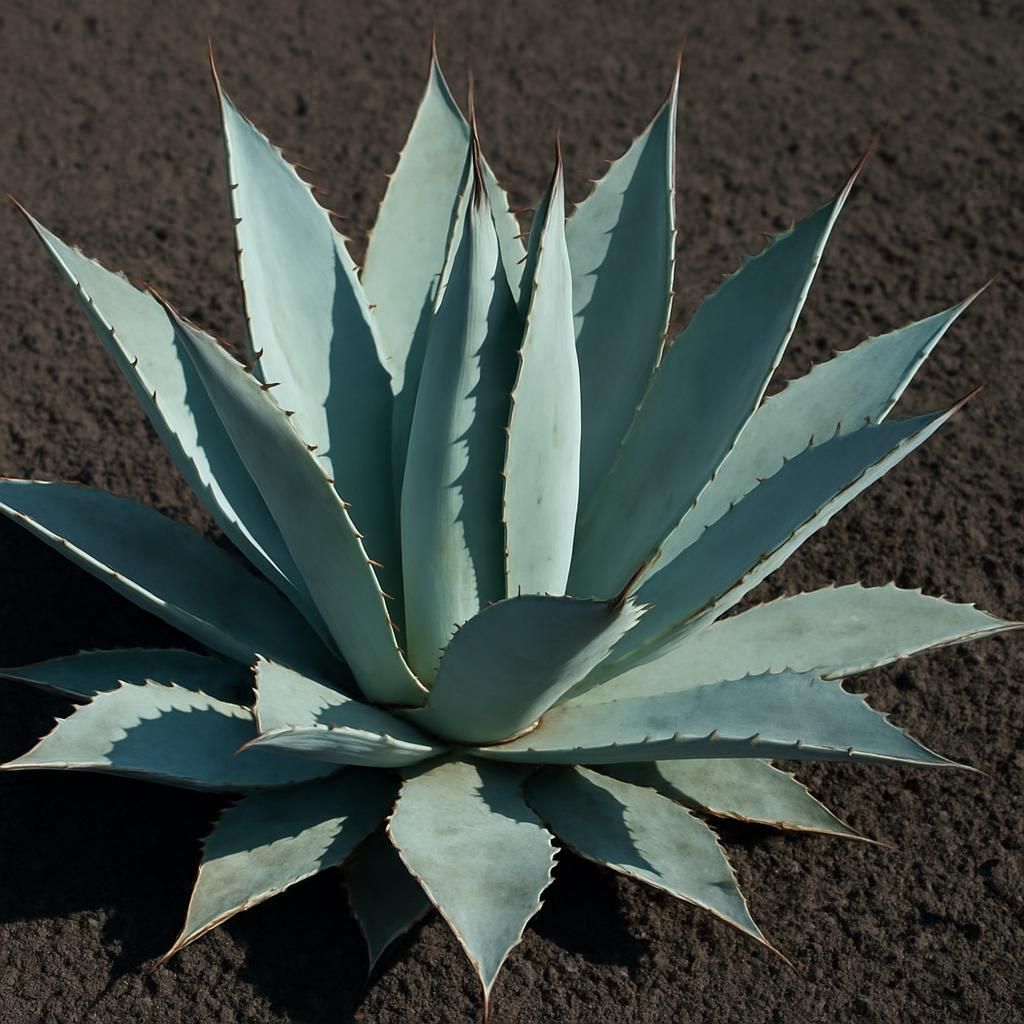
Introduction to Agave tequilana
Agave tequilana, also called blue Weber agave, is the foundational crop behind authentic tequila. Native to the highlands of Jalisco and surrounding Mexican states, this succulent has been cultivated for centuries for both its fermented sap (aguamiel) and the distilled spirit known worldwide as tequila. Its thick, blue-green leaves store substantial fructans that convert to fermentable sugars during the cooking process, making it economically valuable for both large-scale distilleries and small artisanal producers.
Successful commercial cultivation demands precise attention to climate, soil chemistry, and long-term plant management. Unlike many annual crops, Agave tequilana follows a multi-year cycle that rewards patience and meticulous cultural practices. Growers who understand its specific requirements achieve superior piña weight, higher sugar concentrations, and reduced susceptibility to stress-related disorders.
Botanical Profile of Agave tequilana
Agave tequilana belongs to the Asparagaceae family and is characterized by its rosette growth habit and rigid, lanceolate leaves with marginal spines and a prominent terminal spine. Mature plants typically reach 1.8–2.4 meters in height with a similar spread. The leaves exhibit a distinctive glaucous blue-gray coloration caused by a waxy cuticle that reduces transpiration in hot, dry environments.
The plant produces a tall inflorescence (quiote) after 6–12 years, reaching up to 5–8 meters. Each flower stalk supports numerous yellow blooms that attract pollinators including bats and bees. Following flowering the mother plant dies, but offsets (hijuelos) ensure vegetative propagation. The underground stem (corm) and basal leaves form the harvestable piña, which can weigh 40–90 kg under optimal conditions.
Soil, pH, and Climate Requirements for Agave tequilana
Agave tequilana thrives in well-drained, mineral-rich volcanic soils typical of the Jalisco highlands. It tolerates poor fertility but performs best in soils with adequate calcium and magnesium. The following table summarizes ideal growing conditions:
| Parameter | Ideal Range | Notes |
|---|---|---|
| Soil Type | Sandy loam to volcanic sandy loam | Excellent drainage essential |
| Soil pH | 6.0–7.5 | Slightly acidic to neutral preferred |
| Temperature Range | 15–32 °C daytime; 5–12 °C nighttime | Frost below −5 °C causes leaf damage |
| Annual Rainfall | 600–900 mm | Supplemental irrigation needed in drier areas |
| Elevation | 1,200–2,200 m | Higher elevations improve sugar content |
| Sunlight | Full sun (minimum 6–8 hours) | Essential for robust leaf and piña growth |
| Spacing | 2.5–3.0 m between plants | Allows mechanical access and airflow |
Step-by-Step Planting & Propagation
Propagation of Agave tequilana is primarily vegetative using offsets (hijuelos) or bulbils. Select healthy, disease-free offsets weighing 1–3 kg with intact root systems. Remove lower leaves to expose the basal plate, then allow the cut surface to callus for 7–10 days in a shaded, dry location.
Prepare planting holes 40–50 cm deep and 50 cm wide. Incorporate 2–3 kg of well-aged compost or aged manure mixed with native soil to improve initial nutrient availability. Plant offsets so the basal plate sits level with the surrounding soil surface. Water lightly after planting to settle soil around roots, then withhold further irrigation for 2–3 weeks to encourage establishment.
For large-scale operations, space plants on a 2.5 m × 3.0 m grid to permit tractor access. In sloped terrain, orient rows along contour lines to minimize erosion. Initial planting is best performed at the onset of the rainy season or with supplemental irrigation to ensure root development before extreme heat arrives.
Care & Maintenance regimes for Agave tequilana
Proper maintenance ensures vigorous growth and maximizes sugar accumulation. The following table outlines recommended water, fertilizer, and pruning schedules:
| Growth Stage | Irrigation Frequency | Fertilizer Application | Pruning / Sanitation Schedule |
|---|---|---|---|
| Year 1 (Establishment) | Every 10–14 days during dry periods | 50 g NPK 10-10-10 per plant at month 3 and 9 | Remove damaged lower leaves monthly |
| Years 2–4 | Every 3–4 weeks; reduce in winter | 100 g NPK 12-6-12 plus 50 g potassium sulfate annually | Remove suckers and dead leaves every 60 days |
| Years 5–7 | Every 4–6 weeks; minimal in dormancy | 150 g NPK 8-4-12 plus micronutrients annually | Remove basal leaves and control offsets quarterly |
| Pre-harvest (Year 7–8) | Withhold irrigation 60–90 days prior | Foliar micronutrient spray (Zn, B, Mn) once | Cease pruning 90 days before harvest |
Mulch with 10–15 cm of gravel or coarse organic material to suppress weeds and moderate soil temperature. Avoid over-fertilization, which promotes excessive vegetative growth at the expense of sugar concentration in the piña.
Pests, Diseases & Organic Management
Common challenges include the agave weevil (Scyphophorus acupunctatus), which bores into the base of leaves and the piña, and scale insects that colonize leaf surfaces. Fungal issues such as Phytophthora root rot can occur in poorly drained soils. Regular scouting and removal of infested tissue remain the first line of defense.
Organic management strategies include releasing predatory beetles and applying neem oil or insecticidal soaps for soft-bodied pests. Soil solarization before planting and maintaining proper spacing reduce fungal pressure. In severe cases, approved organic insecticides containing spinosad or Bacillus thuringiensis can be used according to local regulations.
Harvesting, Curing & Optimal Storage
Agave tequilana reaches peak sugar content between 7 and 10 years depending on altitude and climate. Harvest when the piña shows a slight yellowing at the base and the terminal spine begins to wither. Cut leaves (pencas) flush with the piña using a specialized coa tool, then extract the entire plant.
Transport harvested piñas to the distillery within 24–48 hours to prevent fermentation. At the facility, piñas are cooked in autoclaves or traditional ovens to hydrolyze inulin into fermentable sugars. After cooking, the material is milled, fermented, and distilled.
For growers storing vegetative offsets, keep them in a cool, dry, shaded area with good airflow. Avoid stacking more than two layers deep to prevent bruising. Offsets remain viable for up to 30 days when kept at 15–20 °C and 40–50 % relative humidity.
Companion Planting for Agave tequilana
Although Agave tequilana is typically grown in monoculture, strategic intercropping with nitrogen-fixing legumes such as Clover or Pigeon pea during the first two years can improve soil fertility and reduce erosion. Aromatic herbs including Rosemary and Thyme planted along field borders help deter certain insect pests through volatile compounds.
Avoid planting shallow-rooted vegetables that compete for surface moisture. Deep-rooted perennials or cover crops that are terminated before the agave canopy closes provide the best balance between soil improvement and minimal competition. Always maintain a 1.5 m buffer zone around each agave plant to allow mechanical access and airflow.