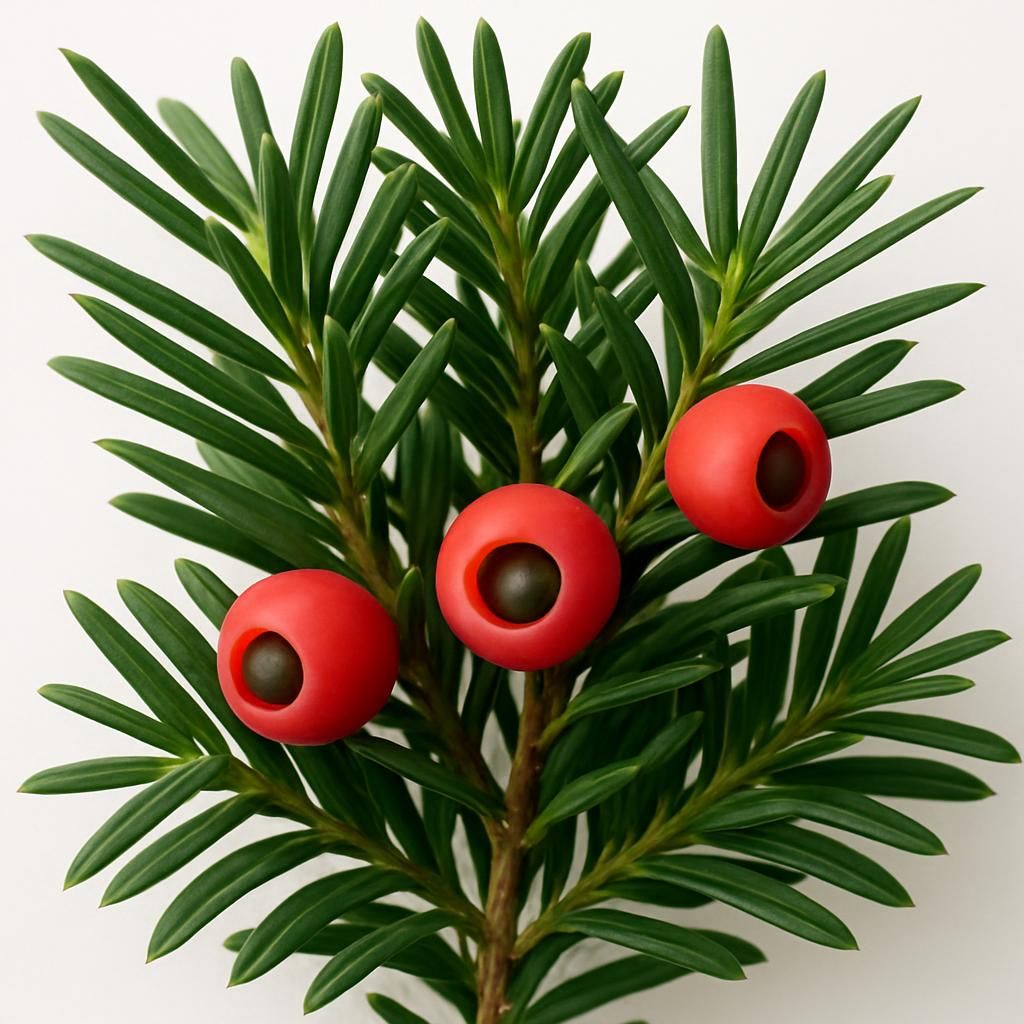
Introduction to yew
European yew (Taxus baccata) is an ancient evergreen conifer native to Europe, North Africa, and parts of western Asia. It has been cultivated for centuries for its dense, dark-green foliage and its ability to form formal hedges, topiary, and windbreaks. In modern agriculture, yew is also grown for the extraction of taxanes used in cancer treatments. The plant is extremely long-lived, with some specimens exceeding 1,000 years, and it is prized for its fine-grained, durable wood historically used in archery bows.
Botanical Profile of yew
Taxus baccata belongs to the family Taxaceae. It is a dioecious species, meaning male and female reproductive structures occur on separate plants. Male plants produce small pollen cones, while female plants develop bright red arils surrounding a single seed. The foliage consists of flat, linear needles arranged in two ranks along the stems. Yew exhibits slow to moderate growth, reaching 10–20 meters in height under optimal conditions, though it is often maintained at lower heights through regular pruning. The bark is thin, scaly, and reddish-brown. All parts of the plant except the fleshy red aril contain toxic alkaloids, primarily taxine, which can be lethal to livestock and humans if ingested.
Soil, pH, and Climate Requirements for yew
Yew performs best in well-drained, fertile soils with consistent moisture but never waterlogging. It tolerates a range of soil textures from sandy loam to clay loam provided drainage is excellent. The plant prefers neutral to slightly alkaline conditions and is sensitive to extreme acidity.
| Parameter | Ideal Range | Notes |
|---|---|---|
| Soil Type | Loam to clay loam | Requires excellent drainage |
| Soil pH | 6.5–8.0 | Neutral to slightly alkaline |
| Temperature | 5–25 °C (41–77 °F) | Hardy to USDA zone 5 |
| Annual Rainfall | 600–1,200 mm | Supplemental irrigation in dry periods |
| Sun Exposure | Partial shade to full sun | Tolerates deep shade but slower growth |
| Spacing | 1.5–3 m (5–10 ft) | Closer for hedging, wider for timber |
Step-by-Step Planting & Propagation
Yew can be propagated from seed or semi-ripe cuttings. Seed propagation requires cold stratification for 18–24 months and is primarily used for conservation or large-scale forestry. Commercial growers prefer cuttings taken in late summer or early autumn from healthy, disease-free mother plants. Cuttings 10–15 cm long are dipped in rooting hormone and placed in a well-drained propagation mix under mist. Rooting occurs in 8–12 weeks. Field planting of rooted cuttings or container-grown plants is best done in early spring or autumn. Dig planting holes twice the width of the root ball and backfill with native soil amended with well-rotted compost. Water thoroughly after planting and apply a 5–7 cm mulch layer to conserve moisture and suppress weeds.
Care & Maintenance regimes for yew
Yew requires minimal but consistent care once established. Focus on maintaining soil moisture during the first two growing seasons and providing balanced nutrition annually. Pruning is essential for hedging and topiary to encourage dense growth.
| Task | Frequency | Details |
|---|---|---|
| Watering | Weekly during establishment | Deep watering to 30 cm; reduce once established |
| Fertilizer | Early spring and mid-summer | Apply 10-10-10 NPK at 50–75 g/m²; avoid high-nitrogen formulas |
| Pruning | Late spring and late summer | Shear hedges lightly; remove dead wood; never prune into bare wood |
Pests, Diseases & Organic Management
Yew is relatively resistant to most pests but can be affected by scale insects, spider mites, and yew scale. Root rot caused by Phytophthora species is the primary disease concern in poorly drained soils. Organic management includes improving drainage, applying neem oil or insecticidal soap for scale and mites, and using beneficial nematodes for soil-borne pests. Regular monitoring and removal of infested plant parts are essential. Avoid over-fertilization, which can encourage soft growth susceptible to pests.
Harvesting, Curing & Optimal Storage
For pharmaceutical use, foliage is harvested from plants at least 8–10 years old during late summer when taxane content peaks. Branches are cut with clean shears, and needles are stripped and dried in shaded, well-ventilated areas at temperatures below 35 °C. Dried foliage is stored in airtight containers away from light and moisture. For timber, trees are felled at 40–60 years; logs are air-dried under cover for 12–18 months. Wood should be stored horizontally on stickers to prevent warping.
Companion Planting for yew
Yew pairs well with shade-tolerant understory plants and species that improve soil structure. Suitable companions include Thyme, Yarrow, and Clover, which help suppress weeds and attract beneficial insects. Avoid planting yew near vegetable crops that may be browsed by livestock, as all parts except the aril are toxic. In mixed hedges, yew provides year-round structure and protection for more tender species such as Rosemary.