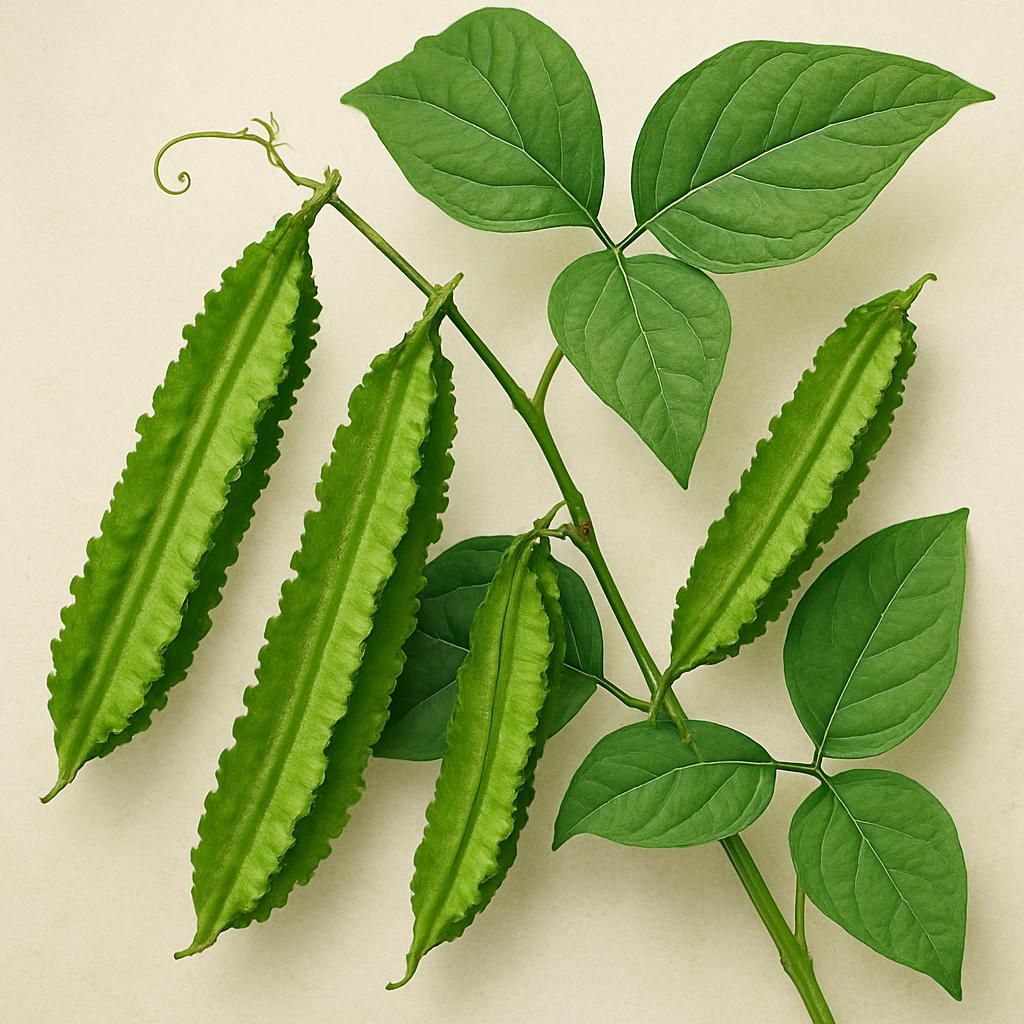
Introduction to Winged Bean (Psophocarpus tetragonolobus)
Winged Bean, scientifically known as Psophocarpus tetragonolobus, is a leguminous plant that is as nutritious as it is versatile. This tropical perennial is commonly cultivated for its edible pods, leaves, and tubers, which are packed with protein and essential nutrients. Primarily grown in Southeast Asia, it is recognized for its resilience and adaptability to a variety of growing conditions, making it invaluable for sustainable agricultural practices.
Botanical Profile of Winged Bean (Psophocarpus tetragonolobus)
The Winged Bean belongs to the family Fabaceae and is characterized by its distinctive four-winged pods. Its bright green leaves, pale yellow flowers, and rich tubers render it an aesthetically pleasing plant. This perennial climber can grow up to 3-4 meters tall in optimum conditions, producing beans rich in protein, calcium, and dietary fiber.
Soil, pH, and Climate Requirements for Winged Bean (Psophocarpus tetragonolobus)
To cultivate Winged Bean successfully, understanding its environmental preferences is crucial.
| Aspect | Ideal Conditions |
|---|---|
| Soil Type | Well-drained loamy soils |
| Soil pH | 5.5 - 6.5 |
| Temperature Range | 22 - 30°C (72 - 86°F) |
| Rainfall | 1200 - 2400 mm annually |
Step-by-Step Planting & Propagation
- Select the Site: Choose a location with ample sunlight, as Winged Bean requires at least 6-8 hours of sun daily.
- Prepare the Soil: Ensure the soil is well-drained and fertile by adding organic matter such as compost or well-rotted manure.
- Sow the Seeds: Direct sow seeds 2-3 cm deep, spacing them 30 cm apart in rows that are about 120 cm apart.
- Supporting Structures: Install trellises or poles for the vines to climb, which supports growth and increases yield.
- Watering: Keep the soil consistently moist but avoid waterlogging, especially during the germination period.
Care & Maintenance regimes for Winged Bean (Psophocarpus tetragonolobus)
Proper care is essential to maximize yield and ensure plant health.
| Activity | Schedule |
|---|---|
| Watering | 2-3 times weekly, more in dry spells |
| Fertilizing | Every 4-6 weeks with a balanced NPK fertilizer |
| Pruning | Regularly remove dead or diseased vines |
Pests, Diseases & Organic Management
Common pests include Spider Mites and aphids. They can be managed with neem oil sprays and maintaining plant health through proper nutrition. Diseases such as root rot require improved drainage and careful water management.
Harvesting, Curing & Optimal Storage
Harvest the pods when they are young and tender, 75-90 days after planting. To cure tubers, dry them in the sun for a few days to prevent spoilage. Store beans in a cool, dry place to maintain freshness.
Companion Planting for Winged Bean (Psophocarpus tetragonolobus)
Winged Beans can be planted alongside crops such as Corn and Cherry Tomato, as they complement each other by improving soil fertility and maximizing space utilization.
For more comprehensive practices in companion planting, refer to our blog post on Summer Companion Planting: 10 Organic Pairings to Boost Small Farm Resilience.