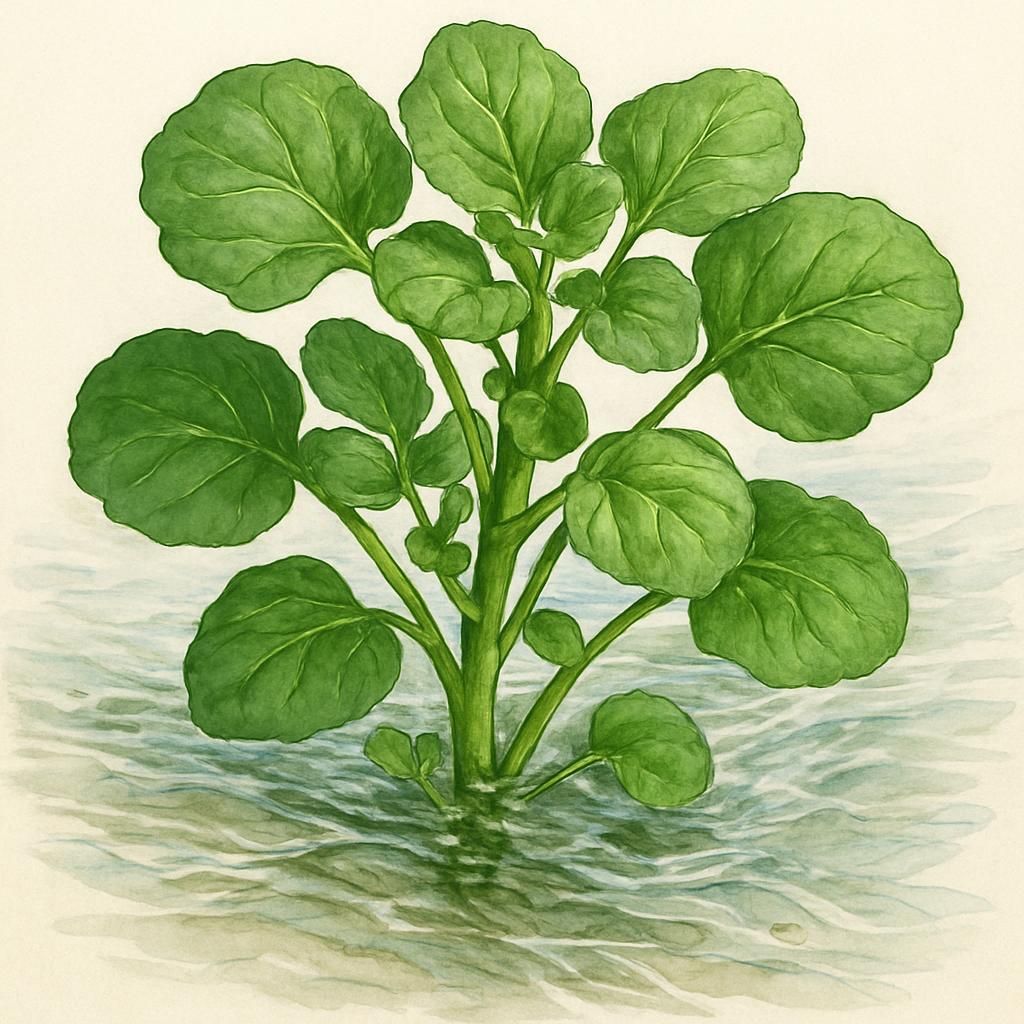
Introduction to Watercress (Large Leaf)
Watercress (Large Leaf) is a vibrant leafy green that plays a critical role in gourmet culinary dishes due to its peppery flavor and rich nutritional profile. Often considered a superfood, watercress is high in vitamins A, C, and K, and provides a host of minerals including calcium and iron. Its large leaf variety is particularly favored for providing more substantial leaves that perform well in salads, sandwiches, and soups.
Botanical Profile of Watercress (Large Leaf)
Watercress belongs to the Brassicaceae family, which also includes relatives like mustard and radishes. Scientifically referred to as Nasturtium officinale, watercress is a fast-growing perennial plant often seen in aquatic environments. The plant features small white flowers that culminate in pods containing seeds, and its sprawling nature allows it to cover significant areas if not properly managed.
Soil, pH, and Climate Requirements for Watercress (Large Leaf)
Watercress requires specific growing conditions to thrive. Its preference for semi-aquatic environments means that maintaining the right soil and water balance is crucial. Moreover, ideal pH levels and climate conditions foster healthier plants and maximize productivity.
| Requirement | Ideal Condition |
|---|---|
| Soil Type | Silty or loamy with high organic matter |
| Soil pH | 6.5 - 7.5 |
| Temperature Range | 10°C - 20°C (50°F - 68°F) |
| Water Availability | Constant moisture, preferably flowing water |
Step-by-Step Planting & Propagation
Watercress is typically propagated from seeds or cuttings. Seeds can be directly sown in the field under controlled moisture conditions.
- Seed Sowing: Begin by preparing a wet seedbed with enriched soil. Scatter the seeds on the surface and gently tamp them down, ensuring continuous moisture.
- Propagation from Cuttings: Cuttings from a mature watercress plant can be planted directly into the soil or water. Ensure nodes are submerged as roots develop from these points.
- Water Management: Plants require constant moisture or a flowing water source which can be achieved through irrigation or by planting near natural or man-made water channels.
Care & Maintenance Regimes for Watercress (Large Leaf)
Consistent care boosts growth quality and yield, focusing on water management, fertilization, and proper pruning. Ensuring optimum environmental conditions is essential for healthy crops.
| Care Task | Schedule |
|---|---|
| Watering | Daily, maintaining moisture or water flow |
| Fertilizing | Every 4 weeks with balanced liquid fertilizer |
| Pruning | Regularly to prevent bolting and encourage leaf growth |
Pests, Diseases & Organic Management
Watercress can be susceptible to a range of pests and diseases, although it is notably resilient. Common pests include Aphids, Spider Mites, and whiteflies.
For organic management:
- Introduce ladybugs or apply neem oil to control aphids.
- Use insecticidal soap for severe spider mite infestations.
- Maintain water flow to prevent stagnant conditions which can propagate diseases like root rot.
Harvesting, Curing & Optimal Storage
Watercress is usually harvested once the leaves are lush and healthy. The best typical harvest time is 4-6 weeks post-planting.
- Cut plants just above the water level or soil to encourage re-growth.
- Rinse leaves thoroughly in cold water to remove debris and potential pests.
- Store in breathable packaging in a refrigerated setting, retaining freshness for up to a week.
Companion Planting for Watercress (Large Leaf)
Watercress has minimal companion planting requirements but is known to perform well near water-loving plants like Mint and Basil. Avoid planting near vegetables that draw excessive water, like beans, which may compete for existing resources.
For more on companion planting, check out Summer Companion Planting: 10 Organic Pairings to Boost Small Farm Resilience and understand techniques to maximize yields through strategic plant positioning.