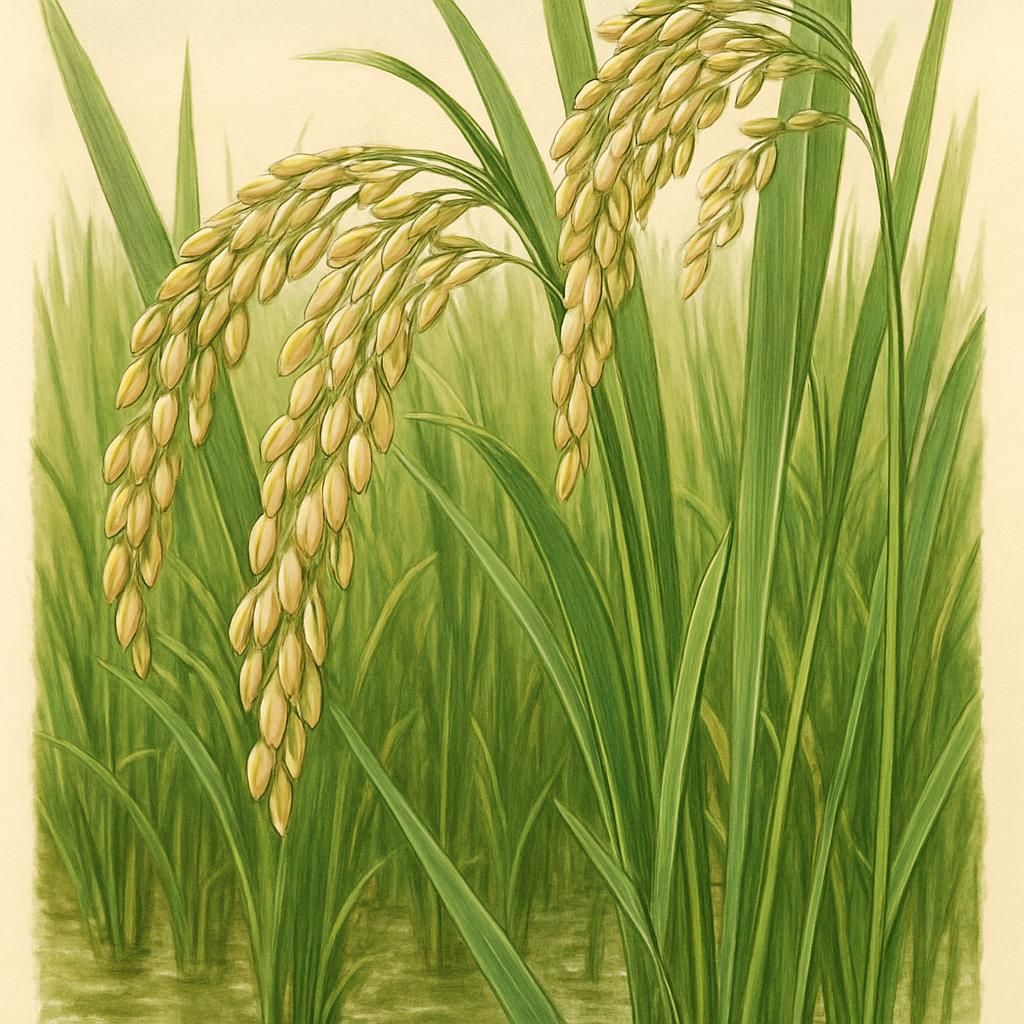
Introduction to Vialone Nano Rice
Vialone Nano Rice is an Italian medium-grain rice variety highly valued for its culinary versatility. Popular in the preparation of risottos, it stands out for its excellent ability to absorb flavors and maintain a creamy texture, making it integral to many Italian dishes.
Botanical Profile of Vialone Nano Rice
Vialone Nano Rice, scientifically referred to as Oryza sativa, is a species within the Poaceae family. Distinct for its short, round grains, this rice is an integral part of the Italian gastronomic tradition, especially in regions like Veneto and Lombardy.
Soil, pH, and Climate Requirements for Vialone Nano Rice
Successful cultivation of Vialone Nano Rice depends significantly on meeting its environmental prerequisites.
| Parameter | Ideal Condition |
|---|---|
| Soil Type | Clay loam with good drainage |
| pH Level | 5.5 - 7.5 |
| Temperature Range | 20°C to 30°C (68°F to 86°F) |
| Rainfall | 1,000 mm annually |
| Elevation | Sea level to 1,000 meters |
The moist, cool climate coupled with fertile soils gives Vialone Nano its unique characteristics. It thrives in conditions with ample water supply, reflecting the rice paddies of Northern Italy.
Step-by-Step Planting & Propagation
- Seed Selection: Choose certified seeds from reputable suppliers to ensure disease-free and high-quality crops.
- Soil Preparation: Till the soil to improve aeration and incorporate organic matter to boost fertility. Ensure the soil has good water retention capability.
- Sowing: Direct seeding is recommended. Sow seeds in rows 30-40 cm apart when the soil temperature is consistently above 20°C.
- Irrigation: Establish a controlled flooding system to submerge the rice consistently. Water level management is crucial during various growth stages.
- Thinning: Once seedlings are established, thin plants to ensure optimal spacing, allowing 10 cm between each for growth and nutrient uptake.
Care & Maintenance Regimes for Vialone Nano Rice
Regular care ensures robust growth and high yields.
| Aspect | Schedule/Guideline |
|---|---|
| Watering | Maintain consistent soil moisture; periodic irrigation is critical, especially during flowering. |
| Fertilizer | Apply nitrogen-heavy fertilizers post-sowing; supplement with phosphorus and potassium during critical growth phases. |
| Pruning | Not applicable directly, but biomass management is key – ensure clean fields to avoid disease spread. |
Pests, Diseases & Organic Management
Vialone Nano Rice is susceptible to certain pests and diseases.
- Major Pests: Leafhoppers, Spider Mites, and Root-knot Nematodes.
- Common Diseases: Blast, sheath blight, and bacterial leaf blight.
Organic Management Tips:
- Use crop rotation and companion planting to control pest populations naturally.
- Implement biological controls such as predator insects to reduce pest numbers.
- A regular monitoring program to identify and manage outbreaks early.
For more insights on natural disease management, consider reading Crop Diseases Under the Microscope: 9 Organic Fixes for Small Farm Resilience.
Harvesting, Curing & Optimal Storage
Once rice grains mature, typically 160 days after sowing, the rice turns a golden color.
- Harvesting: Use a combine harvester for large-scale operations. For small plots, manual harvesting is feasible.
- Curing: Dry the harvested rice in a shaded area with good airflow for optimal preservation.
- Storage: Store the dried rice in a cool, dry place in airtight containers to maintain quality and prevent pest infestation.
Companion Planting for Vialone Nano Rice
Companion planting can enhance growth and protect against pests. Suitable companions include Yarrow and Nasturtium for their pest-repellent properties.
Discover more about companion planting strategies in Summer Companion Planting: 10 Organic Pairings to Boost Small Farm Resilience.