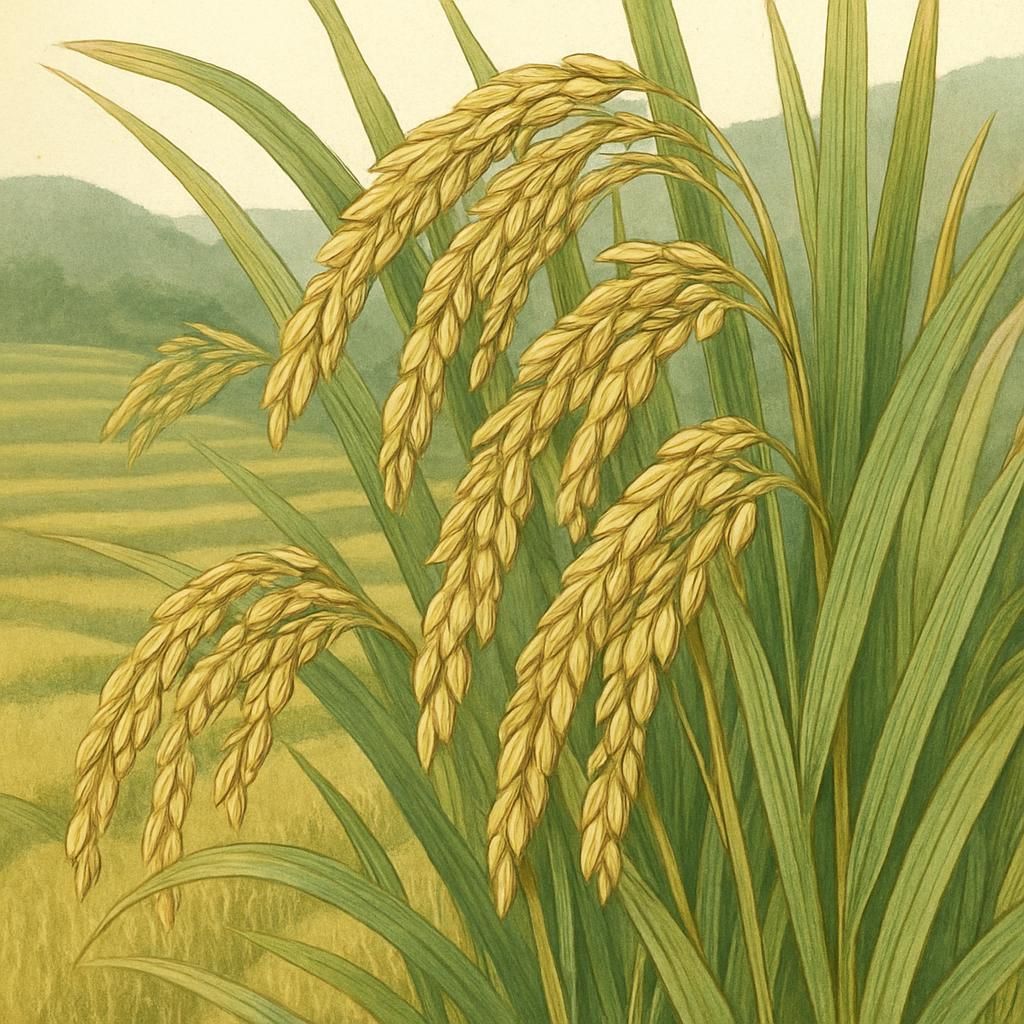
Introduction to Upland Rice (Pa-le)
Upland Rice, often referred to as Pa-le, is a variety of rice that is cultivated primarily in dryland, non-flooded fields. Unlike its lowland counterparts, Upland Rice can be grown under pluvial conditions and in well-drained, elevated areas. This adaptability makes it a valuable crop for farmers in regions where water resources are limited.
Botanical Profile of Upland Rice (Pa-le)
The scientific name of Upland Rice is Oryza sativa. It is a member of the Poaceae family, known for its versatility in various climatic conditions. Upland Rice plants typically grow to a height of 1 to 1.5 meters. The grains are usually smaller and have a tougher husk compared to lowland rice varieties.
Soil, pH, and Climate Requirements for Upland Rice (Pa-le)
Upland Rice requires specific soil and climate conditions to thrive optimally. The table below provides a detailed outline of the ideal growing conditions:
| Parameter | Ideal Range |
|---|---|
| Soil Type | Loam, Sandy Loam |
| Soil pH | 5.0 - 6.5 |
| Temperature Range | 21°C - 32°C |
| Annual Rainfall | 800mm - 1200mm |
Step-by-Step Planting & Propagation
- Soil Preparation: Begin by preparing your soil to ensure it is well-drained and nutrient-rich. A sandy loam or loam soil type is ideal.
- Sowing Seeds: Plant seeds 1-2 cm deep into the soil. Use a seed rate of approximately 50 kg per hectare.
- Spacing: Ensure rows are spaced at about 25-30 cm apart with seeds spaced at 15-20 cm intervals.
- Propagation Method: Upland Rice is predominantly propagated through direct seeding rather than transplanting.
Care & Maintenance Regimes for Upland Rice (Pa-le)
To maintain a healthy Upland Rice crop, follow these care schedules:
| Task | Frequency | Details |
|---|---|---|
| Watering | Once a week | Ensure soil remains moist but not waterlogged. |
| Fertilization | Every 4-6 weeks | Use a balanced NPK fertilizer, preferably organic. |
| Pruning | Trim from tillering | Trim diseased, pest-infested, or overly dense clumps. |
Pests, Diseases & Organic Management
Upland Rice is susceptible to various pests and diseases such as Spider Mites and sheath rot. Organic management includes:
- Neem Oil: Effective against mites and other small insects.
- Garlic Water: A natural antifungal for controlling sheath diseases.
- Companion Planting: Utilize plants like marigold to deter pests naturally.
For organic pest management strategies, read our in-depth article on 7 Summer Pest Traps That Sabotage Small Farm Harvests.
Harvesting, Curing & Optimal Storage
- Harvesting: Upland Rice is ready for harvest when grains turn golden brown, approximately 120 days post-sowing.
- Curing: Dry harvested rice in the sun for 2-3 days. This reduces moisture content and prevents mold.
- Storage: Store cured rice grains in a cool, dry place in airtight containers to prolong shelf life.
Companion Planting for Upland Rice (Pa-le)
Companion planting can enhance Upland Rice yields and deter pests. Suitable companions include Lettuce, coriander, and beans. Avoid planting with tall crops like Corn that can overshadow the rice. For more companion planting tips, explore our blog on Summer Companion Planting: 10 Organic Pairings to Boost Small Farm Resilience.