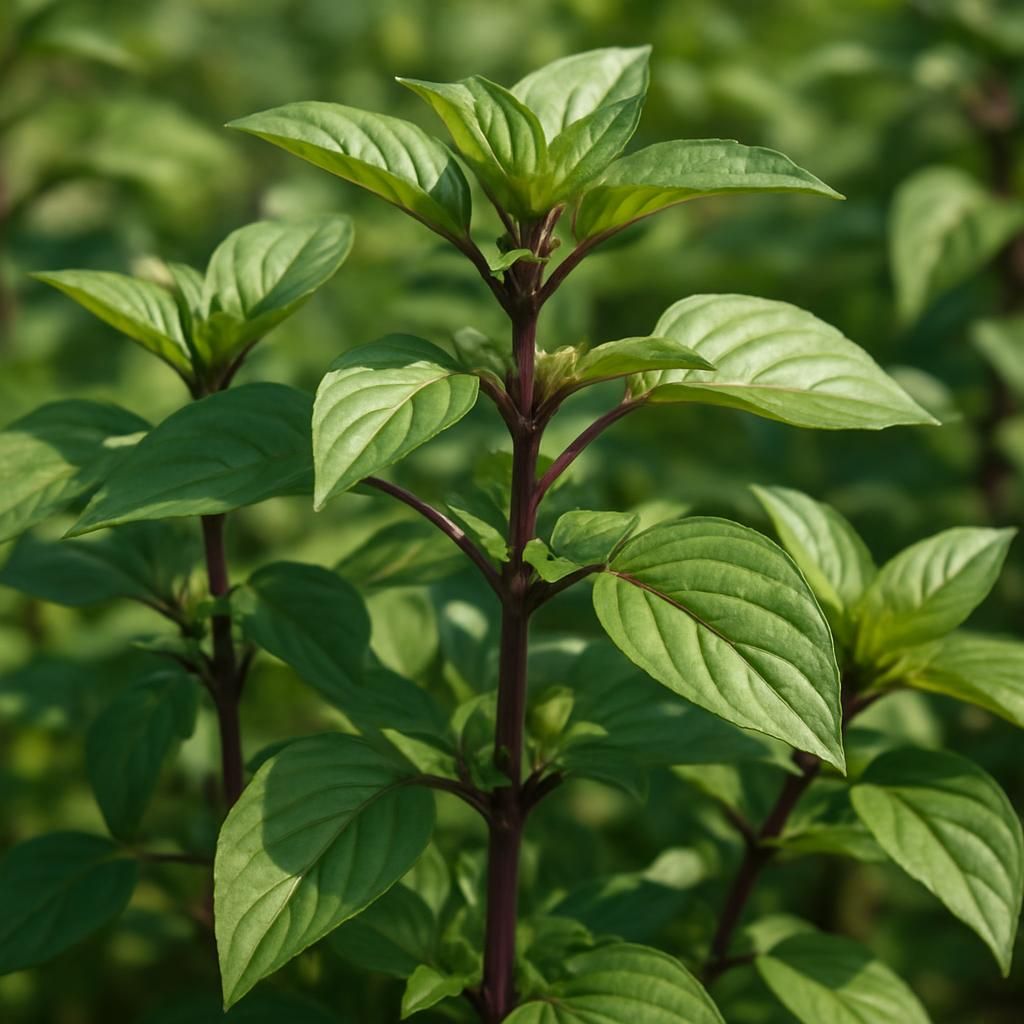
Introduction to Thai Basil (Siam Queen)
Thai Basil, particularly the 'Siam Queen' variety, is cherished for its distinct aroma and vibrant purple stems. Known scientifically as Ocimum basilicum var. thyrsiflora, this variety offers a unique flavor profile described as a blend of spicy, sweet, and anise-like. Thai Basil is used widely in Southeast Asian dishes, lending a particular zing to recipes. Beyond culinary purposes, it can be grown easily in home gardens, offering ornamental beauty as well as utility.
Botanical Profile of Thai Basil (Siam Queen)
'Siam Queen' is an annual plant that belongs to the Lamiaceae family. Growing approximately 18-24 inches tall, it features glossy, dark green leaves with contrasting purple stems. The plant produces spikes of pink to purple flowers, which can attract beneficial pollinators like bees and butterflies.
Soil, pH, and Climate Requirements for Thai Basil (Siam Queen)
To thrive, Thai Basil requires specific growing conditions which must be met for optimal growth and flavor.
| Condition | Ideal Range |
|---|---|
| Soil Type | Well-draining loamy soil |
| Soil pH | 5.5 - 7.5 |
| Temperature | 70 - 90°F (21 - 32°C) |
| Sunlight | Full sun, at least 6-8 hours a day |
| Humidity | Moderate to high |
Step-by-Step Planting & Propagation
Seed Preparation: Start seeds indoors 6-8 weeks before the last expected frost. Use a seed-starting mix to fill trays and plant seeds 1/4 inch deep.
Germination: Maintain a warm temperature of about 70-75°F (21-24°C) to facilitate germination. The seeds typically sprout within 5-10 days.
Transplanting: Once seedlings have 2-3 true leaves, harden them off by gradually exposing them to outdoor conditions. Transplant them outdoors after the last frost into a sunny location.
Spacing: Space plants 12-18 inches apart to ensure they have adequate room to grow.
Care & Maintenance Regimes for Thai Basil (Siam Queen)
Thai Basil requires regular care to maintain its health and productivity.
| Task | Frequency/Details |
|---|---|
| Watering | Regular, 1-2 inches per week. Avoid waterlogging. |
| Fertilizing | Use a balanced liquid fertilizer every 4-6 weeks. |
| Pruning | Regularly pinch tops to promote bushy growth and prevent flowering. |
Pests, Diseases & Organic Management
Thai Basil is relatively resistant to pests and diseases but can occasionally suffer from problems like Spider Mites and aphids. Employ organic methods such as neem oil or insecticidal soap to manage these pests. Powdery Mildew and root diseases may occur in humid conditions, which can be controlled through proper spacing and avoiding overhead watering.
Harvesting, Curing & Optimal Storage
Begin harvesting Thai Basil when the plant is about 6-8 inches tall, focusing on removing younger, top leaves. Regular harvesting encourages bushier growth. For preserving, air dry the leaves or freeze them in ice cube trays. Store dried leaves in airtight containers away from light.
Companion Planting for Thai Basil (Siam Queen)
Thai Basil benefits from companion planting. It grows well with Tomato, Oregano, and Chili Pepper, which can help deter pests and improve flavor in the garden. Avoid planting near Fennel as it can inhibit basil's growth.
For more comprehensive understanding of companion planting, visit our blog on Summer Companion Planting: 10 Organic Pairings to Boost Small Farm Resilience.