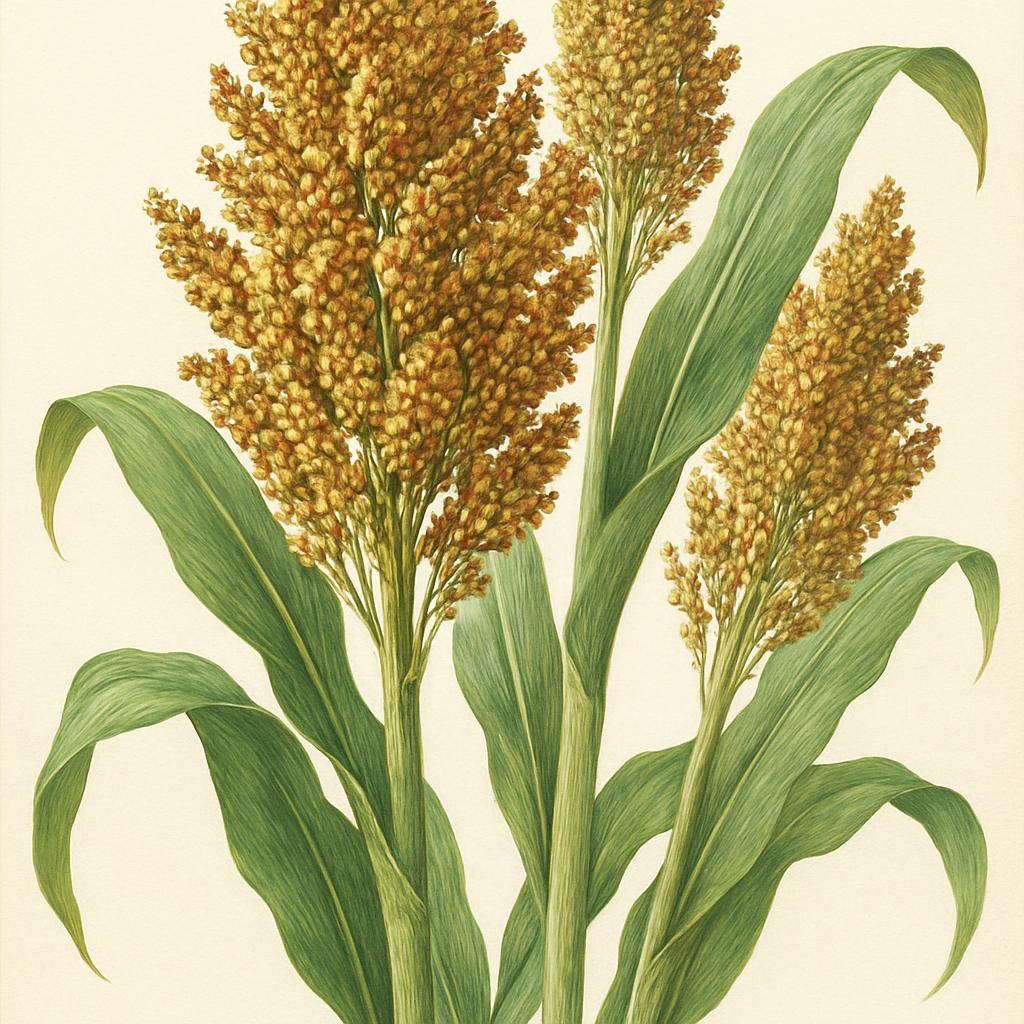
Introduction to Sorghum (Sweet Sugar Drip)
Sorghum, specifically the Sweet Sugar Drip variety, is cherished for its sweetness and high adaptability in challenging climates. As a variety of Sweet Sorghum, 'Sweet Sugar Drip' has gained popularity among farmers seeking a reliable source of biofuel and syrup production. The versatility of this crop also extends to its use as animal fodder and in gluten-free diets.
Botanical Profile of Sorghum (Sweet Sugar Drip)
Sorghum bicolor, known as 'Sweet Sugar Drip', belongs to the Poaceae family. It is an annual grass that can reach heights of up to 3 meters. The plant produces large seed heads that are prized for their high sugar content, extracted to produce sorghum syrup, a popular sweetener alternative.
Soil, pH, and Climate Requirements for Sorghum (Sweet Sugar Drip)
Below is an outline of the ideal conditions for growing Sweet Sugar Drip sorghum:
| Parameter | Ideal Conditions |
|---|---|
| Soil Type | Well-drained loamy or sandy soils |
| pH Level | 5.8 to 6.8 |
| Temperature | 70°F to 95°F (21°C to 35°C) |
| Rainfall | 400 to 650 mm per year |
| USDA Zones | 6 to 11 |
The plant is particularly suited to semi-arid regions due to its drought tolerance.
Step-by-Step Planting & Propagation
- Seed Selection: Choose healthy, disease-free seeds from reputable suppliers.
- Soil Preparation: Till the soil to a depth of 6 inches and incorporate organic matter to improve nutrient content.
- Planting Time: Sow seeds in late spring after the last frost.
- Spacing: Plant seeds 1 inch deep and maintain a spacing of 3 to 6 inches between plants with rows 24 to 30 inches apart.
- Germination: Seeds typically germinate within 5 to 10 days.
Care & Maintenance regimes for Sorghum (Sweet Sugar Drip)
| Activity | Schedule |
|---|---|
| Watering | Twice a week during dry spells |
| Fertilizing | Apply a balanced NPK fertilizer after emergence and at mid-season |
| Pruning | Remove damaged leaves as needed |
Weed Control: Regularly monitor and manage weeds, using mulch to suppress growth. Rotational cropping with Corn can further manage weed pressure.
Pests, Diseases & Organic Management
Sweet Sugar Drip sorghum is susceptible to various pests such as Spider Mites and Sugarcane Aphid. Common diseases include Anthracnose and Downy Mildew. To manage these organically, integrate crop rotation, encourage beneficial insects, and employ organic pesticides where necessary. For more organic strategies, consider reading the Crop Diseases Under the Microscope: 9 Organic Fixes for Small Farm Resilience.
Harvesting, Curing & Optimal Storage
- Maturity Time: Sorghum reaches maturity in about 70 to 120 days.
- Harvesting: Harvest when the seed head is fully developed but before birds become a major issue.
- Curing: Allow stalks to dry in the field for a few days to concentrate sugars.
- Storage: Store grain in dry, cool storage to prevent mold.
Companion Planting for Sorghum (Sweet Sugar Drip)
Companion planting can enhance productivity and pest control. Plants like Beans fix nitrogen into the soil, benefiting sorghum growth. Additionally, planting Marigolds helps repel harmful insects naturally. More tactical pairings can be explored by reading Summer Companion Planting: 10 Organic Pairings to Boost Small Farm Resilience.