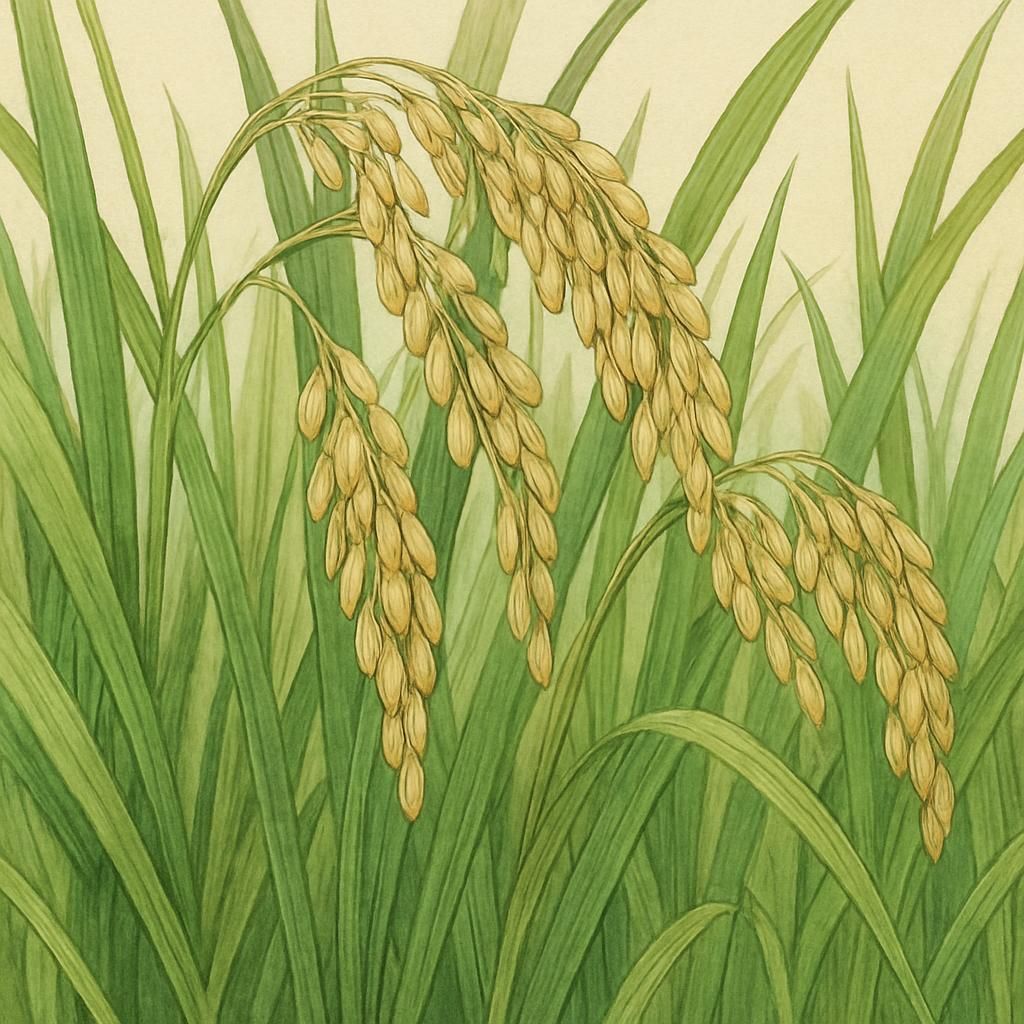
Introduction to Senia Rice
Senia Rice, belonging to the Rice family, is a highly valued Japonica variety predominantly grown in the fertile regions of Valencia, Spain. Recognized for its short, plump grains, Senia Rice is a staple in the preparation of Spain's iconic dish, paella. This variety is favored for its ability to absorb flavors while maintaining a delicate texture, making it a cherished choice for many Mediterranean rice dishes.
Botanical Profile of Senia Rice
Senia Rice is a cultivar of the species Oryza sativa, specifically grouped under the Japonica subspecies. It is well known for its short grain size and pearl-like appearance. The grains swell and become tender when cooked, retaining a creamy, slightly sticky texture ideal for Mediterranean cuisine. The plant itself can grow up to one meter in height, featuring long, slender leaves and stems that support the panicles where the grains develop.
Soil, pH, and Climate Requirements for Senia Rice
Cultivating Senia Rice requires careful attention to soil and climatic conditions to ensure a good yield and quality.
| Condition | Ideal Range |
|---|---|
| Soil Type | Clay loam, well-drained |
| pH Level | 5.5 - 6.5 |
| Temperature | 20°C - 35°C (68°F - 95°F) |
| Rainfall | 1,000 - 1,200 mm annually |
| Humidity | High |
Senia Rice performs best in regions with warm, temperate climates. High humidity and ample water supply from either rainfall or irrigation are critical during the growing season to replicate the flooded paddy fields commonly used in commercial rice cultivation.
Step-by-Step Planting & Propagation
Seed Selection and Preparation: Use certified Senia Rice seeds to ensure high germination rates and disease resistance. Prior to planting, soak the seeds in water for 24 hours to promote germination.
Field Preparation: Prepare the field by plowing and leveling the land to ensure a flat surface. This step is crucial for maintaining uniform water depth, essential for rice cultivation.
Planting: Plant seeds directly in flooded paddies or in dry soil to be flooded later. Typically, broadcasting the seeds at a density of 80-100 kg per hectare is recommended.
Water Management: Maintain a consistent water depth of 5-10 cm during the seedling and tillering stages. Adjust the water level as the plants mature to avoid stress and promote even growth.
Weed Control: Use a combination of manual, mechanical, or herbicide methods to manage weeds effectively. Early intervention during the seedling stage is critical to prevent competition for resources.
Care & Maintenance Regimes for Senia Rice
Proper care and maintenance are essential to achieve optimal Senia Rice yields.
| Aspect | Schedule and Details |
|---|---|
| Watering | Keep fields flooded initially; gradually reduce before harvest |
| Fertilization | Apply nitrogen-rich fertilizers at emergence, critical stages |
| Pruning | Not applicable for rice crops due to the growth habit |
Water management is critical; fields must be adequately irrigated, especially in dry periods. Fertilization should be balanced, with a primary focus on nitrogen to promote vigorous growth and high yields.
Pests, Diseases & Organic Management
Senia Rice is susceptible to a variety of pests and diseases, notably Spider Mites and various fungal infections. Implement an integrated pest management strategy that includes:
- Regular Monitoring: Inspect fields frequently for signs of pests or disease.
- Biological Control: Utilize natural predators like ladybugs to control pest populations.
- Organic Treatments: Apply neem oil or other organic pesticides to manage fungal diseases and mites.
To delve into more on tackling pests and diseases organically, explore Crop Diseases Under the Microscope: 9 Organic Fixes for Small Farm Resilience.
Harvesting, Curing & Optimal Storage
Harvesting
Senia Rice is ready to harvest approximately 140-160 days after planting. The grains should be golden brown and have a moisture content of about 20%.
Curing
- Drying: Immediately after harvesting, dry the rice in the sun for a few days, reducing moisture to around 14% to prevent spoilage.
- Threshing: Use mechanical or manual methods to separate grains from the straw.
Storage
- Condition: Store rice in a cool, dry, and well-ventilated area.
- Pests: Ensure storage areas are sealed to prevent access by pests such as rodents and insects.
Companion Planting for Senia Rice
Companion planting can enhance biodiversity and pest resistance. Suitable companions for Senia Rice include:
- Clover: Helps fix nitrogen in the soil, benefiting rice growth.
- Marigold: Repels certain pests naturally.
- Lychee: Can coexist in regions where both crops flourish, offering shade and moisture retention.
For more insights on optimizing companion planting in various conditions, consider reading Summer Companion Planting: 10 Organic Pairings to Boost Small Farm Resilience.