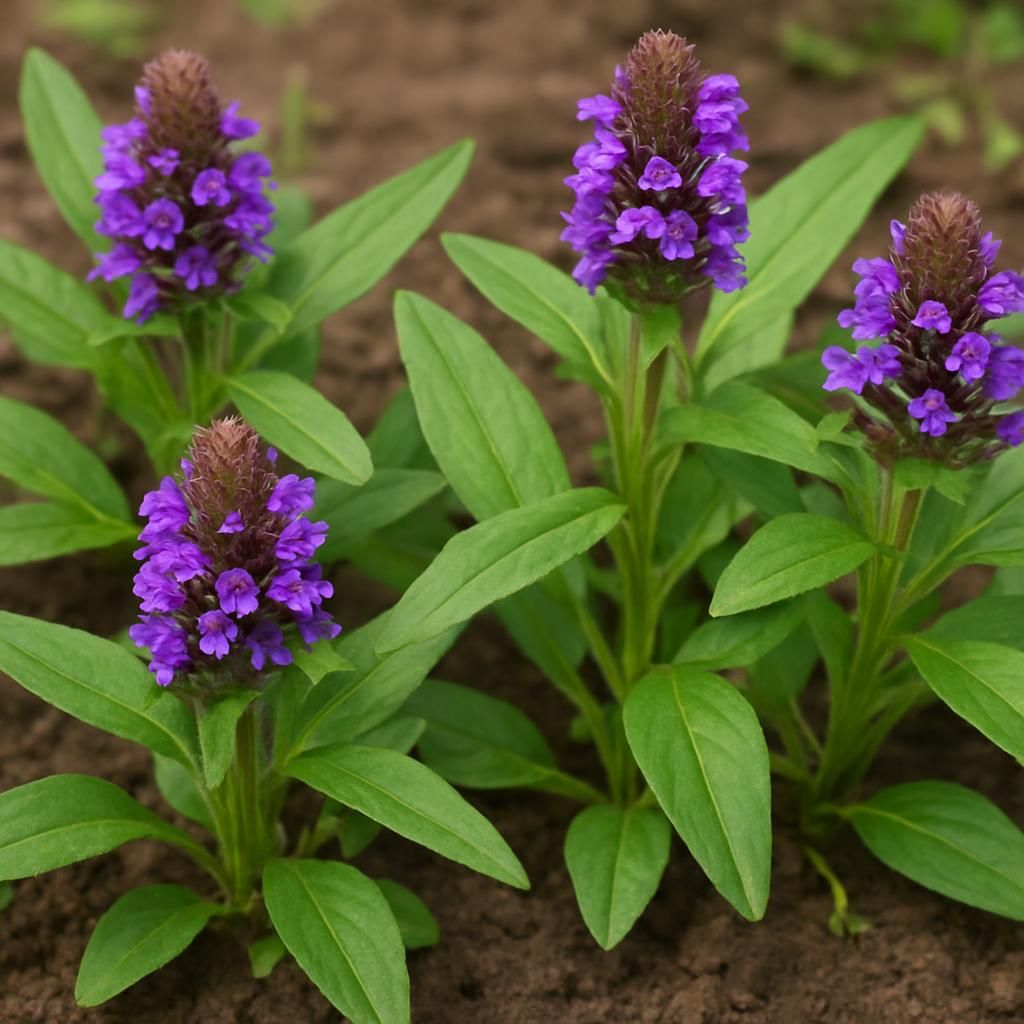
Introduction to Self-Heal (Prunella vulgaris)
Self-Heal (Prunella vulgaris) is a versatile herbaceous perennial belonging to the mint family. It has been used for centuries in traditional European, Chinese, and Native American medicine for its anti-inflammatory, astringent, and wound-healing properties. Modern interest has grown among small-scale farmers and herbalists seeking resilient, low-input medicinal herbs that also support pollinator biodiversity. As a ground-covering species, it helps suppress weeds while providing valuable biomass for compost or mulch.
Botanical Profile of Self-Heal (Prunella vulgaris)
Prunella vulgaris produces creeping stems that root at nodes, forming dense mats up to 30 cm tall. Its opposite, lance-shaped leaves are dark green with slightly serrated margins. Terminal spikes of violet to purple flowers appear from late spring through early autumn, attracting bees and beneficial insects. The plant develops a fibrous root system with shallow rhizomes that enable rapid vegetative spread. Seed capsules release small, dark brown nutlets that remain viable in soil for multiple seasons.
Soil, pH, and Climate Requirements for Self-Heal (Prunella vulgaris)
Self-Heal performs best in moist, well-drained loamy soils rich in organic matter. It tolerates partial shade but yields higher flower and leaf biomass under full sun with consistent moisture. The following table summarizes optimal conditions:
| Parameter | Ideal Range | Notes |
|---|---|---|
| Soil Type | Loam to sandy loam | Avoid heavy clay without amendment |
| Soil pH | 6.0–7.5 | Slightly acidic to neutral |
| Temperature Range | 15–25 °C daytime | Hardy to –20 °C; protect young transplants |
| Annual Rainfall | 600–1200 mm | Supplemental irrigation during dry spells |
| Light Requirement | Full sun to partial shade | Full sun maximizes medicinal compound levels |
| Drainage | Good | Raised beds recommended in wet climates |
Step-by-Step Planting & Propagation
- Site Preparation: Clear perennial weeds and incorporate 5–7 cm of well-rotted compost. Conduct a soil test and adjust pH if below 5.8.
- Propagation Methods: Direct sow stratified seed in early spring at 0.5 cm depth, or start transplants indoors 6–8 weeks before last frost. Division of established clumps in autumn or early spring yields the fastest establishment.
- Spacing: Set plants 20–25 cm apart in rows 40 cm wide to allow for lateral spread.
- Irrigation at Planting: Water thoroughly after transplanting and maintain even moisture for the first three weeks.
- Mulching: Apply 5 cm of organic mulch to conserve moisture and suppress annual weeds during establishment.
Care & Maintenance regimes for Self-Heal (Prunella vulgaris)
Consistent moisture and moderate fertility support vigorous growth and high rosmarinic acid content. The table below outlines seasonal schedules:
| Season | Watering Schedule | Fertilizer Application | Pruning / Maintenance |
|---|---|---|---|
| Spring | 25 mm/week; increase if dry | Side-dress with 2–3 kg N/ha compost tea | Remove winter-damaged foliage |
| Summer | 30–40 mm/week during bloom | Light top-dress (1 kg N/ha) after first cut | Deadhead spent spikes to extend bloom |
| Autumn | Reduce to 15 mm/week | Apply 3 cm compost layer | Cut back to 5 cm after final harvest |
| Winter | Minimal; protect from waterlogging | None | Apply light straw mulch in cold zones |
Pests, Diseases & Organic Management
Self-Heal is generally pest-resistant but can host Aphids and Spider Mites during hot, dry periods. Slugs may damage young foliage in overly moist conditions. Fungal issues such as Powdery Mildew appear in crowded, shaded plantings. Implement cultural controls including proper spacing, morning irrigation, and removal of infected debris. Beneficial insect releases (lady beetles, lacewings) provide effective aphid suppression. Neem oil or insecticidal soap offers acceptable organic rescue treatments when populations exceed thresholds.
Harvesting, Curing & Optimal Storage
Harvest aerial parts at peak flowering for highest medicinal potency. Cut stems 5 cm above soil level using clean shears during mid-morning after dew has dried. Bundle stems loosely and hang in a shaded, well-ventilated area at 25–30 °C for 7–10 days. Once brittle, strip leaves and flowers and store in airtight glass containers away from light. Properly dried material retains potency for 12–18 months when kept below 15 % moisture.
Companion Planting for Self-Heal (Prunella vulgaris)
Self-Heal pairs effectively with nitrogen-fixing Clover and aromatic herbs such as Thyme and Yarrow. These combinations improve soil fertility while attracting pollinators and predatory insects. Avoid planting near aggressive spreaders such as mint to prevent competition. Interplanting with Nasturtium can further deter aphids through trap-cropping. In mixed perennial beds, position Self-Heal at the edges where its low habit fills gaps without shading taller crops.