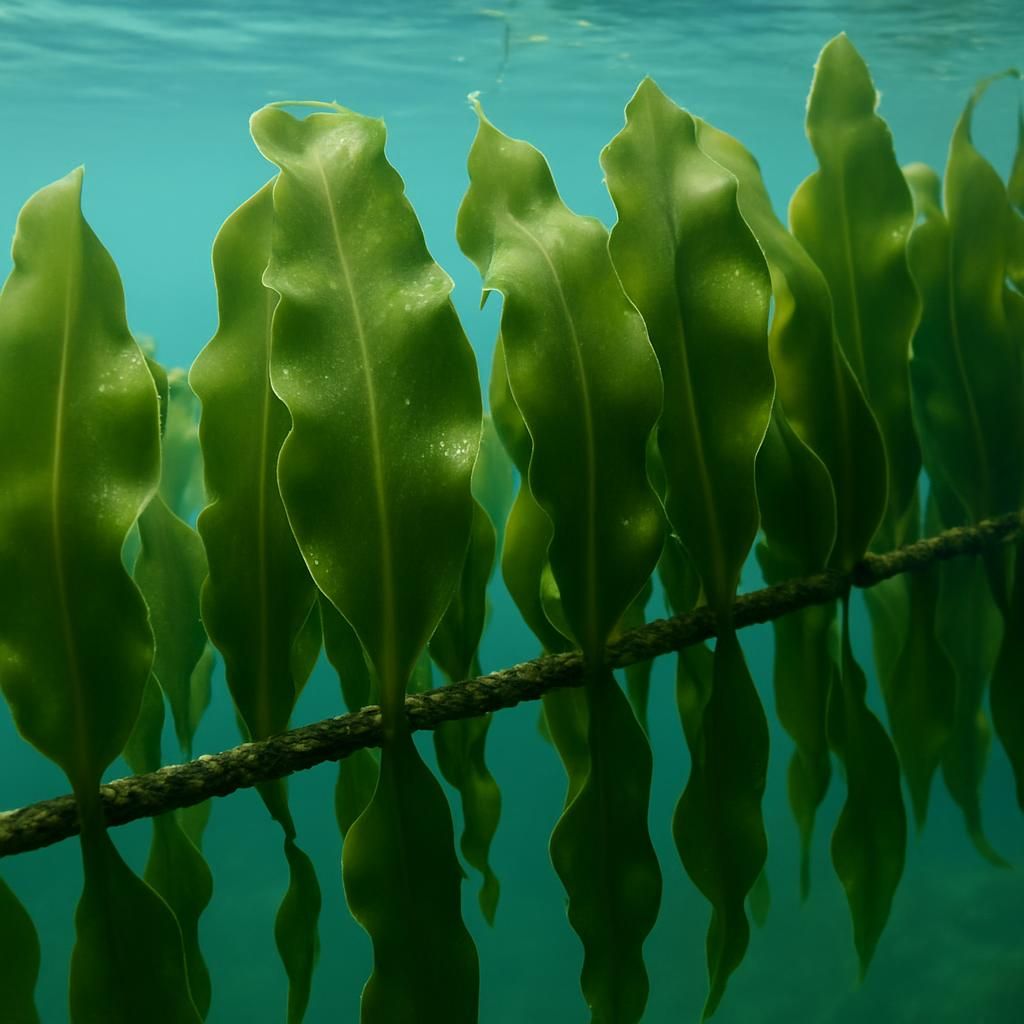
Introduction to kelp
Kelp cultivation represents one of the most sustainable forms of marine agriculture, producing high-value biomass with minimal freshwater input. As a brown seaweed, kelp plays a vital role in coastal ecosystems while offering growers rapid growth cycles and multiple harvest options. Demand continues to rise for kelp-based foods, soil amendments, and biostimulants, making it an increasingly attractive crop for coastal producers.
Commercial production focuses on species such as Laminaria japonica and Saccharina latissima. These seaweeds sequester carbon efficiently and improve water quality through nutrient uptake. Successful cultivation requires understanding marine-specific parameters including salinity, light penetration, and water movement. Growers who master these elements achieve consistent yields while supporting ocean health.
Botanical Profile of kelp
Kelp belongs to the order Laminariales and features a complex thallus structure with holdfast, stipe, and blade components. The holdfast anchors the plant to rocky substrates while the blade maximizes photosynthetic surface area. Growth occurs primarily at the meristematic zone near the stipe-blade junction, enabling rapid elongation under optimal conditions.
Kelp reproduces through alternation of generations with microscopic gametophytes and macroscopic sporophytes. The sporophyte phase produces the harvestable biomass that growers typically cultivate. Environmental triggers such as temperature shifts and photoperiod changes influence reproductive timing and spore release. Understanding this life cycle is essential for controlled nursery production and outplanting schedules.
Soil, pH, and Climate Requirements for kelp (MUST INCLUDE A MARKDOWN TABLE OF IDEAL CONDITIONS)
Kelp does not grow in terrestrial soil; instead, it requires stable rocky or artificial substrates in marine environments. Water chemistry parameters including salinity, temperature, and nutrient levels directly determine growth rates and product quality. Coastal sites with consistent upwelling or nutrient-rich currents provide natural advantages for cultivation.
| Parameter | Ideal Range | Notes |
|---|---|---|
| Water Temperature | 5–15 °C | Optimal for Saccharina and Laminaria species |
| Salinity | 28–35 ppt | Full-strength seawater; avoid freshwater influx |
| pH | 7.8–8.4 | Slightly alkaline marine conditions |
| Light (PAR) | 100–400 µmol m⁻² s⁻¹ | Moderate irradiance; avoid excessive surface exposure |
| Nutrient (NO₃⁻) | 5–20 µM | Natural upwelling or supplemental dosing |
| Current/Water Flow | 0.1–0.5 m s⁻¹ | Gentle flow delivers nutrients and prevents fouling |
| Depth | 2–10 m | Subtidal zone with sufficient light penetration |
Step-by-Step Planting & Propagation
Kelp propagation begins in controlled hatcheries where spores are collected from mature sporophytes and settled onto seed strings. Growers induce sporulation by exposing fertile blades to temperature and light shocks. The resulting zoospores settle onto twine or rope substrates and develop into microscopic gametophytes within days.
After fertilization, juvenile sporophytes emerge and are cultured under controlled irradiance and nutrient regimes for 4–8 weeks. Once seedlings reach 2–5 cm, they are transferred to sea-based longlines or rafts. Deployment timing coincides with cooler water temperatures to minimize stress and maximize survival rates.
Site preparation includes securing mooring systems and installing horizontal or vertical culture lines at appropriate depths. Spacing between lines typically ranges from 1–2 meters to allow water flow while maximizing biomass per unit area. Regular monitoring during the first weeks ensures seedlings remain attached and free from early fouling.
Care & Maintenance regimes for kelp (MUST INCLUDE A MARKDOWN TABLE OF WATER, FERTILIZER, AND PRUNING SCHEDULES)
Successful kelp farming requires routine inspection of culture lines, monitoring of water quality, and timely intervention against fouling organisms. Nutrient supplementation may be necessary in oligotrophic waters, while mechanical or biological cleaning prevents epiphyte accumulation. Harvest scheduling balances maximum biomass with product quality.
| Task | Frequency | Method | Notes |
|---|---|---|---|
| Water Quality Check | Weekly | Salinity, temperature, and nutrient testing | Adjust depth or location if parameters drift |
| Fertilizer Application | Bi-weekly (if needed) | Liquid kelp extract or nitrate dosing | Only in low-nutrient sites; avoid over-fertilization |
| Fouling Removal | Every 2–3 weeks | Gentle brushing or freshwater dips | Target epiphytes and bryozoans |
| Line Inspection | Monthly | Visual and tension checks | Repair or replace damaged ropes |
| Thinning/Pruning | As needed | Selective harvest of mature blades | Maintain optimal density for light penetration |
Pests, Diseases & Organic Management
Kelp faces pressure from grazing herbivores such as sea urchins and snails, as well as epiphytic algae and bacteria that reduce photosynthetic efficiency. Warm water events can trigger disease outbreaks including “kelp wasting disease” caused by Labyrinthula species. Proactive site selection and regular cleaning form the foundation of organic management.
Biological controls include introducing native grazers that preferentially consume fouling organisms without damaging the crop. Physical barriers such as predator exclusion nets protect young sporophytes during vulnerable early stages. Maintaining appropriate spacing and water flow reduces disease incidence by limiting pathogen spread.
Harvesting, Curing & Optimal Storage
Kelp is typically harvested when blades reach 1–3 meters in length, usually 4–8 months after outplanting. Mechanical harvesters or manual cutting at the stipe base allow regrowth from the meristem in some species. Immediate post-harvest handling focuses on minimizing desiccation and maintaining product quality.
Fresh kelp is rinsed in seawater to remove sand and epiphytes before processing. Drying methods include sun-drying on racks, forced-air dehydrators, or freeze-drying for premium markets. Properly dried kelp retains nutritional value and can be stored in cool, dry conditions for up to 12 months.
Companion Planting for kelp
Kelp integrates well with other marine species in integrated multi-trophic aquaculture (IMTA) systems. Filter-feeding shellfish such as mussels and oysters benefit from kelp-generated organic matter while helping control fouling. Sea cucumbers and urchins can be co-cultured to consume detritus and maintain system balance.
Terrestrial crop analogies include pairing kelp with nitrogen-fixing clover in land-based nutrient cycling studies. Coastal farmers often combine kelp lines with oyster mushroom cultivation on nearby land to create closed-loop nutrient flows. These companion strategies enhance overall system resilience and diversify farm income streams.