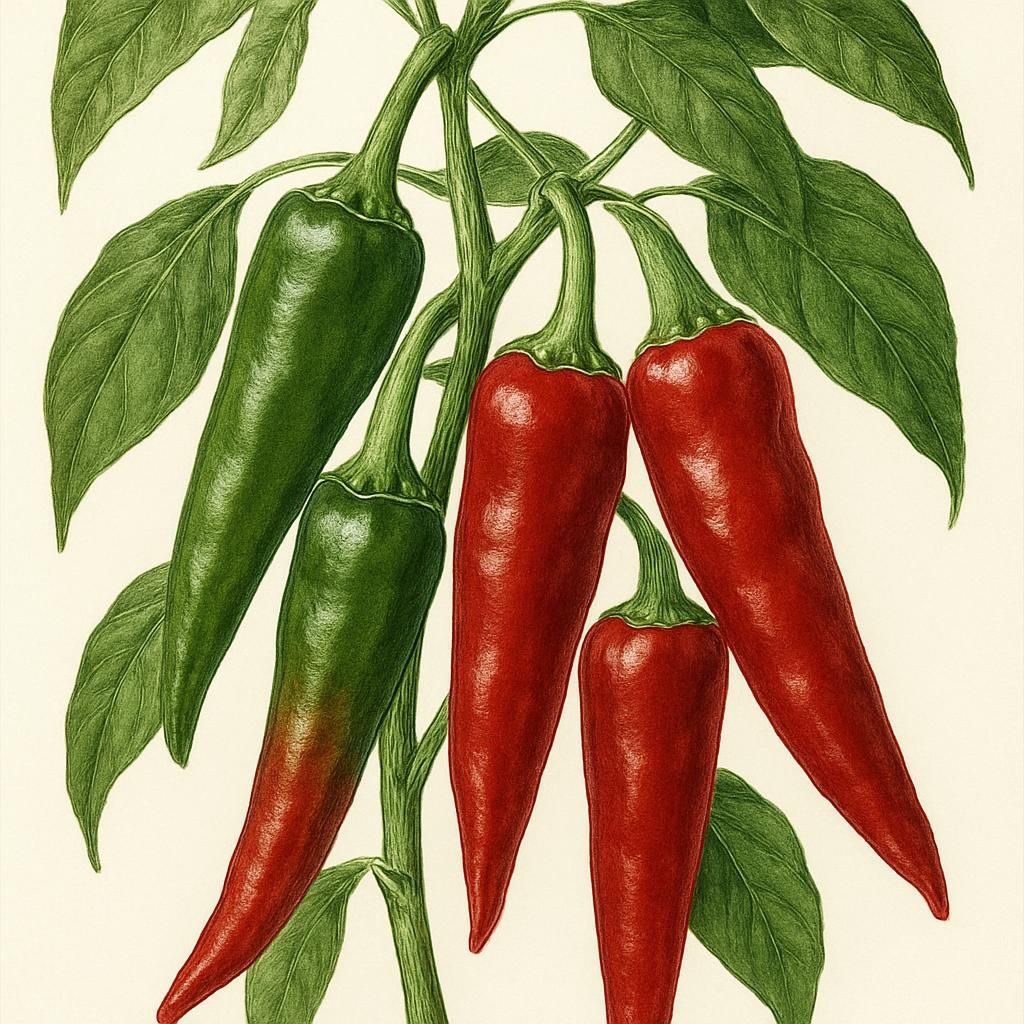
Introduction to Sandia Chili
Sandia Chili is a medium-hot variety of chili pepper in the Capsicum annuum family, famed for its vibrant taste and widespread use in Southwestern cuisine. Cultivated extensively in New Mexico, Sandia Chili offers a balance of heat and flavor, making it a staple in various dishes. The peppers are used fresh, dried, or powdered.
Botanical Profile of Sandia Chili
Sandia Chili belongs to the Capsicum annuum species and is an annually grown cultivar. The plant can reach heights up to 1 meter and produces elongated green pods that ripen to a deep red. The heat index of Sandia Chili ranges from 5,000 to 10,000 Scoville Heat Units (SHU).
Soil, pH, and Climate Requirements for Sandia Chili
To achieve optimal growth, Sandia Chili needs specific soil and climate conditions reflected in its New Mexican origins. Well-drained sandy or loamy soils with ample organic matter are critical.
| Factor | Ideal Condition |
|---|---|
| Soil Type | Sandy or Loamy |
| pH | 6.0 - 7.0 |
| Temperature Range | 65°F - 85°F |
| Rainfall | 20 - 40 inches annually |
| USDA Hardiness Zone | 5-11 |
Step-by-Step Planting & Propagation
- Seed Selection: Select certified disease-free seeds.
- Starting Indoors: Begin by sowing seeds indoors 6-8 weeks before the last expected frost date.
- Transplantation: Transplant when seedlings have at least 4 true leaves, spacing them 18 inches apart in rows spaced about 30 inches apart.
- Direct Sowing: In milder climates, direct sowing can be done after frost risks pass.
- Sunlight Needs: Ensure full sun exposure to maximize photosynthesis and fruiting.
- Watering: Use drip irrigation for consistent moisture, preventing both drought stress and waterlogging.
Care & Maintenance Regimes for Sandia Chili
Proper care and maintenance ensure healthy growth and maximum yield.
| Task | Frequency |
|---|---|
| Watering | Weekly (1-2 inches) |
| Fertilizing | Bi-weekly with balanced 10-10-10 NPK |
| Pruning | As needed to encourage air flow |
Maintain a consistent watering schedule, installing drip irrigation if possible. Fertilize with a balanced NPK ratio every two weeks. Pruning excess foliage allows for improved air circulation and reduces disease incidence.
Pests, Diseases & Organic Management
Sandia Chili is susceptible to several pests and diseases that need vigilant control methods. Key pests include Spider Mites and Aphids. Diseases like Powdery Mildew can affect plants under stress. Apply organic insecticidal soap for pests and a baking soda solution for fungal issues. Crop rotation and companion planting with herbs like Thyme can prevent infestations.
Harvesting, Curing & Optimal Storage
Harvest Sandia Chili when green for fresh use, or allow them to ripen to red for drying and freezing. Use gloves when harvesting to prevent skin irritation. Cure by hanging to dry in a warm, well-ventilated area, then store in airtight containers.
Companion Planting for Sandia Chili
Companion planting can enhance the growth and health of Sandia Chili by attracting beneficial insects and controlling pests. Plants such as Basil, Carrots, and marigolds make excellent companions. Learn about more combinations with the article Summer Companion Planting: 10 Organic Pairings to Boost Small Farm Resilience.
Conclusion
Cultivating Sandia Chili requires understanding specific growing conditions, attention to pest management, and a commitment to regular plant care tasks. By adhering to these guidelines, growers can achieve robust plants and fruitful harvests.