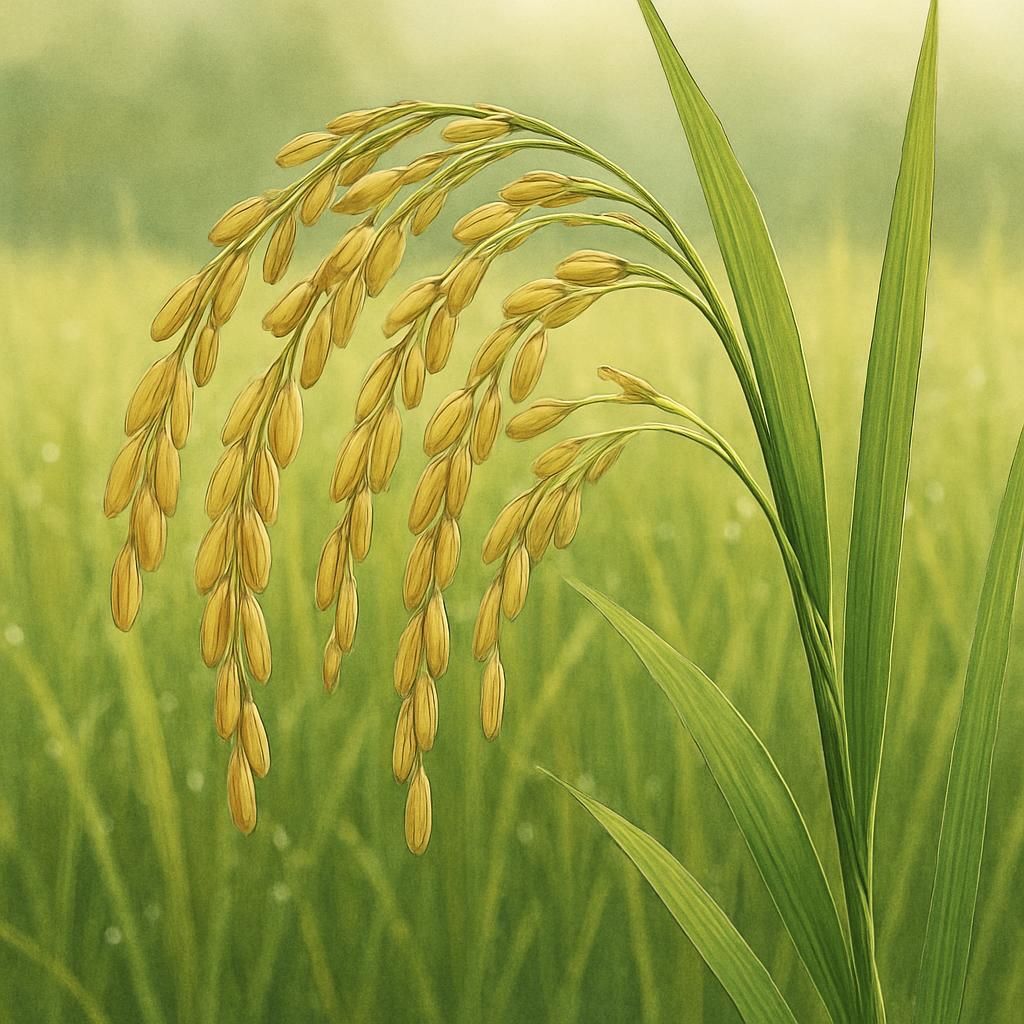
Introduction to Ponni Rice (Thanjavur)
Ponni Rice is a variety of rice grown predominantly in the Thanjavur district of Tamil Nadu, India. Renowned for its unique aroma and taste, Ponni Rice is a staple in South Indian households. This medium grain rice cooks fluffy and non-sticky, making it ideal for traditional dishes like sambar and rasam rice.
Botanical Profile of Ponni Rice (Thanjavur)
Belonging to the species Oryza sativa, Ponni Rice is part of the Poaceae family and is primarily categorized under wetland rice cultivation. The plant reaches maturity within 135-140 days, marked by its green, narrow leaves and panicles loaded with spikelets.
Soil, pH, and Climate Requirements for Ponni Rice (Thanjavur)
To achieve optimal growth, Ponni Rice requires specific soil and climatic conditions. It prefers rich, clayey loam soil, which facilitates adequate water retention essential for paddy growth. Below is a table outlining the ideal conditions:
| Element | Ideal Condition |
|---|---|
| Soil Type | Clayey Loam |
| pH | 5.5 to 6.5 |
| Temperature | 20°C to 37°C |
| Rainfall | 1000mm to 2500mm annually |
| Humidity | High (Above 70%) |
Step-by-Step Planting & Propagation
- Land Preparation: Start by leveling the field to ensure uniform water distribution. Incorporate organic matter and ensure good water drainage;
- Selection of Seeds: Use certified disease-free Ponni Rice seeds for propagation;
- Sowing: Start with seedbed preparation. Sow the seeds in nurseries, flooding fields after 2-3 weeks to kill weeds;
- Transplantation: After about 21 days, transplant seedlings at a spacing of 20x15 cm in rows, ensuring proper stem establishment;
- Water Management: Maintain 5-10 cm of standing water in the paddy fields for optimal growth;
- Nutrient Management: Use fertilizers judiciously based on soil test results. Incorporate nitrogen, phosphorus, and potassium for vigorous plant growth.
Care & Maintenance regimes for Ponni Rice (Thanjavur)
Regular care and maintenance are vital for ensuring a high yield. Here's a maintenance schedule:
| Action | Schedule |
|---|---|
| Watering | Constant flooding during growing season |
| Fertilizing | Basal application of NPK fertilizer; top dressing with urea 30 days after transplanting |
| Pruning | Not applicable, but remove weeds regularly |
Pests, Diseases & Organic Management
Ponni Rice is susceptible to various pests and diseases such as Stem Borers, Leaf Blight, and Fungal Infections. Organic management practices include:
- Utilizing neem oil or bio-pesticides for pest control;
- Implementing crop rotation and mulching to reduce disease outbreaks;
- Regular field scouting to identify and address pest problems early.
Harvesting, Curing & Optimal Storage
- Harvesting: Harvest Ponni Rice when grains are hard and have reached the 'yellow ripe stage'.
- Curing: Sun-dry harvested rice for 5-7 days to reduce moisture content to about 14%.
- Storage: Store the dried rice in airtight containers in a cool, dry place to prolong its shelf life.
Companion Planting for Ponni Rice (Thanjavur)
While rice fields are typically mono-cropped, integrating plants like Marigold and Sesame along the borders can deter pests naturally. Such companion plants not only enhance biodiversity but also aid in maintaining soil health and ecological balance.
Learn more about effective farming practices from this blog post on summer companion planting.
To delve deeper into general rice cultivation, explore this Wiki article.