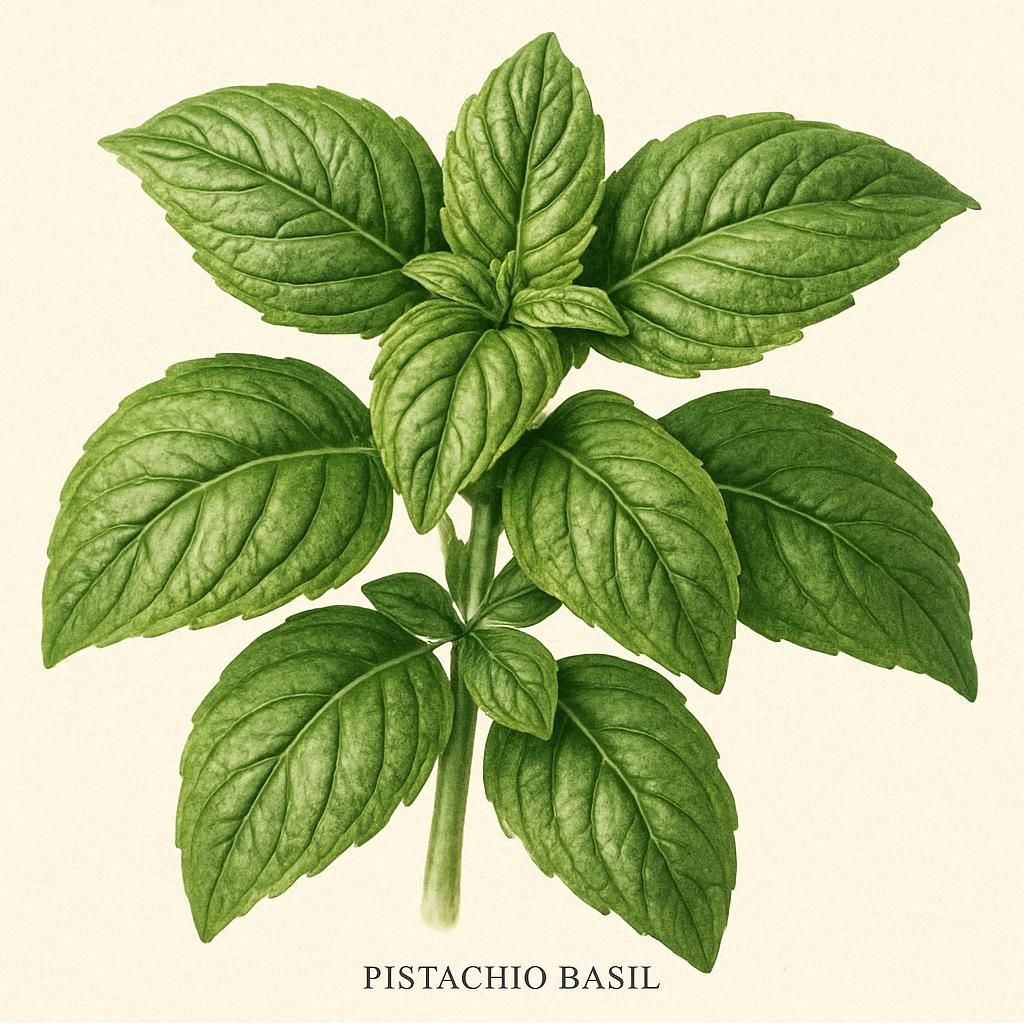
Introduction to Pistachio Basil
Pistachio Basil is a unique cultivar of basil that offers a delightful nutty flavor, reminiscent of pistachios. It is valued both for its culinary uses and ornamental appeal, making it a versatile addition to any garden or kitchen.
Botanical Profile of Pistachio Basil
Pistachio Basil belongs to the species Ocimum basilicum, which is commonly known as sweet basil. This variety is distinguished by its distinctive aroma and flavor, offering a fresh twist on traditional basil. The plant typically grows up to 24 inches in height and produces small, edible leaves that are perfect for garnishing.
Soil, pH, and Climate Requirements of Pistachio Basil
To achieve optimal growth, Pistachio Basil requires particular soil, pH, and climate conditions. Below is a table summarizing these ideal conditions:
| Condition | Ideal Parameters |
|---|---|
| Soil Type | Well-drained, loamy soil |
| pH Level | 6.0 - 7.0 |
| Watering | Moderate, consistent |
| Sunlight | Full sun (6-8 hours daily) |
| Temperature Range | 70-85°F (21-29°C) |
Step-by-Step Planting & Propagation
- Seed Selection and Preparation: Choose high-quality Pistachio Basil seeds from a reputable supplier. Soak the seeds in water for 24 hours to speed up germination.
- Soil Preparation: Prepare a well-drained, fertile soil bed with a pH between 6.0 and 7.0. Amend with organic compost.
- Sowing: Sow seeds 1/4 inch deep in the prepared soil. Space them about 12 inches apart to allow for optimal growth.
- Watering: Keep the soil consistently moist but avoid waterlogging; seed germination typically occurs in 7-10 days.
- Thinning: Thin seedlings to 12 inches apart after 2-3 weeks of growth to prevent crowding.
- Transplanting: If started indoors, transplant seedlings to an outdoor location when they have 4-6 true leaves.
Care & Maintenance Regimes for Pistachio Basil
Proper care and maintenance are essential for a healthy Pistachio Basil plant. Below is a care schedule to ensure robust growth:
| Care Aspect | Schedule |
|---|---|
| Watering | 1-inch per week, more during dry periods |
| Fertilizing | Bi-weekly with balanced organic fertilizer |
| Pruning | Prune regularly to encourage bushiness; remove flowering tops to enhance foliage growth |
Pests, Diseases & Organic Management
Pistachio Basil is susceptible to Spider Mites, whiteflies, and root rot. To manage these issues organically:
- Spider Mites and Whiteflies: Use neem oil or insecticidal soap.
- Root Rot: Ensure proper drainage and avoid overwatering.
- For further pest management strategies, see 7 Summer Pest Traps That Sabotage Small Farm Harvests.
Harvesting, Curing & Optimal Storage
- Harvesting: Begin harvesting after the leaves have reached a suitable size, typically 60 days after planting.
- Curing: Air dry leaves in a shaded area to retain flavor.
- Storage: Store dried leaves in airtight containers in a cool, dark place for up to a year.
Companion Planting for Pistachio Basil
To optimize growth conditions and enhance pest resistance, consider pairing Pistachio Basil with complementary plants. Basil varieties, Tomato, and French Marigold are excellent companion plants that can deter pests and improve flavor.
For more on strategic planting, refer to Summer Companion Planting: 10 Organic Pairings to Boost Small Farm Resilience.