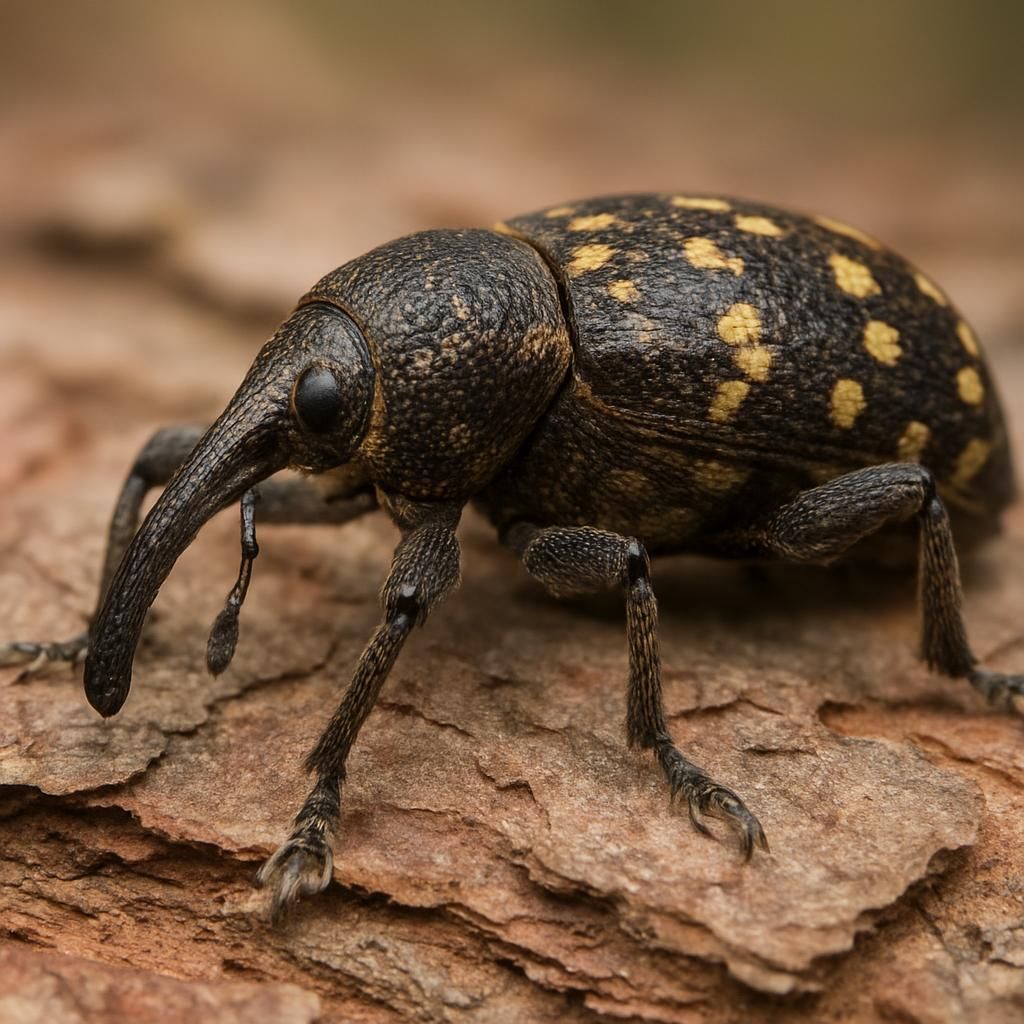
Introduction to Pine weevils
Pine weevils, scientifically known as Hylobius abietis, are among the most damaging pests affecting conifer plantations across Europe and parts of Asia. These large weevils target newly planted pine and spruce seedlings, often killing young trees within the first two growing seasons after establishment. Adult weevils feed on the bark of stems and branches, while their larvae develop in the roots and lower stems, causing structural damage that prevents nutrient and water uptake. The pest thrives in areas with recent clear-felling where fresh stumps provide ideal breeding sites. Economic impacts include high replanting costs and delayed forest regeneration, making early detection and integrated management essential for sustainable forestry.
Identifying Symptoms & Damage
Early symptoms of pine weevil infestation include wilting and yellowing of needles on young conifer seedlings, often appearing within weeks of planting. Adult feeding produces distinctive resinous patches and irregular bark removal around the stem base, frequently resulting in complete girdling that leads to plant collapse. Larval activity creates tunnels and galleries in the root collar and upper roots, weakening structural integrity and increasing susceptibility to secondary pathogens. In severe cases, entire rows of seedlings may die, with damage most visible during spring and early summer. Close inspection of the soil around the base of affected plants often reveals adult weevils hiding in litter or emerging at dusk.
Lifecycle and Progression of Pine weevils (MUST INCLUDE A MARKDOWN TABLE OF LIFECYCLE STAGES)
The lifecycle of Hylobius abietis spans one to three years depending on climate and host availability. Adults emerge in spring, mate near fresh stumps, and females lay eggs in the soil or bark crevices. Larvae feed on roots for several months before pupating in soil chambers. New adults remain in the soil over winter and emerge the following spring to continue the cycle.
| Stage | Duration | Key Characteristics | Environmental Conditions |
|---|---|---|---|
| Egg | 2–4 weeks | Small, oval, laid in soil or bark crevices | 10–20°C, moist soil |
| Larva | 6–18 months | White, legless, feeds on roots and bark | Cool, humid forest floor |
| Pupa | 2–4 weeks | Formed in soil chambers near host roots | Stable soil temperature |
| Adult | 1–2 years | 10–15 mm, dark brown with yellow spots | Active above 8°C, nocturnal |
Environmental Triggers & Risk Factors
Pine weevil populations surge following large-scale clear-felling operations that leave abundant stumps and slash. Sandy or well-drained soils facilitate larval development, while mild winters increase adult survival rates. High planting densities and delayed replanting after harvest create ideal conditions for rapid infestation. Areas with previous weevil outbreaks or proximity to mature conifer stands face elevated risk. Climate change is extending the active season in northern regions, potentially increasing generation turnover.
Organic Control & Treatment Plans (MUST INCLUDE A MARKDOWN TABLE OF TREATMENT OPTIONS AND FREQUENCIES)
Organic management emphasizes cultural and biological tactics over synthetic insecticides. Physical barriers such as protective collars or netting around seedlings provide immediate protection. Soil solarization and removal of fresh stumps reduce breeding sites. Beneficial nematodes (Heterorhabditis spp.) and entomopathogenic fungi can suppress larval populations when applied correctly.
| Treatment Option | Application Method | Frequency | Notes |
|---|---|---|---|
| Protective collars | Place around stem base at planting | Once per season | Effective for first two years |
| Beneficial nematodes | Soil drench around roots | Early spring and autumn | Requires moist soil for activity |
| Stump removal / chipping | Mechanical grinding post-harvest | Immediately after felling | Reduces egg-laying sites |
| Mulch barriers | 10–15 cm organic mulch layer | Reapply annually | Discourages adult movement |
| Trap logs | Fresh pine logs placed in rows | Replace every 4–6 weeks | Monitor and destroy infested logs |
Preventing Pine weevils in the Future
Long-term prevention relies on integrated site management and resistant planting stock. Delay replanting for 2–3 years after clear-felling when feasible, or use larger, more vigorous seedlings that can outgrow damage. Maintain wide buffer zones between new plantings and mature stands. Regular monitoring with pitfall traps allows early intervention. Combining these practices with the organic controls listed above minimizes future outbreaks.
Crops Most Affected by Pine weevils
While primarily a forestry pest, pine weevils can also damage young Pine and Spruce seedlings used in Christmas tree production and reforestation projects. Related conifer species such as Douglas Fir and Larch may suffer occasional attack in mixed plantations.