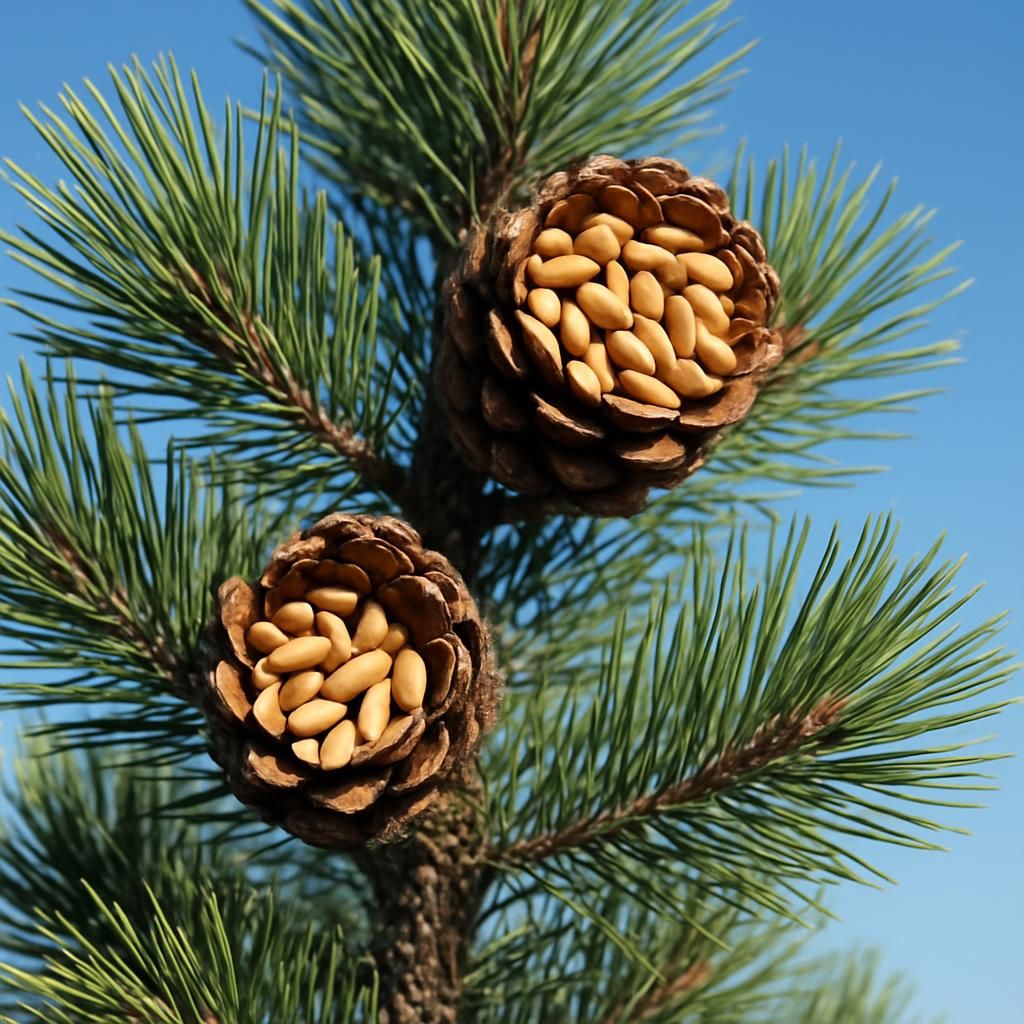
Introduction to Pine Nut (Pinus gerardiana - Chilgoza)
Pinus gerardiana, widely recognized as the Chilgoza pine, is a slow-growing evergreen conifer native to the western Himalayas. It produces large, edible seeds known as Chilgoza pine nuts that are harvested from mature cones. These nuts are valued for their high oil content, delicate flavor, and role as a premium ingredient in both culinary and medicinal traditions. Commercial cultivation remains limited due to the species’ long maturation period and specific environmental requirements, making successful plantations highly rewarding for dedicated growers.
Botanical Profile of Pine Nut (Pinus gerardiana - Chilgoza)
Pinus gerardiana belongs to the Pinaceae family and typically reaches 15–25 meters in height with a broad, irregular crown. Its needles occur in fascicles of three, measuring 6–10 cm long, and the tree produces ovoid cones 10–18 cm in length containing 30–50 seeds each. The seeds are wingless, 2–2.5 cm long, and encased in a hard, reddish-brown shell. Chilgoza pines exhibit a deep taproot system that provides drought tolerance once established, and they can live for several hundred years under favorable conditions.
Soil, pH, and Climate Requirements for Pine Nut (Pinus gerardiana - Chilgoza)
Successful Chilgoza cultivation demands well-drained, sandy-loam to gravelly soils with good aeration. The species performs best in slightly acidic to neutral conditions and requires a distinct cold period for cone development.
| Parameter | Ideal Range | Notes |
|---|---|---|
| Soil Type | Sandy loam to gravelly | Excellent drainage essential |
| Soil pH | 5.5 – 7.0 | Avoid heavy clay or waterlogged sites |
| Altitude | 1800 – 3300 m | Himalayan native range |
| Temperature | -10 °C to 30 °C (growing season) | Requires winter chilling below 5 °C |
| Annual Rainfall | 600 – 1200 mm | Supplemental irrigation in dry spells |
| Frost Tolerance | High | Mature trees tolerate heavy snow |
Step-by-Step Planting & Propagation
- Site Selection: Choose south-facing slopes with full sun exposure and protection from strong winds.
- Soil Preparation: Deep rip or trench to 1 m depth, incorporate 20–30 kg well-rotted compost per planting hole.
- Propagation: Sow stratified seeds in early spring; alternatively, graft scions from high-yielding mother trees onto Pinus wallichiana rootstock.
- Spacing: Plant seedlings 6–8 m apart in rows 8–10 m wide to allow for crown development.
- Initial Irrigation: Provide 10–15 liters per plant weekly for the first two growing seasons.
Care & Maintenance regimes for Pine Nut (Pinus gerardiana - Chilgoza)
Young Chilgoza plantations require consistent attention during the first decade. Mulching with pine needles or wood chips conserves moisture and suppresses weeds. Once established, trees benefit from periodic deep watering during prolonged dry periods and light supplemental feeding.
| Growth Stage | Water Schedule | Fertilizer Schedule | Pruning Schedule |
|---|---|---|---|
| Years 1–3 | 15 L/week during dry season | 100 g NPK 10-10-10 at planting, repeat annually in spring | Remove lower branches at year 3 |
| Years 4–10 | 20–30 L every 10–14 days | 200 g balanced slow-release fertilizer every second year | Thin competing leaders in late winter |
| Mature Trees | Deep soak every 3–4 weeks in drought | 300 g organic compost or well-rotted manure every 3 years | Minimal; remove dead or damaged wood only |
Pests, Diseases & Organic Management
Chilgoza pines are relatively resilient but can be affected by Aphids, Spider mites, and cone-infesting insects. Root rot caused by Phytophthora species may occur in poorly drained soils. Organic management includes introducing predatory insects, maintaining soil drainage, and applying neem-based sprays during early infestation. Regular monitoring of cone development helps detect early signs of seed weevils.
Harvesting, Curing & Optimal Storage
Cones are harvested in late summer to early autumn when scales begin to open. Collect fallen or manually picked cones and spread them in thin layers under shade for 7–10 days to complete drying. Once fully open, seeds are extracted by gentle shaking or mechanical tumbling. Store cleaned nuts in airtight containers at 4–10 °C with relative humidity below 60 % to preserve oil quality for up to 12 months.
Companion Planting for Pine Nut (Pinus gerardiana - Chilgoza)
Interplanting with nitrogen-fixing species such as Clover or leguminous shrubs improves soil fertility. Understory planting of Thyme or Yarrow can deter pests while providing ground cover. Avoid planting shallow-rooted crops directly beneath the drip line to prevent competition for moisture.