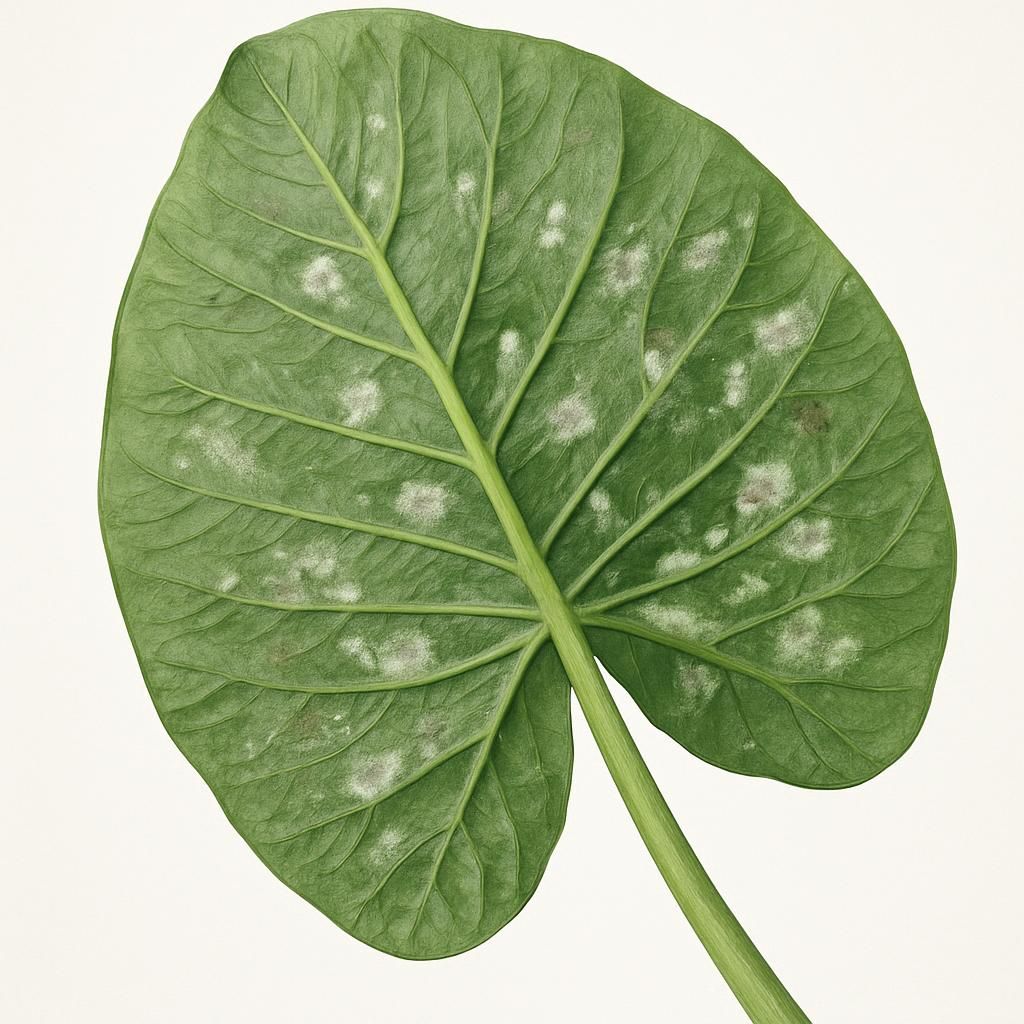
Introduction to Phytophthora colocasiae
Phytophthora colocasiae is a destructive oomycete that causes taro leaf blight, one of the most serious diseases affecting Taro production worldwide. First described in the early 20th century, the pathogen thrives in warm, wet environments and can devastate entire fields within days under favorable conditions. It primarily attacks the leaves and corms of taro, but related Elephant Ear Taro varieties are also susceptible. Losses are especially severe in subsistence and smallholder systems where taro is a staple crop.
The disease is caused by an oomycete rather than a true fungus, which means standard fungicides are often less effective and integrated management is essential. Rapid spread occurs through splashing rain, irrigation water, and contaminated tools or planting material. Because the pathogen produces durable oospores and chlamydospores, it can persist in soil and crop debris for months, making long-term prevention critical.
Identifying Symptoms & Damage
Early symptoms appear as small, water-soaked lesions on the upper leaf surface that quickly expand into large, irregular necrotic areas with yellow halos. Under humid conditions, a fine white downy growth of sporangia develops on the underside of lesions. Severely affected leaves collapse and wither within 4–7 days, giving the canopy a scorched appearance.
On corms, infection produces firm, brown to reddish-brown rots that begin at the base or wounds and may extend through the entire storage organ. Infected corms often develop a characteristic foul odor and are prone to secondary bacterial invasion. Yield reductions range from 30% in mild outbreaks to complete crop failure in epidemic years.
Lifecycle and Progression of Phytophthora colocasiae
The pathogen completes multiple infection cycles during a single growing season, driven by abundant moisture.
| Lifecycle Stage | Description | Duration | Environmental Optimum |
|---|---|---|---|
| Zoospore Release | Motile zoospores swim in free water on leaf surfaces or in soil | Minutes to hours | 20–30 °C, pH 5.5–7.0 |
| Encystment & Germination | Zoospores settle and form germ tubes that penetrate stomata or wounds | 2–6 hours | High humidity (>90% RH) |
| Mycelial Growth | Intercellular hyphae colonize leaf mesophyll and vascular tissue | 3–7 days | 25–28 °C |
| Sporulation | Lemon-shaped sporangia form on lesion surfaces; release new zoospores | 5–10 days | Night temperatures 18–22 °C with dew |
| Oospore Formation | Thick-walled sexual spores produced in decaying tissue for long-term survival | Weeks to months | Cool, moist soil |
| Chlamydospore Survival | Dormant structures in soil and corm debris | Up to 12 months | Wide temperature range |
Environmental Triggers & Risk Factors
High relative humidity above 85% combined with frequent rainfall or overhead irrigation creates the ideal microclimate for epidemic development. Night temperatures between 18 °C and 24 °C favor sporangial production, while daytime temperatures above 30 °C slow lesion expansion but do not eradicate the pathogen.
Poor field drainage, compacted soils, and planting in low-lying areas increase leaf wetness duration. Continuous monoculture of taro without rotation or sanitation allows soil inoculum to accumulate. Use of infected cormels or suckers is the primary means of long-distance spread.
| Factor | Favorable Range | Risk Level |
|---|---|---|
| Soil pH | 5.0–6.5 | Moderate |
| Temperature | 20–28 °C | High |
| Relative Humidity | >85% | Critical |
| Leaf Wetness Duration | >6 hours | Critical |
| Planting Density | >40,000 plants/ha | Moderate |
Organic Control & Treatment Plans
Organic management emphasizes reducing leaf wetness, lowering inoculum, and boosting plant defenses. Begin with certified disease-free planting material and rogue infected plants immediately. Improve drainage by forming raised beds or ridges and avoid overhead irrigation after the vegetative stage.
| Treatment Option | Active Ingredient / Method | Application Frequency | Rate / Notes |
|---|---|---|---|
| Copper Hydroxide | 50% WP foliar spray | Every 7–10 days during wet periods | 2–3 g/L; rotate with other products |
| Potassium Phosphite | 0–28–26 foliar & soil drench | Every 14 days starting at 4-leaf stage | 3–5 mL/L; enhances systemic resistance |
| Compost Tea | Aerated compost extract | Weekly for 4 weeks post-planting | 1:5 dilution; apply as soil drench |
| Neem Oil | Azadirachtin 0.15% EC | Every 10–14 days | 5 mL/L; tank-mix with sticker |
| Trichoderma harzianum | Commercial bio-fungicide | At planting and 30 days later | 5 g/plant mixed with FYM |
| Crop Sanitation | Removal of infected leaves & corms | Continuous | Burn or deep bury debris |
Combine foliar sprays with cultural practices for best results. Alternate copper with phosphite to reduce resistance risk. Monitor weather forecasts and intensify applications when 48-hour leaf-wetness periods are predicted.
Preventing Phytophthora colocasiae in the Future
Long-term prevention relies on resistant cultivars, strict sanitation, and diversified cropping systems. Select varieties such as Taro lines with known field tolerance and obtain planting material only from reputable sources. Implement a minimum three-year rotation with non-host crops such as Rice or Cassava to break the disease cycle.
Maintain wide row spacing (90–120 cm) and orient rows with prevailing winds to promote rapid leaf drying. Mulch with 5–8 cm of organic material to suppress soil splash and moderate soil moisture. After harvest, remove all crop residues and solarize beds for 4–6 weeks where feasible.
Regular scouting every 3–5 days during the rainy season allows early detection and rapid removal of infected plants before widespread sporulation occurs. The Overlooked Art of Crop Rotation for Small Farm Resilience provides additional rotation templates suitable for tropical root-crop systems.
Crops Most Affected by Phytophthora colocasiae
Although taro is the primary host, the pathogen has been reported on several aroid species and occasionally on other tropical crops under high disease pressure.
- Taro (primary host)
- Elephant Ear Taro
- Cassava (minor reports)
- Ginger (rare opportunistic infections)
- Turmeric (occasional leaf lesions)