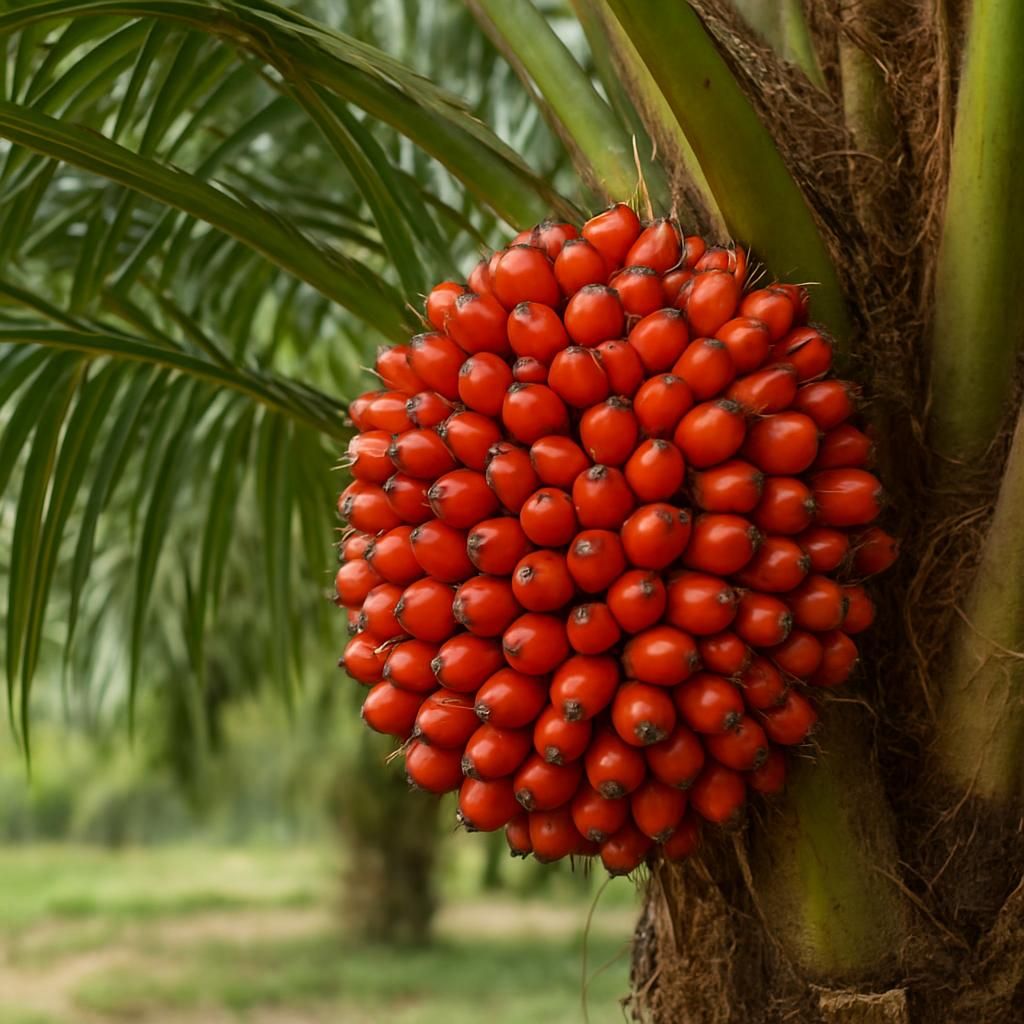
Introduction to Oil Palm Fruit
Oil palm fruit (Elaeis guineensis) is the primary feedstock for the global edible oil and biofuel industries. A single mature hectare can yield 4–6 tonnes of crude palm oil annually when managed under optimal conditions, far exceeding the productivity of most other oilseed crops. The fruit grows in large compact bunches weighing 10–30 kg, each containing thousands of individual drupes that ripen from green to orange-red. Because the crop is perennial, careful establishment and long-term management directly determine farm profitability for decades.
Botanical Profile of Oil Palm Fruit
The oil palm is a single-stemmed, unarmed pinnate-leaved palm reaching 15–20 m at maturity. Leaves are 3–5 m long with 100–200 leaflets arranged on either side of the rachis. The inflorescence is a compound spadix protected by a spathe; female flowers develop into the characteristic fruit. Each fruit consists of a thin exocarp, a thick oily mesocarp (source of palm oil), a hard endocarp (shell), and a white kernel rich in lauric oil. Three botanical varieties exist: dura (thick shell), pisifera (shell-less), and the commercial tenera hybrid (thin shell, high oil).
Soil, pH, and Climate Requirements for Oil Palm Fruit
Oil palm thrives on deep, fertile, well-drained soils with good water-holding capacity. The following table summarizes ideal conditions:
| Parameter | Ideal Range | Notes |
|---|---|---|
| Soil Type | Deep sandy loam to clay loam | Avoid waterlogged or shallow soils |
| Soil pH | 5.0–6.5 | Lime if below 4.5; avoid alkaline soils |
| Annual Rainfall | 2000–2500 mm, evenly distributed | Supplemental irrigation needed if dry spells exceed 3 months |
| Temperature | 24–32 °C mean monthly | Growth ceases below 15 °C or above 35 °C |
| Altitude | 0–500 m a.s.l. | Higher elevations reduce bunch production |
| Relative Humidity | 70–90 % | Essential for pollination and fruit set |
Step-by-Step Planting & Propagation
- Select certified tenera hybrid seedlings from reputable nurseries to ensure 25–30 % higher oil yield than dura.
- Prepare land by clearing vegetation, constructing drainage, and establishing legume cover crops such as Pueraria or Gliricidia to build soil nitrogen.
- Plant at 9 m triangular spacing (143 palms/ha) during the onset of the rainy season.
- Dig 60 cm × 60 cm × 60 cm pits; mix topsoil with 10 kg compost and 200 g rock phosphate before planting.
- Plant seedlings so the collar sits 5 cm above soil level; water immediately and apply mulch.
- Provide temporary shade for the first 3–6 months and replace casualties within the first year.
Care & Maintenance regimes for Oil Palm Fruit
Consistent nutrient supply and canopy management are critical. The following table outlines recommended schedules:
| Operation | Frequency | Details |
|---|---|---|
| Watering | Weekly in dry season | 150–200 L/palm/week via drip; maintain soil moisture at 60–70 % field capacity |
| Fertilizer | 4 applications/year | Year 1: 0.5 kg NPK 15-15-15/palm; increase to 2.5–3.5 kg by year 8; split doses at start and mid-rainy season; supplement with 1 kg kieserite and 50 g borax annually |
| Pruning | Every 6–8 weeks | Remove 1–2 oldest fronds and all male inflorescences after pollination; maintain 35–40 functional leaves per palm |
Pests, Diseases & Organic Management
Key threats include the rhinoceros beetle, red palm weevil, termites, and basal stem rot caused by Ganoderma. Implement an integrated approach: pheromone traps for adult beetles, removal of breeding sites, and application of entomopathogenic fungi such as Metarhizium. For Ganoderma, excavate and burn infected stumps, then plant resistant material and maintain good drainage. Regular monitoring and early rogueing of infected palms prevent spread.
Harvesting, Curing & Optimal Storage
Harvest when 5–10 loose fruits per bunch appear on the ground, typically 150–180 days after anthesis. Cut bunches with a chisel or sickle attached to a long pole; lower carefully to avoid bruising. Transport to the mill within 24 hours to minimize free fatty acid buildup. At the mill, sterilize bunches at 140 °C for 60–90 minutes, strip, digest, and press to extract crude palm oil. Store crude oil at 40–50 °C in nitrogen-flushed tanks to prevent oxidation; kernels are dried to 7 % moisture and stored in ventilated silos.
Companion Planting for Oil Palm Fruit
Inter-row planting of leguminous cover crops such as Pueraria phaseoloides and Mucuna improves soil nitrogen, suppresses weeds, and reduces erosion. In young plantations, short-term intercrops such as banana, pineapple, or soybeans can generate early income without competing with palms after canopy closure. Avoid tall or heavy feeders that shade the palm crowns.