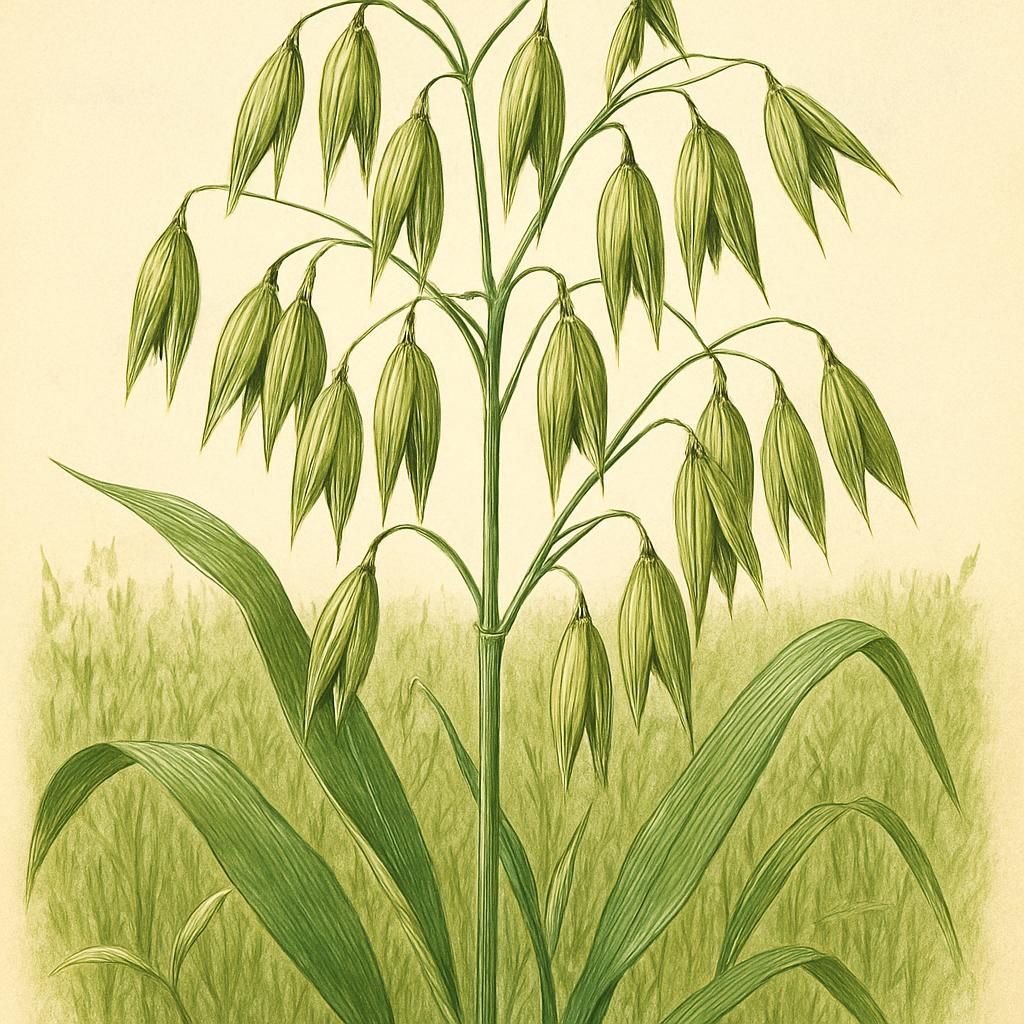
Introduction to Oat (Hull-less Terra)
Oat (Hull-less Terra) represents a unique variant of traditional oats, characterized by a minimal hull, which simplifies harvesting and processing. This cultivar is particularly popular among health-conscious consumers and those seeking gluten-free grains. As part of the Avena genus, Hull-less Terra is not only valuable for its nutritional profile but also for its adaptability to various agro-climatic conditions, making it a staple crop for diverse geographies.
Botanical Profile of Oat (Hull-less Terra)
Oat (Hull-less Terra) belongs to the Poaceae family, known widely for cereal grains. Unlike its heavily hulled counterparts, this variety undergoes less intensive processing, maintaining more nutrients. It grows to about three feet tall and showcases thin, elongated leaves typical of grasses. The seed heads or panicles host multiple seeds, which mature approximately 60-90 days after planting.
Soil, pH, and Climate Requirements for Oat (Hull-less Terra)
To thrive, Oat (Hull-less Terra) requires well-drained soils with a good amount of organic matter. It's adaptable to a variety of pH levels but performs best within a neutral range.
| Factor | Ideal Conditions |
|---|---|
| Soil Type | Loamy, Well-drained |
| Soil pH | 6.0 - 7.5 |
| Temperature | 10°C - 25°C |
| Rainfall | 500 - 750 mm annually |
Step-by-Step Planting & Propagation
Begin by preparing the soil with tilling to ensure it's loose and aerated. Aim for a planting depth of 2-3 cm with a plant spacing of about 15 cm apart. Seeding should occur in early spring or late fall to avoid extreme temperatures. Use a broadcast seeder or drill for uniform distribution.
- Soil Preparation: Till the land, adding compost or a balanced fertilizer.
- Seed Selection: Choose certified Hull-less Terra seeds for better yields.
- Planting: Sow seeds directly into the prepared soil.
- Watering: Keep the soil moist till germination.
- Thinning: Once the plants are a few inches tall, thin them to the recommended spacing.
Care & Maintenance Regimes for Oat (Hull-less Terra)
Proper care involves consistent watering, weed management, and monitoring for pest infestations.
| Activity | Frequency |
|---|---|
| Watering | Weekly or as required during dry spells |
| Fertilizing | Bi-monthly with a balanced NPK |
| Weeding | As needed, during early growth |
Pests, Diseases & Organic Management
Oat (Hull-less Terra) can be susceptible to pests like aphids and diseases such as rusts or mildew. Organic management techniques include the introduction of beneficial insects and crop rotation to mitigate disease spread.
Consider reading Crop Diseases Under the Microscope: 9 Organic Fixes for Small Farm Resilience for further insights on organic management.
Harvesting, Curing & Optimal Storage
Harvest Oat (Hull-less Terra) when the grain moisture content is around 15%. Drying is crucial post-harvest to prevent mold. Store in a cool, dry place to maintain quality.
Companion Planting for Oat (Hull-less Terra)
Companion planting with legumes such as Chickpeas or Lentils can improve soil fertility through nitrogen fixation. Rotating with Barley or Wheat can help break pest cycles and enhance soil structure.
Learn more about strategic planting methods in Crop Rotation Realities: 6 Organic Patterns That Deliver for Small Farms.