Introduction to Bretziella fagacearum
Bretziella fagacearum, formerly classified as Ceratocystis fagacearum, is the causative agent of oak wilt, one of the most destructive diseases affecting oak trees in North America. This vascular wilt pathogen invades the xylem, blocking water transport and triggering rapid decline. The disease poses significant threats to both natural forests and urban landscapes, where mature oaks provide critical ecological and aesthetic value. Early identification and integrated management are essential to limit spread and preserve oak populations.
Identifying Symptoms & Damage
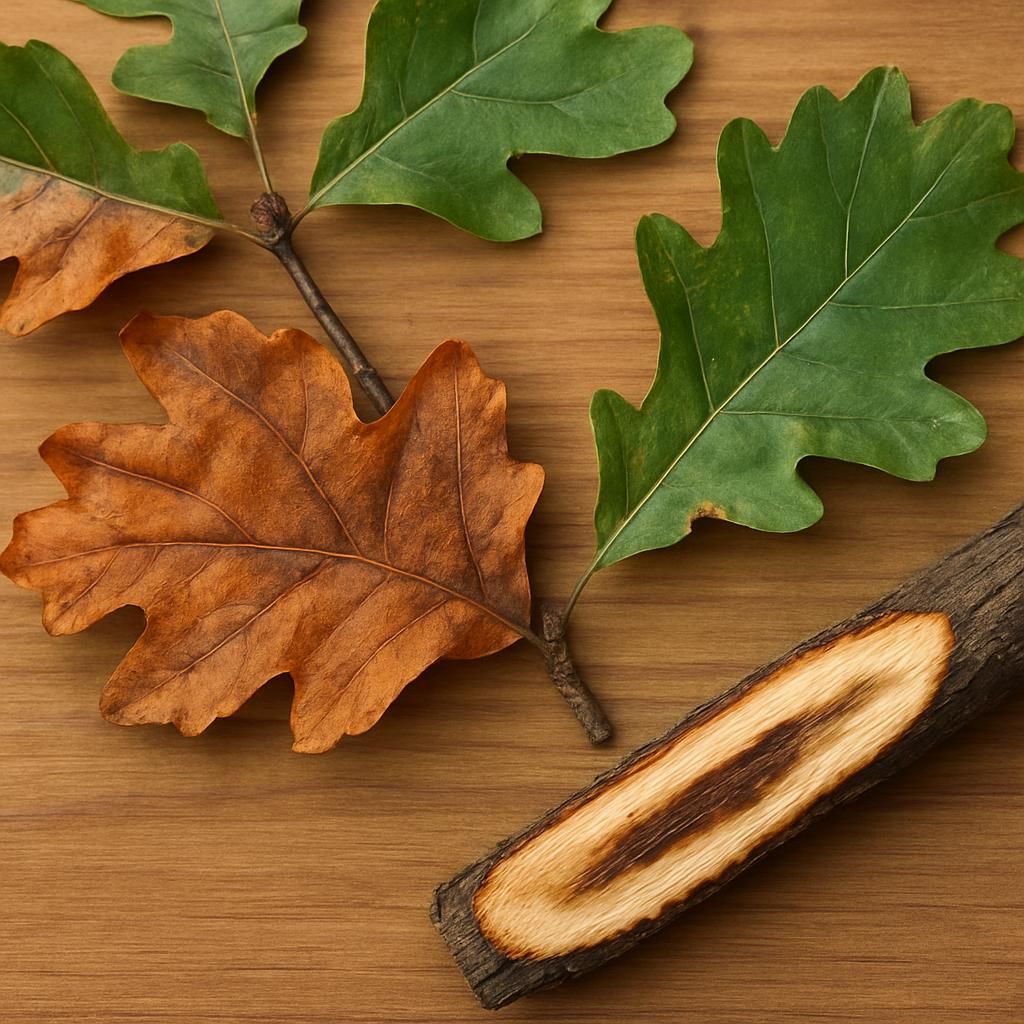
Infected trees exhibit distinct symptoms that progress rapidly. Initial signs include wilting and bronzing of leaves, often beginning at the crown and moving downward. Leaves may develop water-soaked margins that turn brown or tan while veins remain green initially. Premature defoliation occurs within weeks, accompanied by vascular discoloration visible as brown streaking in the sapwood when bark is removed. In red oaks, mortality can occur in as little as two to six weeks, while white oaks may survive longer but eventually succumb. Secondary symptoms include bark cracking and the formation of pressure pads under the bark that eventually rupture, exposing fungal mats attractive to insect vectors.
Lifecycle and Progression of Bretziella fagacearum
The pathogen completes its lifecycle through a combination of insect vectors and root-to-root transmission. Spores produced in fungal mats on infected trees are carried by nitidulid beetles to fresh wounds on healthy oaks. Root grafts between adjacent trees allow direct spread belowground, creating expanding infection centers. Environmental conditions influence both sporulation and beetle activity.
| Lifecycle Stage | Description | Typical Duration | Key Conditions |
|---|---|---|---|
| Fungal Mat Formation | Mycelium produces pressure pads and sporulating mats beneath bark | 2-6 weeks after infection | Warm temperatures (20-30°C), high humidity |
| Insect Vector Transmission | Nitidulid beetles carry spores to fresh wounds on healthy trees | Peak activity spring through fall | Fresh wounds, beetle emergence |
| Root Graft Spread | Hyphae move through interconnected root systems | Ongoing, year-round | Proximity of oaks (within 15-20 m) |
| Xylem Colonization | Pathogen invades water-conducting vessels, causing wilting | Days to weeks | Active transpiration, spring growth |
| Tree Mortality | Complete vascular blockage leads to crown death | 2-8 weeks in red oaks | High disease pressure, stressed trees |
Environmental Triggers & Risk Factors
Oak wilt outbreaks are strongly influenced by climate, tree density, and human activity. Warm spring and early summer temperatures accelerate both fungal sporulation and nitidulid beetle activity. Periods of drought stress increase tree susceptibility by reducing defensive resin production. High oak density promotes root graft transmission, while mechanical wounding from pruning, construction, or storms creates entry points. Soil compaction and poor drainage further weaken trees, elevating infection risk. The disease is most severe in the eastern and central United States where red oak species predominate.
Organic Control & Treatment Plans
Management focuses on sanitation, barrier creation, and cultural practices rather than curative chemical treatments. Infected trees must be removed promptly and processed to destroy fungal mats. Root disruption using vibratory plows or trenching creates physical barriers that limit underground spread. Wound protection and timing of pruning are critical to reduce vector access. Organic approaches emphasize maintaining tree vigor through proper mulching, watering during drought, and avoiding unnecessary wounding.
| Treatment Option | Method | Frequency | Notes |
|---|---|---|---|
| Sanitation Removal | Fell and chip or burn infected trees before fungal mats form | Within 2-4 weeks of symptom detection | Prevents beetle transmission |
| Root Disruption | Install vibratory plow or trench barriers 1-1.5 m deep | Once per infection center | Effective for 3-5 years |
| Wound Protection | Apply organic wound dressings or avoid pruning April-July | As needed, especially spring | Reduces vector entry |
| Mulching & Watering | Apply 5-10 cm organic mulch and supplemental irrigation during drought | Annually or during dry spells | Improves tree resilience |
| Monitoring & Early Detection | Regular scouting and lab confirmation of vascular streaking | Spring through fall | Enables rapid response |
Preventing Bretziella fagacearum in the Future
Long-term prevention relies on proactive cultural practices and landscape design. Plant diverse, non-oak species in high-risk areas to reduce monoculture vulnerability. Maintain strict pruning schedules outside the high-risk spring and early summer window. Educate property owners and arborists about proper wound care and sanitation protocols. In new plantings, space oaks at least 20 meters apart to minimize root graft potential. Regular soil health assessments and organic amendments support robust tree defenses. Integrating these practices with ongoing monitoring creates resilient landscapes less prone to catastrophic outbreaks.
Crops Most Affected by Bretziella fagacearum
While Bretziella fagacearum primarily targets oak species, its impact extends to landscapes containing mixed hardwoods where oaks serve as keystone components. Oak species, particularly members of the red oak group such as Northern Red Oak and Pin Oak, suffer the highest mortality rates. White oaks demonstrate greater tolerance but remain susceptible. Secondary effects include loss of habitat for wildlife dependent on acorn production and altered forest composition favoring non-oak species. In agricultural settings adjacent to infected woodlands, care must be taken during land clearing to avoid creating new infection centers. No major food crops are directly affected, but the disease significantly influences agroforestry systems incorporating oak windbreaks or timber production.