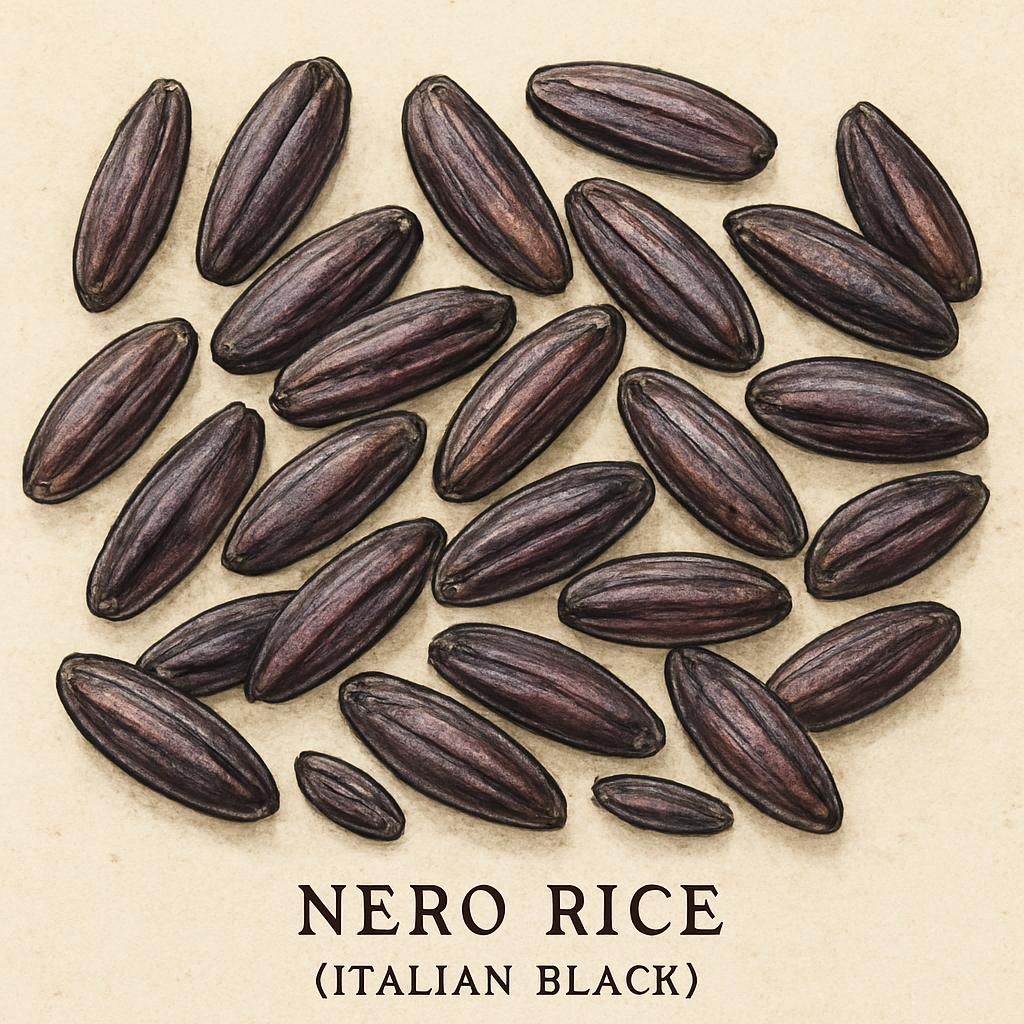
Introduction to Nero Rice (Italian Black)
Nero Rice, often referred to as Italian Black Rice, is a distinguished variety of rice known for its deep purplish-black hue. This unique pigmentation contributes not only to its visual appeal but also to its rich nutritional profile, packed with antioxidants and dietary fiber. Originating from Italy, it is cherished for its nutty flavor and slightly chewy texture, making it an exquisite choice for a variety of culinary applications.
Botanical Profile of Nero Rice (Italian Black)
Nero Rice belongs to the species Oryza sativa L., a key member of the Poaceae family. This annual grass is cultivated mainly for its edible grains. The black color of the grains is attributed to the high anthocyanin content, which acts as a natural antioxidant.
Soil, pH, and Climate Requirements for Nero Rice (Italian Black)
Growing Nero Rice requires specific environmental conditions to ensure a successful harvest. Here are the ideal conditions for cultivation:
| Requirement | Ideal Condition |
|---|---|
| Soil Type | Silty or loamy |
| Soil pH | 6.0 - 7.0 |
| Temperature | 20°C - 35°C |
| Rainfall | 1000 - 1500 mm/year |
| Sunlight | Full sun |
Step-by-Step Planting & Propagation
- Seed Selection and Preparation: Choose high-quality seeds from a reputable supplier. Soak the seeds in water for 24 hours before planting to promote germination.
- Land Preparation: Plow the field to a depth of about 15-20 cm to aerate the soil and incorporate organic matter. Level the field to ensure uniform water distribution.
- Sowing: Sow the seeds directly into prepared paddies or start in nurseries and transplant the seedlings when they reach 15-20 cm in height.
- Spacing: Ensure appropriate spacing of 25 cm between rows to allow ample growth space and air circulation.
Care & Maintenance regimes for Nero Rice (Italian Black)
Proper care and maintenance are crucial for optimizing yield. Follow this schedule:
| Activity | Frequency |
|---|---|
| Watering | Regular, maintain 2-5 cm water level at all times |
| Fertilization | NPK 20:20:15 ratio at 3 stages - at planting, vegetative stage, and at early flowering |
| Weeding | Every 10-15 days |
| Pest Inspection | Weekly |
Pests, Diseases & Organic Management
Nero Rice, like other rice crops, is susceptible to pests and diseases such as spider mites and phytophthora. Employ organic management strategies such as:
- Biological Control: Use natural predators like ladybugs to manage pest populations.
- Organic Pesticides: Neem oil and other organic formulations can deter pests without harming beneficial insects.
Harvesting, Curing & Optimal Storage
Nero Rice typically matures in about 120-150 days. Harvest the rice when grains are fully mature but not overly dry.
- Curing: Allow harvested rice to dry in the sun for 2-3 days to reduce moisture content to 12%.
- Storage: Store in a cool, dry place in airtight containers to prevent pest infestations and moisture uptake.
Companion Planting for Nero Rice (Italian Black)
Companion planting with crops like chickpeas or mung beans can improve soil nitrogen levels due to their nitrogen-fixing abilities. Avoid planting near tall crops that may block sunlight, necessary for optimal rice growth.
For further insights into optimizing crop health, consider reading about The Forgotten Art of Fall Soil Revival: 8 Organic Strategies for Small Farm Resilience.
For more about rice varieties and cultivation techniques, visit Rice on Wikipedia.