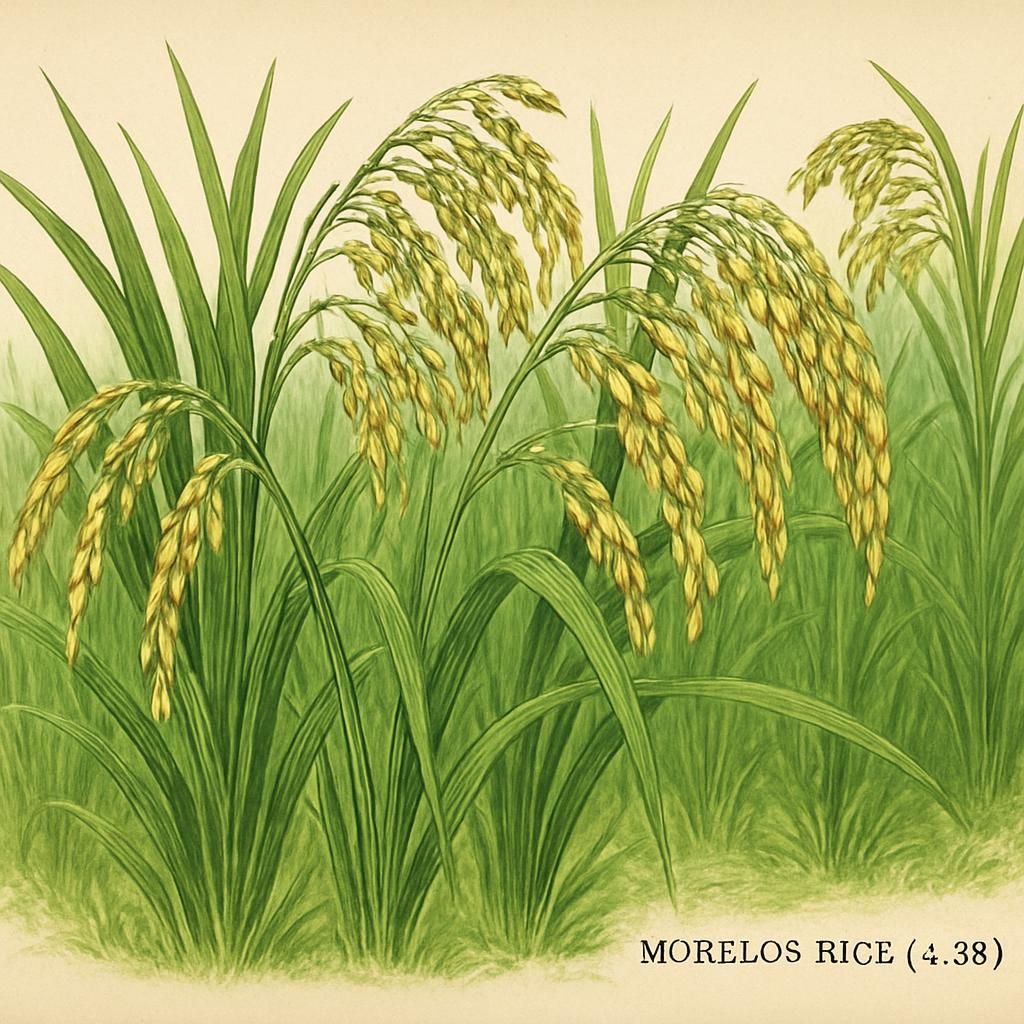
Introduction to Morelos Rice (A-98)
Morelos Rice, known scientifically as Oryza sativa, is a staple that is cherished for its distinct flavor and adaptability to various growing conditions. Originating from the Morelos region of Mexico, Morelos Rice (A-98) is specifically bred for its yield and resilience.
Botanical Profile of Morelos Rice (A-98)
As a variety of Oryza sativa, the Morelos Rice (A-98) exhibits key characteristics such as medium grain size and a rich aroma. It grows in a stalky form reaching heights of up to 1.2 meters and features lush, green foliage.
Soil, pH, and Climate Requirements for Morelos Rice (A-98)
Morelos Rice thrives in specific environmental conditions that encourage optimal growth.
| Factor | Ideal Condition |
|---|---|
| Soil Type | Loamy, well-drained with good moisture retention |
| pH Level | 5.5 to 7.0 |
| Temperature | 20°C to 35°C (68°F to 95°F) |
| Rainfall | 1000-1500 mm annually |
Morelos Rice (A-98) prefers a warm, tropical climate with sufficient rainfall or irrigation to maintain wet soil conditions.
Step-by-Step Planting & Propagation
- Soil Preparation: Begin by plowing the field to a depth of 15-20 cm. Remove any debris to ensure unobstructed seedling growth.
- Sowing: Use certified and treated seeds to enhance growth and disease resistance. Direct seeding or transplanting methods can be used depending on the availability of resources.
- Spacing and Plant Layout: Maintain rows spaced 20-25 cm apart, planting seeds 10 cm away from each other.
- Flooding: Ensure the rice paddies are flooded with water to a shallow depth to prevent weed growth and support the seedlings.
Care & Maintenance regimes for Morelos Rice (A-98)
Caring for Morelos Rice involves specific management practices to ensure a healthy yield.
| Aspect | Schedule and Quantity |
|---|---|
| Watering | Maintain shallow flooded conditions until grain formation |
| Fertilizer | Apply nitrogen-rich fertilizer at 30 kg/ha every 4 weeks |
| Pruning | Not Applicable |
Regular monitoring for pest infestations and nutrient management is crucial for a healthy crop.
Pests, Diseases & Organic Management
Morelos Rice is susceptible to common issues such as Spider Mites and diseases like blast. Implementing integrated pest management (IPM) practices and using neem oil or beneficial nematodes can be effective organic strategies.
For specific guidelines on dealing with diseases, refer to Crop Diseases Under the Microscope: 9 Organic Fixes for Small Farm Resilience.
Harvesting, Curing & Optimal Storage
Harvest Morelos Rice approximately 120 days after planting, when the grain has hardened and moisture content is reduced to about 20%. Curing involves drying the grains to a moisture content of 12% to prevent spoilage. Store in cool, dry conditions to maintain quality over time.
Companion Planting for Morelos Rice (A-98)
Effective companion planting includes crops that help repel pests, enhance soil nutrients, or provide ground cover. An example is planting Lychee nearby, which can support a diverse ecosystem that fosters rice health.
For more organic patterns in companion planting, read the Spring Companion Planting: 8 Organic Pairings to Maximize Small Farm Yields.