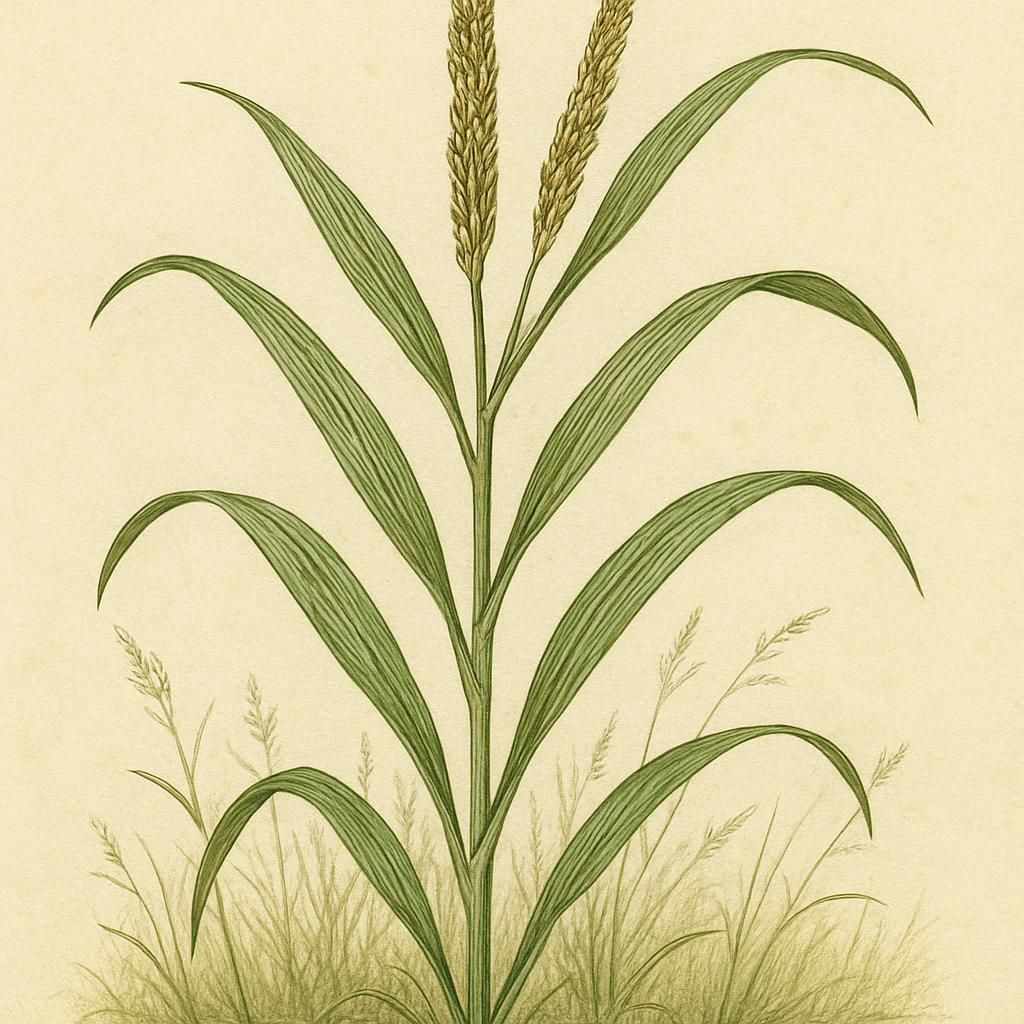
Introduction to Maize (Teosinte - Balsas)
Maize (Teosinte - Balsas) is a grass native to the Balsas River Valley in southwestern Mexico. This wild grass is pivotal in the study of maize domestication, serving as the progenitor of modern corn (Corn). The ancient transformation of teosinte into the maize varieties we know today is a crucial chapter in agricultural history, illustrating how selective breeding has reshaped crops to suit human needs.
Botanical Profile of Maize (Teosinte - Balsas)
The botanical species Zea mays spp. parviglumis, commonly known as Balsas teosinte, is characterized by its tall stature, up to 3 meters, with narrow leaves and a profusion of spikes or tassels. The seeds of teosinte are encased in hard, triangular fruitcases, quite distinct from the exposed kernels of modern maize. These fruitcases are an evolutionary defense against being eaten by animals, allowing seeds to disperse and germinate successfully.
Soil, pH, and Climate Requirements for Maize (Teosinte - Balsas)
Esteemed for its adaptability, teosinte grows in various conditions, yet prefers loamy, well-draining soils. It thrives in regions with warm temperatures and sufficient rainfall. Below is a table outlining its ideal growth conditions:
| Condition | Ideal Range |
|---|---|
| Soil Type | Loam, well-draining |
| pH Level | 5.5 - 7.0 |
| Temperature | 15°C - 30°C |
| Rainfall | 800 - 1500 mm annually |
Step-by-Step Planting & Propagation
Seed Selection: Choose high-quality seeds from a reputable source to ensure genetic purity and vigor.
Soil Preparation: Prepare the soil by tilling to enhance aeration and drainage. Apply organic compost to improve fertility.
Sowing: Plant seeds approximately 2.5 cm deep and 30 cm apart in rows spaced 90 cm apart. This spacing allows adequate room for growth and sunlight penetration.
Watering: Water immediately after sowing to aid germination. Maintain consistent moisture without waterlogging.
Germination: Expect seeds to germinate within 7-14 days, depending on environmental conditions.
Care & Maintenance Regimes for Maize (Teosinte - Balsas)
Proper care and maintenance are crucial for successful cultivation. Below is a schedule for water, fertilization, and pruning to maintain healthy growth:
| Task | Schedule |
|---|---|
| Watering | Weekly, increase in dry periods |
| Fertilizer | Every 4-6 weeks, balanced NPK |
| Pruning | Trim dead/diseased leaves as needed |
Pests, Diseases & Organic Management
Teosinte, like its modern relatives, can be susceptible to several pests and diseases. Key threats include Spider Mites and fungal infections. Integrated pest management (IPM) strategies, such as introducing natural predators and using organic fungicides, are effective in managing these issues. Read more about organic pest management techniques in the 7 Summer Pest Traps That Sabotage Small Farm Harvests.
Harvesting, Curing & Optimal Storage
Teosinte takes about 4-6 months to mature fully. Harvest when seeds are hard and difficult to dent with a fingernail. Traditionally, stalks are cut close to the ground and left to dry under sun-dry conditions. Once cured, seeds can be stored in a cool, dry place, protected from moisture and pests, for future planting or genetic studies.
Companion Planting for Maize (Teosinte - Balsas)
Companion planting enhances the growth of teosinte by optimizing resource use, controlling pests, and improving yields. Suitable companions include legumes like Soybeans which fix nitrogen in the soil, and Beans that support teosinte stalks when winds are strong. For more companion planting strategies, refer to our blog post Summer Companion Planting: 10 Organic Pairings to Boost Small Farm Resilience.