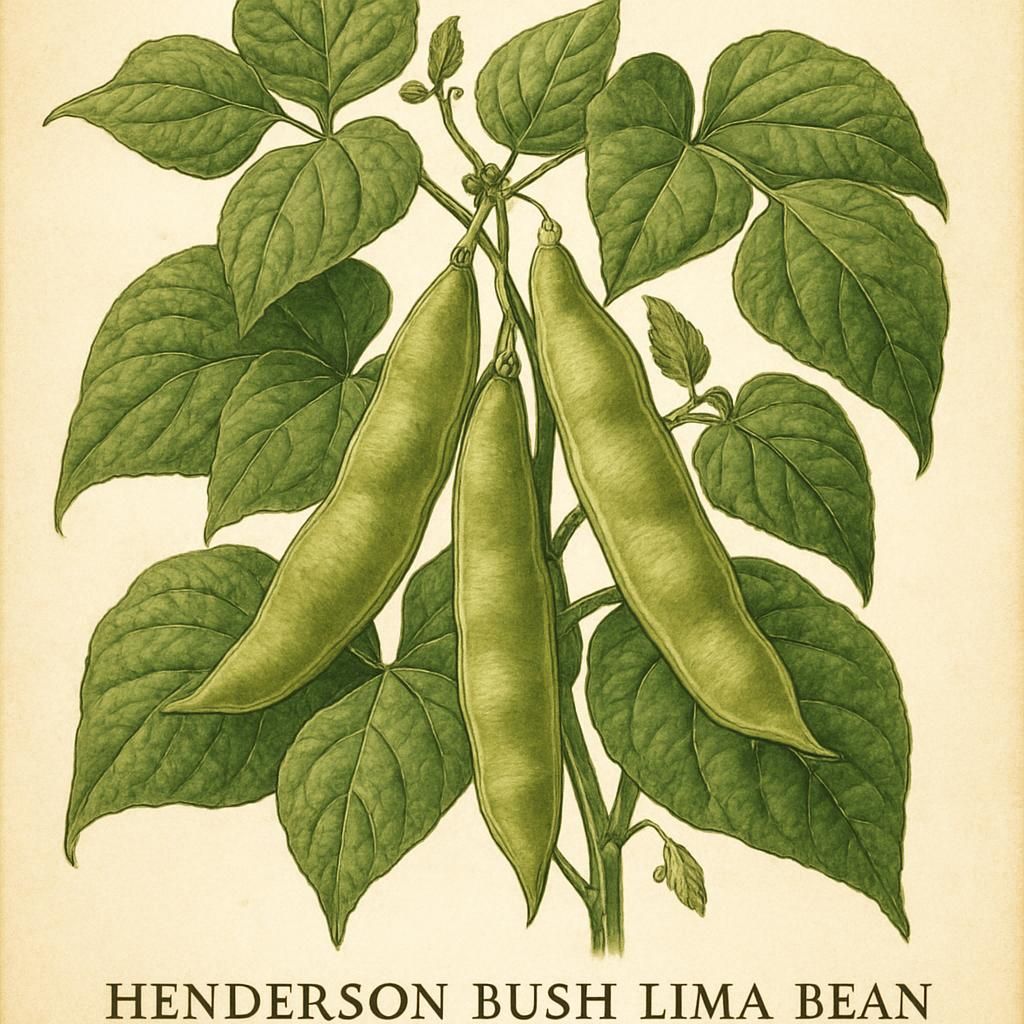
Introduction to Lima Bean (Henderson Bush)
The Lima Bean (Henderson Bush) is a compact and prolific variant of the traditional Lima bean, renowned for its excellent yield and rich, buttery texture. Unlike pole varieties, the Henderson Bush type requires less support and space, making it ideal for small gardens and intensive planting systems. Known for its resilience and ability to produce abundant yields even in less-than-ideal conditions, this bean variety is a staple for both home gardeners and commercial farmers looking to capitalize on limited space.
Botanical Profile of Lima Bean (Henderson Bush)
Family and Origins
Belonging to the Fabaceae family, the Lima Bean (Henderson Bush) is native to Central America, where it thrives in warm climates. As a legume, it naturally enriches soil with nitrogen, promoting soil health and sustainability in crop rotations.
Plant Characteristics
This bush-type plant typically reaches a height of 12 to 20 inches, with a spread of 15 to 24 inches. Its dense foliage provides ample shade for the soil, reducing weed growth and moisture evaporation. Lima beans in this category are distinguishable by their flat, kidney-shaped seeds that mature to a cream color.
Soil, pH, and Climate Requirements for Lima Bean (Henderson Bush)
The optimal growth and productivity of Lima Bean (Henderson Bush) rely on understanding its environmental needs. Below is a table that outlines these specific requirements:
| Aspect | Recommended Condition |
|---|---|
| Soil Type | Well-draining loam |
| pH Level | 6.0 to 6.8 |
| Temperature Range | 70°F to 85°F (21°C to 29°C) |
| Sunlight | Full sun (6-8 hours of direct sunlight) |
| Rainfall | Moderate; avoid waterlogging |
Explanation
This variety prefers well-draining, nutrient-rich loam soil. Maintaining a pH between 6.0 to 6.8 ensures nutrient availability and promotes healthy plant development.
Step-by-Step Planting & Propagation
Seed Selection
Always choose high-quality seeds certified for Henderson Bush. This ensures strong germination and disease resistance.
Timing
Plant seeds directly in the soil after the last frost date, once the soil temperature consistently reaches 65°F (18°C).
Spacing
Plant seeds about 1 inch deep, spaced 3-4 inches apart. Rows should be 18-24 inches apart to facilitate airflow and ease of harvest.
Germination
Generally, germination occurs within 7 to 14 days. Ensure consistent moisture during this period for best results.
Care & Maintenance Regimes for Lima Bean (Henderson Bush)
To optimize growth, follow these care instructions:
| Task | Details |
|---|---|
| Watering | 1 inch per week; more during dry periods |
| Fertilizing | Low in nitrogen; rich in phosphorus and potassium |
| Pruning | Minimal pruning; remove diseased foliage only |
Explanation
Consistent moisture without waterlogging is vital to prevent root diseases. Use a balanced fertilizer that is low in nitrogen, as excessive nitrogen can reduce pod production.
Pests, Diseases & Organic Management
Common Pests
- Spider Mites: Dry conditions often encourage these. Mitigate by ensuring appropriate humidity and using neem oil.
- Bean Aphid: Organic insecticidal soap can reduce infestations.
Diseases
- Common Blight: Maintain spacing to enhance air circulation and avoid overhead watering.
- Powdery Mildew: Apply sulfur-based solutions and ensure good lighting.
Organic management involves frequent inspections and employing natural deterrents such as interplanting with marigolds to repel pests.
Harvesting, Curing & Optimal Storage
Harvesting
Lima beans reach maturity approximately 60-70 days after planting. Pods should be firm, with beans fully developed yet tender.
Curing
After harvesting, allow pods to dry if the beans are intended for seed saving. For immediate consumption, shell fresh seeds.
Storage
Dried beans can be stored in airtight containers for up to a year. Fresh beans should be refrigerated and consumed within a week.
Companion Planting for Lima Bean (Henderson Bush)
For optimal growth and pest control, consider companion planting:
- Corn: Tall corn provides necessary wind protection.
- Marigold: Known for repelling aphids and nematodes.
- Root Vegetables like Carrot: As these have different soil depth requirements, they do not compete directly for nutrients.
For more about companion planting strategies, check out our blog Spring Companion Planting: 8 Organic Pairings to Maximize Small Farm Yields.
Implementing such strategies will help reduce pest incidences, improve soil health, and increase overall yield efficiency.