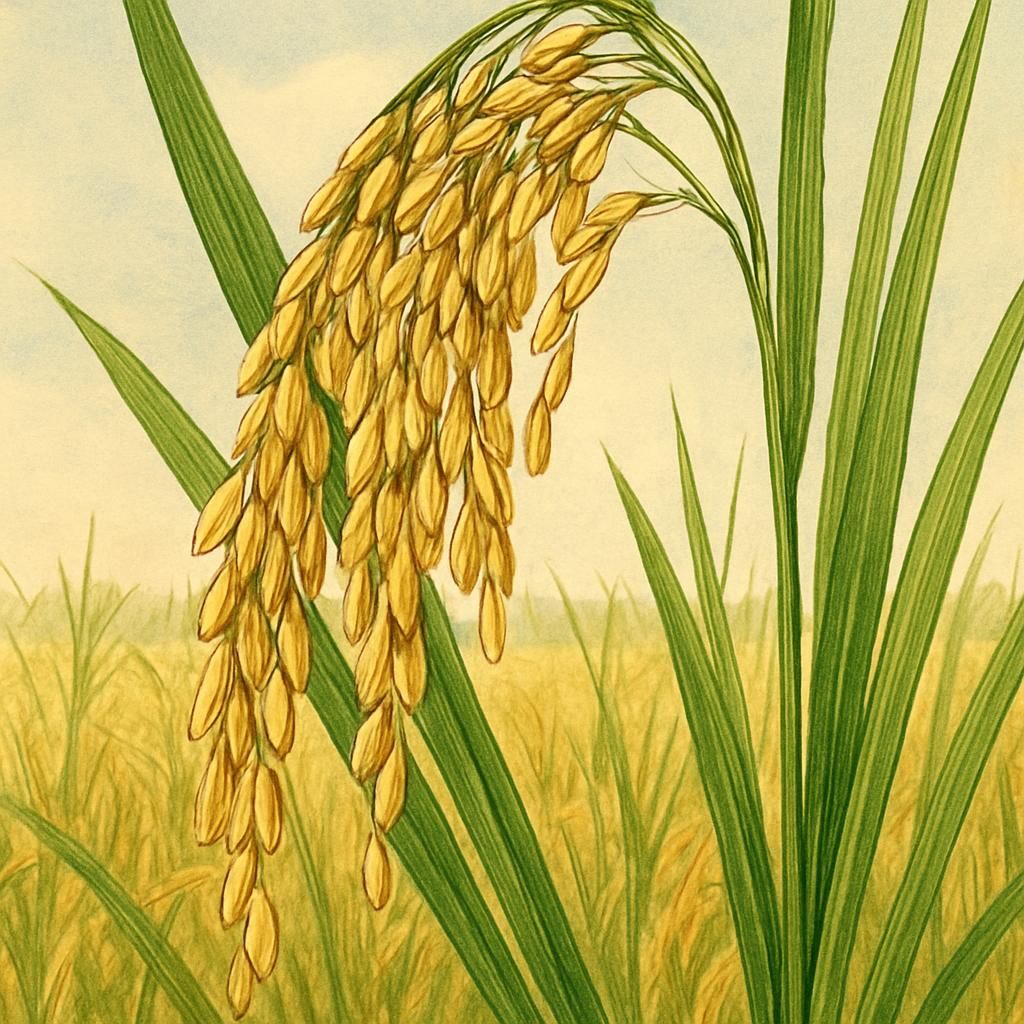
Introduction to Lemont Rice
Lemont Rice is a popular cultivar of Rice known for its high yield and resistance to rice blast, a common rice disease. Developed in the southern United States, this long-grain variety is optimal for areas with warm and humid climates. Its adaptability and robust growth make it a staple for many farmers seeking reliable grain production.
Botanical Profile of Lemont Rice
Scientifically known as Oryza sativa 'Lemont', this rice variety is notable for its robust plant structure. It features erect stems, narrow leaves, and long, dense panicles. With its maturity duration being around 110-130 days, Lemont Rice is a popular choice among cultivators in regions with a suitable growing season.
Soil, pH, and Climate Requirements for Lemont Rice
Lemont Rice thrives in specific soil and climate conditions. It prefers fertile, well-draining soils with adequate water retention capabilities. The ideal pH range is slightly acidic to neutral, which aids in optimal nutrient uptake and growth.
| Condition | Ideal Range |
|---|---|
| Soil Type | Loamy, Clayey |
| Soil pH | 5.5 - 7.0 |
| Temperature | 25°C - 35°C (77°F - 95°F) |
| Rainfall Requirement | 1200mm - 2000mm/year |
This rice variant is typically cultivated in areas with flat terrains to allow for proper irrigation management, a crucial factor for its growth.
Step-by-Step Planting & Propagation
Planting Lemont Rice requires meticulous preparation to ensure successful germination and growth. Here is a step-by-step guide:
- Seed Selection: Choose high-quality Lemont Rice seeds from reputable suppliers to ensure viability and disease resistance.
- Soil Preparation: Till the soil to a fine texture to facilitate root penetration and remove any potential weeds.
- Sowing: Sow seeds at a depth of 1-2 cm (0.39-0.78 inches) with a spacing of 10-15 cm (3.9-5.9 inches) between rows to allow for air circulation and sunlight penetration.
- Water Management: Flood fields 5-10 cm (2-4 inches) deep after sowing to enhance seedling establishment. Maintain water levels consistently throughout the growing season.
- Transplanting: In some cases, seedlings may be started in nurseries and transplanted 20-30 days post-germination.
Care & Maintenance Regimes for Lemont Rice
Proper care and maintenance are crucial to achieving high yields from Lemont Rice crops. This involves regulated watering, fertilization, and timely pruning.
| Task | Schedule |
|---|---|
| Watering | Regular flooding, maintaining 5-10 cm depth |
| Fertilization | Pre-planting and mid-season (NPK 20-20-20) |
| Pruning | Remove dead or diseased leaves monthly |
Maintaining consistent water levels and ensuring nutrient-rich soil are key factors in optimizing crop output.
Pests, Diseases & Organic Management
Lemont Rice, while resistant to some diseases, can still fall prey to pests such as Rice Blast and Spider Mites. Integrated pest management strategies using organic methods can help control infestations:
- Natural Predators: Introduce beneficial insects like predatory beetles to feed on pest populations.
- Neem Oil: Employ neem oil sprays to deter pests organically without harming plants.
- Crop Rotation: Implement crop rotation with non-host plants to break the pest life cycle.
Additionally, organic traps and sanitation practices are useful in preventing disease spread effectively, as detailed in the blog post Crop Diseases Under the Microscope: 9 Organic Fixes for Small Farm Resilience.
Harvesting, Curing & Optimal Storage
Lemont Rice is ready for harvest when 80-85% of the grains have hardened. Typically, this is about 110-130 days after planting:
- Harvesting: Use combine harvesters for efficient collection, minimizing grain damage.
- Curing: Post-harvest, allow the grains to dry in the sun until moisture content is reduced to 12-14% for safe storage.
- Storage: Store rice in cool, dry conditions in airtight containers to protect from pests and moisture-induced spoilage.
Companion Planting for Lemont Rice
Companion planting plays a pivotal role in sustainable agriculture by enhancing growth and deterring pests. Suitable companion plants for Lemont Rice include:
- Clover: Enhances nitrogen fixation in the soil.
- Thyme: Deters insect pests and enhances the aroma of rice.
To explore further on companion planting, refer to the blog post Summer Companion Planting: 10 Organic Pairings to Boost Small Farm Resilience.
By adhering to these guidelines, farmers can optimize yield and quality of Lemont Rice while practicing sustainable agriculture.