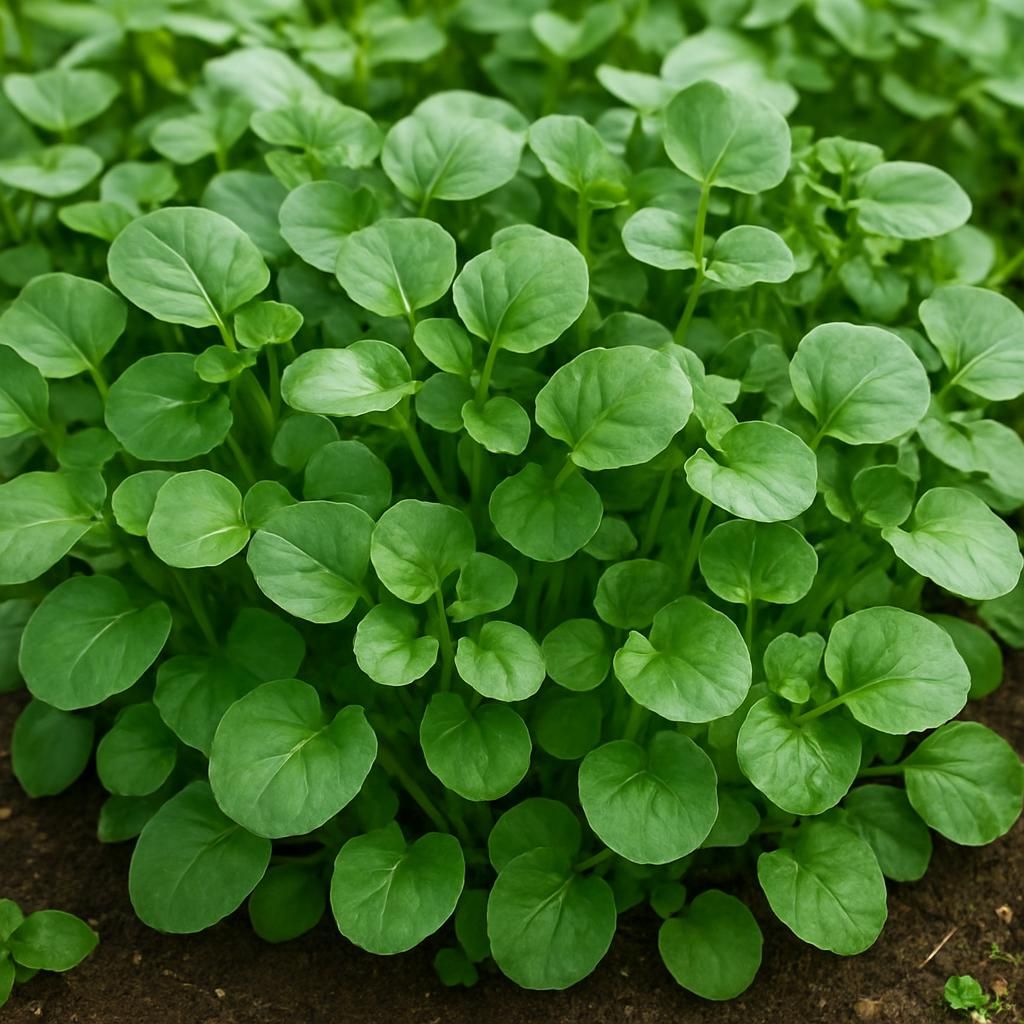
Introduction to Land Cress
Land Cress, scientifically known as Barbarea verna, is a vigorous and flavorful leafy green vegetable belonging to the Brassicaceae family. Known as American Cress, it is often utilized in salads and as a garnishing due to its peppery flavor reminiscent of watercress. Unlike watercress, which requires constant moisture, land cress is hardy and less demanding, making it an ideal leafy vegetable for gardeners who seek low-maintenance crops.
Botanical Profile of Land Cress
Land Cress is a biennial plant, meaning it has a two-year life cycle. In its first year, it forms a rosette of rich green leaves, while in the second year, it produces flowers and seeds. The plant can reach up to 12 inches in height and presents small yellow flowers similar to those of mustard. Its deep green leaves are slightly lobed and can be harvested continuously.
Soil, pH, and Climate Requirements for Land Cress
Land Cress is adaptable but performs best in specific conditions. It prefers a well-drained soil rich in organic matter. It thrives in cooler climates and can tolerate light frost, making it suitable for fall and winter planting.
| Condition | Ideal Range |
|---|---|
| pH Level | 6.0 - 7.5 |
| Soil Type | Loamy, well-drained, organic-rich |
| Temperature | 45-75°F (7-24°C) |
Step-by-Step Planting & Propagation
1. Seed Preparation
Purchase quality land cress seeds from a reputable supplier. Fresh seeds enhance germination rates, thereby ensuring a healthy crop.
2. Soil Preparation
Choose a site that receives at least partial sunlight and enrich the soil with compost or well-rotted manure to boost nutrient availability.
3. Sowing Seeds
Sow seeds directly into the prepared bed spacing them 4-6 inches apart to accommodate plant growth. Cover with a thin layer of fine soil and water gently.
4. Thinning
Once seedlings are 2-3 inches tall, thin them to allow 6-12 inches between plants.
5. Maintenance
Water regularly to keep the soil moist but not waterlogged. Mulching can help retain moisture.
Care & Maintenance regimes for Land Cress
Routine care ensures healthy growth. This includes consistent watering, strategic fertilization, and timely pruning.
| Aspect | Regimen |
|---|---|
| Watering | Regularly, maintain soil moisture but avoid overwatering. |
| Fertilizer | Every 4-6 weeks using a balanced, organic fertilizer. |
| Pruning | Harvest leaves regularly to promote bushy growth. |
Pests, Diseases & Organic Management
Although land cress is generally resilient, it can fall prey to common pests like Aphids and Spider Mites. Diseases, such as powdery mildew, can also occur.
- Organic Solutions:
- Use neem oil or insecticidal soap against pests.
- Practice crop rotation to avoid disease buildup.
- Promote airflow by spacing plants adequately.
For more insect-specific advice, check this article: 7 Summer Pest Traps That Sabotage Small Farm Harvests.
Harvesting, Curing & Optimal Storage
Harvest land cress leaves when they are young and tender for best flavor—commonly around 4-6 weeks after sowing. Use sharp scissors to cut leaves 1 inch above the soil. Cured leaves can be stored in the fridge for about a week in a moisture-retaining bag.
Companion Planting for Land Cress
Integrate land cress in a companion planting regimen to maximize yield and deter pests. Suitable companions include nasturtiums, which repel pests, and Radish, known to alleviate overwintering pests. These partnerships leverage the benefits of biodiversity.
For more on strategic planting, see this article: Summer Companion Planting: 10 Organic Pairings to Boost Small Farm Resilience.