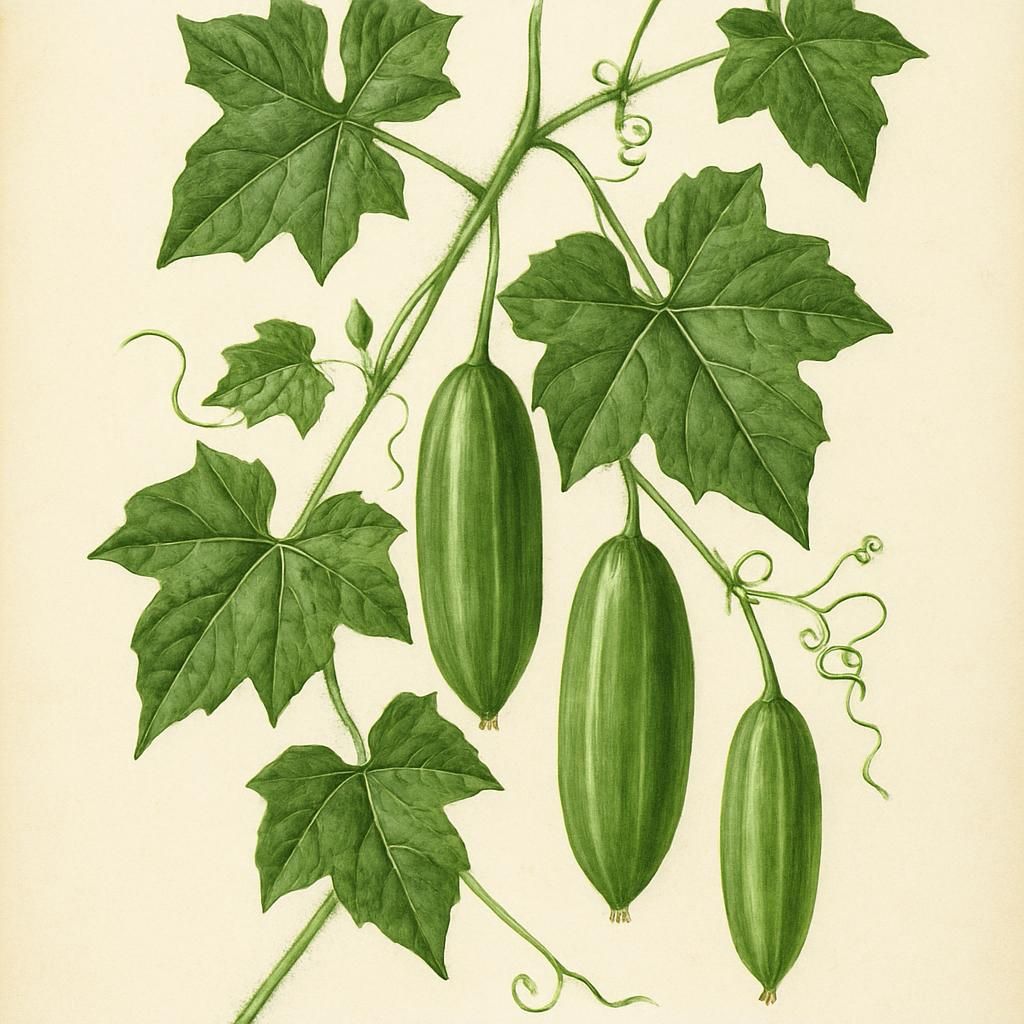
Introduction to Ivy Gourd (Kundru)
Ivy Gourd, commonly known as Kundru, is a perennial climbing plant widely grown for its nutritious green fruits. Native to tropical regions of Africa and Asia, this crop thrives in warm, humid climates. It is a staple in many kitchens, particularly in Indian and Southeast Asian cooking, where it is used in a variety of dishes for its crisp texture and mild flavor.
Botanical Profile of Ivy Gourd (Kundru)
The scientific name of Ivy Gourd is Coccinia grandis. It belongs to the Cucurbitaceae family, which also includes cucumbers and pumpkins. The plant features heart-shaped leaves, white flowers, and elongated fruits with bright red seeds when mature. Ivy Gourd is known for its extensive spread, making it suitable for trellised cultivation.
Soil, pH, and Climate Requirements for Ivy Gourd (Kundru)
Ivy Gourd grows best in well-drained sandy loam soil with a neutral to slightly alkaline pH. It requires a warm climate with plenty of sunlight to flourish. Below is a table summarizing the ideal conditions for growing Ivy Gourd:
| Condition | Ideal Range |
|---|---|
| Soil Type | Sandy loam |
| Soil pH | 6.0 - 7.5 |
| Temperature | 25°C - 35°C (77°F - 95°F) |
| Rainfall | 750 - 1500 mm annually |
Step-by-Step Planting & Propagation
Propagation
- Selecting Seeds or Cuttings: Ivy Gourd can be grown from seeds or cuttings. Cuttings are preferred as they establish more quickly.
- Preparing Cuttings: Use semi-hardwood cuttings about 6-8 inches long. Ensure at least two nodes per cutting.
- Rooting: Place cuttings in a potting mix and keep them in a warm, humid place to promote rooting.
Planting
- Site Selection: Choose a site with full sun and well-drained soil.
- Soil Preparation: Amend soil with compost to enhance fertility and drainage.
- Planting: Plant cuttings deep enough to cover at least one node. Space plants about 2-3 feet apart to allow for optimal growth.
Care & Maintenance regimes for Ivy Gourd (Kundru)
Regular care is crucial for healthy Ivy Gourd plants. This includes proper watering, soil nutrition, and pruning. Below is a table with essential care schedules:
| Task | Frequency |
|---|---|
| Watering | Twice a week, more in dry conditions |
| Fertilizing | Once a month with balanced organic fertilizer |
| Pruning | As required to encourage branching and remove damaged vines |
Pests, Diseases & Organic Management
Common Pests
- Spider Mites: These tiny arachnids cause leaf discoloration and stippling. Regularly hosing plants with water can help dislodge them.
Common Diseases
- Powdery Mildew: Characterized by white powdery growth on leaves, treat with sulfur dust or neem oil.
Organic Management
Implement crop rotation and companion planting strategies to boost resilience against pests and diseases. For detailed tactics, refer to the guide.
Harvesting, Curing & Optimal Storage
Ivy Gourd fruits are ready for harvest 8-10 weeks after planting. Harvest fruits when they are young and tender, as they tend to become bitter with age. Use a sharp knife or scissors to cut the fruits, avoiding damage to the vine. Store the harvested fruits in a cool, dry place to prolong freshness.
Companion Planting for Ivy Gourd (Kundru)
Consider planting Ivy Gourd alongside crops such as Soybeans or Lettuce to naturally deter pests and enhance soil fertility. For more insights on companion planting, explore Summer Companion Planting: 10 Organic Pairings to Boost Small Farm Resilience.