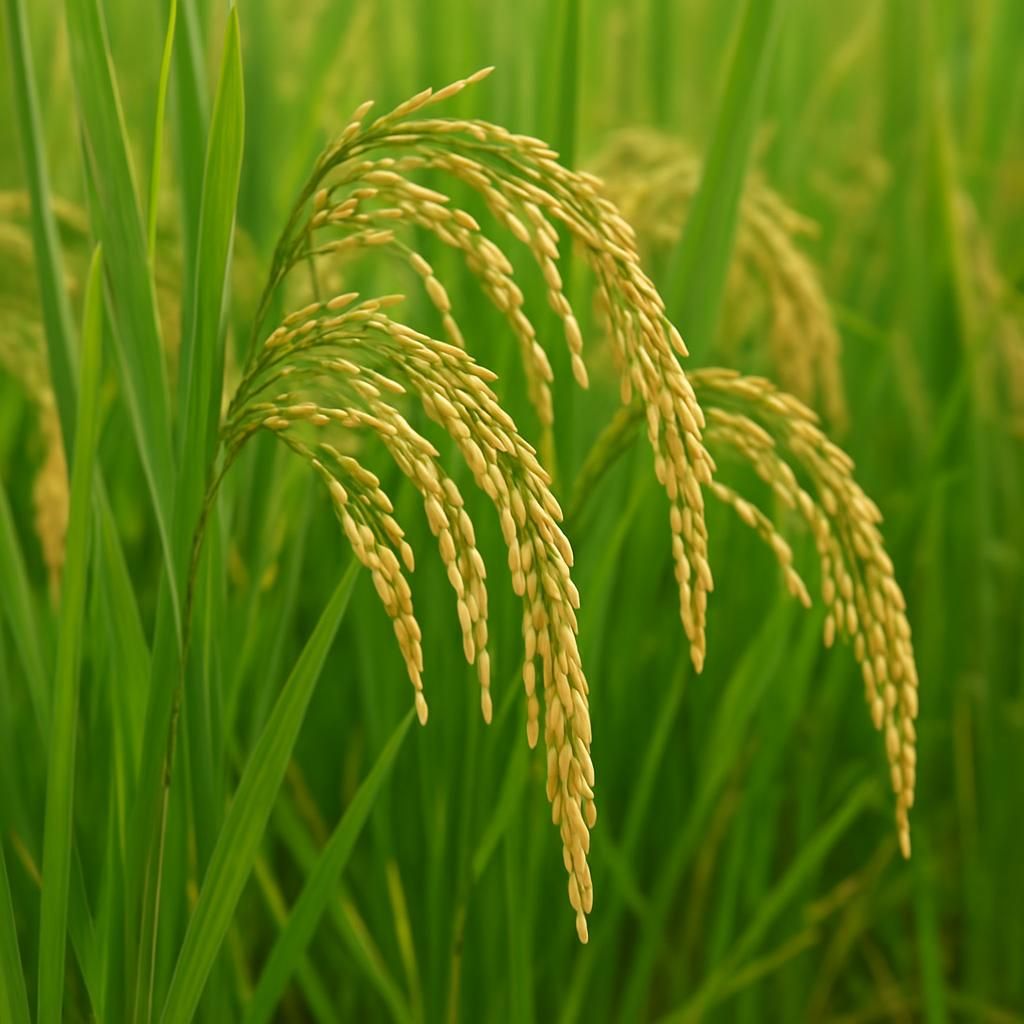
Introduction to Illuppai Poo Samba Rice
Illuppai Poo Samba Rice is a cherished traditional variety from Tamil Nadu, India. It gets its name from the Illuppai flowers, known for their distinct floral aroma. This aromatic rice is predominantly grown in India and is best suited for making traditional South Indian dishes like idlis and dosas.
Botanical Profile of Illuppai Poo Samba Rice
Botanical Name: Oryza sativa
Family: Poaceae
Common Names: Samba Rice, Illuppai Poo Rice
This variety is appreciated for its medium-sized, aromatic grains, which contribute to its distinct flavor profile. The flowering period of Illuppai Poo Samba Rice typically occurs in the cooler monsoon months.
Soil, pH, and Climate Requirements for Illuppai Poo Samba Rice
Ideal cultivation of Illuppai Poo Samba Rice requires specific soil and climate conditions to ensure a bountiful harvest.
| Parameter | Ideal Range |
|---|---|
| Soil Type | Loamy, clayey soils |
| Soil pH | 5.5 - 6.5 |
| Temperature | 20°C - 30°C |
| Rainfall | 1000mm - 2000mm/year |
Step-by-Step Planting & Propagation
- Seed Selection: Choose high-quality seeds from reputable sources to ensure good germination rates.2. Land Preparation: Plow the field to a fine tilth before the monsoon and ensure the field is well-drained.3. Sowing: Broadcast or drill the seeds into the rice field. Maintain a spacing of 20 cm x 15 cm.4. Water Management: Proper irrigation is essential during the germination phase and after the flowering.
Care & Maintenance regimes for Illuppai Poo Samba Rice
Care and maintenance of Illuppai Poo Samba Rice involve specific irrigation, fertilization, and plant protection measures.
| Regime | Action |
|---|---|
| Water | Maintain 5-10 cm of standing water during the growing season; dry the field 2 weeks before harvest |
| Fertilizer | Apply organic fertilizers, NPK ratio of 100:50:50 per hectare |
| Pruning | Not applicable |
Pests, Diseases & Organic Management
Illuppai Poo Samba Rice is susceptible to certain pests and diseases. Pests: Spider Mites, Caterpillars Diseases: Blast, Sheath Blight Utilize neem oil and pheromone traps for pest control and ensure crop rotation to decrease disease likelihood.
For more organic management techniques, you might find this blog useful: Crop Diseases Under the Microscope: 9 Organic Fixes for Small Farm Resilience.
Harvesting, Curing & Optimal Storage
Harvesting should be done when 80% of the grains are golden brown. Post-harvest, dry the panicles on sheets or elevated surfaces to prevent fungal growth. Store the milled rice in moisture-proof containers to enhance its shelf-life.
Companion Planting for Illuppai Poo Samba Rice
Companion planting can enhance the productivity and health of rice paddies. Include legumes like Soybeans and pest-repelling plants like Marigold to improve soil fertility and ward off pests. Experience the benefits of improved pest management and mutual plant support.
To boost resilience and productivity through companion planting, consider this additional read: Spring Companion Planting: 8 Organic Pairings to Maximize Small Farm Yields.