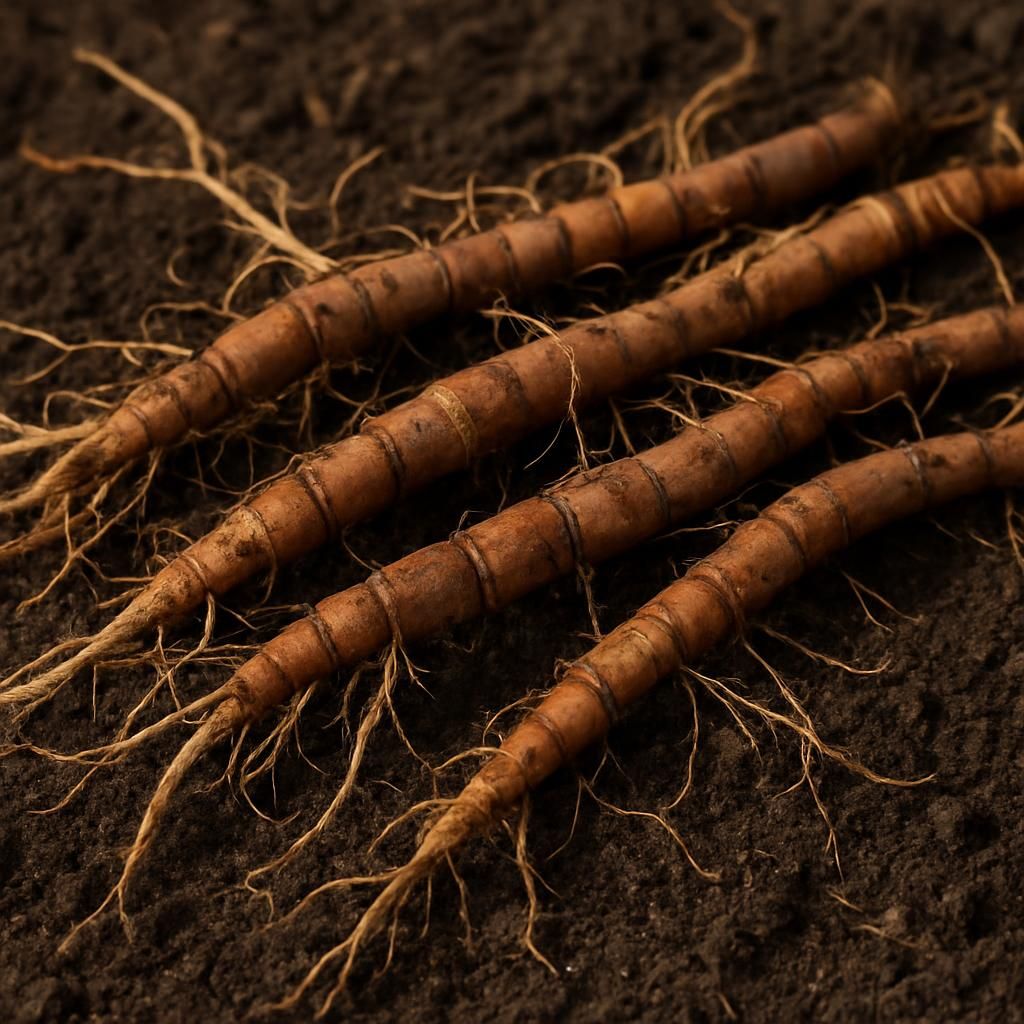
Introduction to Horsetail Root
Horsetail Root refers to the creeping rhizomes of Equisetum arvense, a perennial fern ally that has existed for over 300 million years. These underground stems are harvested for their concentrated silica, flavonoids, and saponins, making the crop attractive to herbal, cosmetic, and agricultural industries. Commercial growers prize the plant for its rapid vegetative spread and minimal input requirements once established.
Because the species is highly adaptable yet potentially invasive, successful production demands strict containment and site planning. This definitive guide covers soil science, propagation, integrated pest management, and harvest protocols based on current agronomic research.
Botanical Profile of Horsetail Root
Equisetum arvense produces two distinct aerial shoots: fertile, unbranched stems that emerge in early spring and bear terminal strobili, followed by sterile, whorled-branch stems that photosynthesize through summer. The extensive rhizome network consists of jointed, dark-brown segments that store starch and produce both roots and new aerial shoots at each node.
The plant lacks true leaves; instead, silica-rich stems perform photosynthesis. Rhizomes typically penetrate 15–40 cm deep and can extend laterally several meters per season under favorable moisture conditions. This aggressive growth habit requires dedicated beds or lined containers to prevent escape into surrounding landscapes.
Soil, pH, and Climate Requirements for Horsetail Root
Horsetail Root thrives in moist, well-aerated substrates with moderate fertility. The species tolerates a wide pH range but performs best in slightly acidic conditions that limit competition from many weeds.
| Parameter | Ideal Range | Notes |
|---|---|---|
| Soil Type | Sandy loam to loam | High organic matter improves rhizome quality |
| Soil pH | 5.5–6.8 | Avoid calcareous soils above pH 7.5 |
| Temperature Range | 10–28 °C daytime | Frost tolerant to –15 °C once dormant |
| Annual Rainfall | 600–1200 mm | Supplemental irrigation needed in dry spells |
| Light | Full sun to partial shade | 6+ hours direct sun maximizes biomass |
| Elevation | 0–1500 m | Higher elevations reduce disease pressure |
Step-by-Step Planting & Propagation
- Site selection: Choose a contained area with reliable moisture or install 30 cm deep root barriers.
- Soil preparation: Incorporate 5–8 cm of well-rotted compost and adjust pH to 6.0–6.5.
- Rhizome sourcing: Obtain certified disease-free segments 8–12 cm long with at least two nodes.
- Planting depth: Place rhizomes horizontally 10–15 cm deep, spaced 30 cm apart in rows 60 cm wide.
- Watering: Irrigate immediately after planting to settle soil and maintain consistent moisture for the first six weeks.
- Mulching: Apply 5 cm of organic mulch to suppress weeds and retain humidity around emerging shoots.
Propagation can also be achieved via spore sowing on sterile media, but rhizome division remains the standard commercial method because it guarantees genetic uniformity and faster establishment.
Care & Maintenance regimes for Horsetail Root
Consistent moisture without waterlogging is critical during active growth. Fertilization should be moderate; excess nitrogen encourages excessive vegetative top growth at the expense of rhizome quality.
| Month Range | Watering Schedule | Fertilizer Application | Pruning / Management |
|---|---|---|---|
| March–May | Keep soil at field capacity | Apply 20 g/m² balanced NPK (10-10-10) | Remove fertile stems after spore release |
| June–August | 25–30 mm per week if no rain | Side-dress 15 g/m² potassium sulfate | Mow sterile stems to 20 cm to promote rhizome thickening |
| September–October | Reduce to 15 mm per week | Optional compost tea (1:10) | Cut back all foliage before first frost |
| November–February | Minimal; maintain slight moisture | None | Monitor for rodent damage under mulch |
Pests, Diseases & Organic Management
Horsetail Root is relatively pest-resistant due to high silica content, yet several organisms can reduce yields. Aphids occasionally colonize young shoots in spring. Spider mites may appear during prolonged hot, dry periods and cause stippling on sterile stems.
Fungal issues are rare but can include Rhizoctonia crown rot in poorly drained beds. Organic controls emphasize cultural practices: maintain 30 cm spacing, avoid overhead irrigation, and rotate beds every four years. Beneficial nematodes applied at 1 million per m² effectively suppress soil-dwelling larvae when pest pressure exceeds threshold levels.
Harvesting, Curing & Optimal Storage
Rhizomes reach peak silica concentration in late autumn after aerial growth has senesced. Excavate carefully with a garden fork to avoid breakage. Wash rhizomes in running water to remove soil, then air-dry at 25–30 °C with good airflow for 7–10 days until moisture content drops below 12 %.
Store cured rhizomes in breathable burlap sacks or paper-lined crates at 5–10 °C and 50–60 % relative humidity. Properly cured material retains medicinal potency for up to 24 months. Label each batch with harvest date and lot number for traceability.
Companion Planting for Horsetail Root
Horsetail Root benefits from nitrogen-fixing neighbors that improve soil fertility without competing for space. Clover sown in adjacent strips supplies nitrogen while acting as a living mulch. Yarrow planted at bed edges repels aphids and attracts beneficial insects.
Avoid pairing with shallow-rooted leafy greens that may be overwhelmed by the aggressive rhizome network. Instead, use Nasturtium as a trap crop at the perimeter to divert aphids away from the main planting. These strategic pairings enhance biodiversity and reduce the need for external inputs.