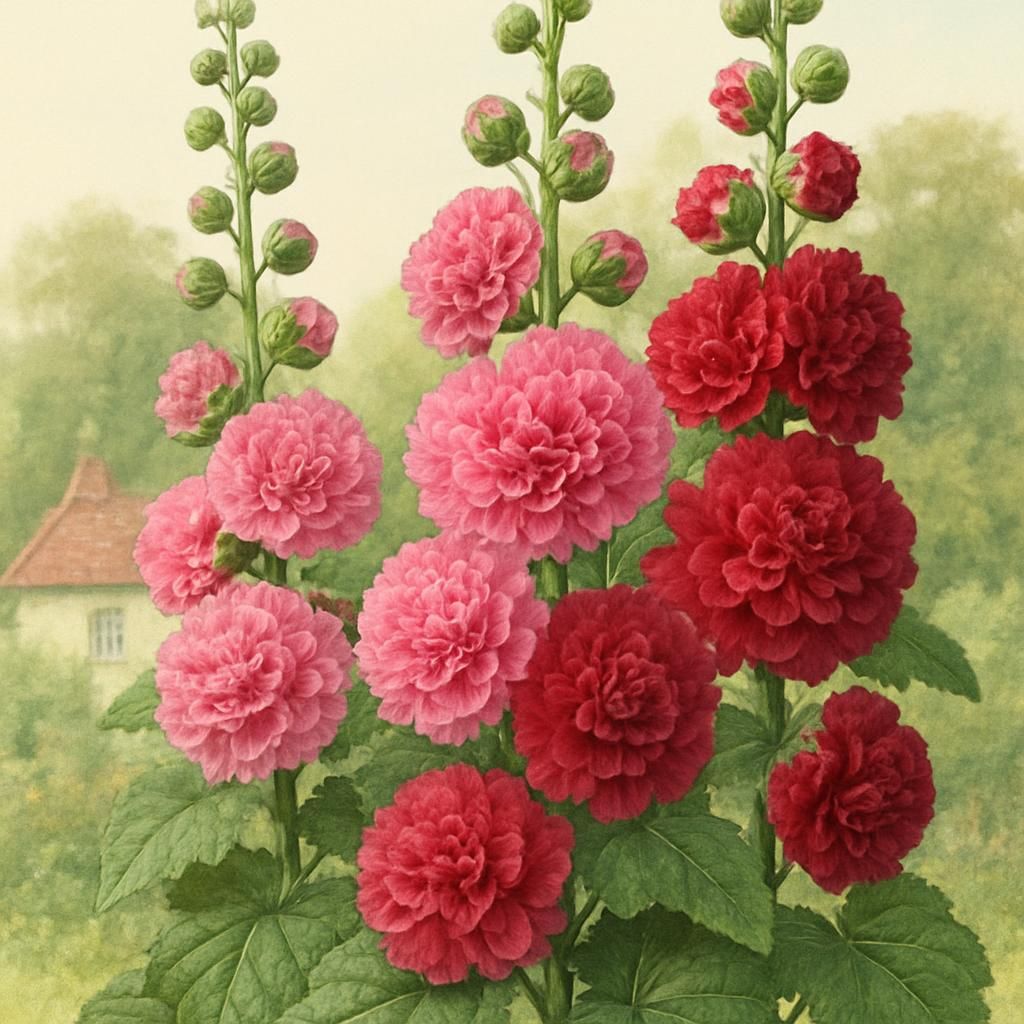
Introduction to Hollyhock
Hollyhock (Alcea rosea) is one of the most recognizable vertical elements in cottage gardens and traditional farm landscapes. Reaching heights of 5–8 feet, the plant produces dramatic spires of single or double blooms in shades of pink, red, yellow, white, and nearly black. Native to Asia and parts of Europe, hollyhock has been cultivated for centuries for both ornamental and medicinal purposes. Its long flowering season and ability to attract pollinators make it a staple in mixed borders, cut-flower production, and heritage gardens. While relatively easy to grow, success depends on understanding its biennial nature, preference for well-drained soil, and susceptibility to certain fungal diseases.
Botanical Profile of Hollyhock
Hollyhock belongs to the Malvaceae family and is closely related to hibiscus and okra. Plants form a basal rosette of large, rough, palmately lobed leaves in the first year, followed by tall, sturdy flower stalks in the second season. Flowers are 3–5 inches across and appear in dense terminal racemes. Individual blooms last only a day or two, but the spike continues producing new flowers for several weeks. Most cultivars are short-lived perennials or biennials, although some modern selections behave as reliable perennials in favorable climates. Seeds are produced in flat, disk-shaped schizocarps that split when mature.
Soil, pH, and Climate Requirements for Hollyhock
Hollyhock performs best in fertile, well-drained soil with moderate fertility. Heavy clay or waterlogged conditions quickly lead to root rot. The plant prefers full sun (at least 6 hours daily) and tolerates a wide range of temperatures once established, though young plants benefit from protection in extreme heat or cold.
| Parameter | Ideal Range | Notes |
|---|---|---|
| Soil Type | Loamy, well-drained | Avoid heavy clay; amend with compost |
| Soil pH | 6.0–7.5 | Slightly acidic to neutral |
| Temperature Range | 60–80°F (15–27°C) | Hardy to USDA Zone 3; protect young plants |
| Sun Exposure | Full sun | Minimum 6 hours direct sunlight |
| Spacing | 18–24 inches | Allows air circulation to reduce disease |
| Planting Depth | Surface sow or 1/8 inch | Light is required for germination |
Step-by-Step Planting & Propagation
Hollyhock is most reliably started from seed. Direct sow in early spring after the last frost or start indoors 6–8 weeks before the final frost date. Press seeds lightly into moist seed-starting mix without covering; germination occurs in 10–21 days at 65–70°F. Transplant seedlings when they have 2–3 true leaves, spacing plants 18–24 inches apart. Division of established clumps can be done in early spring or fall, although plants resent root disturbance. For continuous bloom, sow a portion of seed each year since many varieties are biennial.
Care & Maintenance regimes for Hollyhock
Consistent moisture during establishment and moderate fertility support strong stems and prolific flowering. Over-fertilization produces lush foliage at the expense of blooms. Staking is often required for taller cultivars in windy sites. Deadheading spent flowers encourages additional blooming and reduces self-seeding.
| Task | Frequency | Details |
|---|---|---|
| Watering | Weekly, 1 inch total | Deep watering; allow soil to dry slightly |
| Fertilizer | Early spring & mid-summer | Balanced 10-10-10 or compost tea |
| Pruning/Deadheading | Every 7–10 days during bloom | Remove faded spikes to promote rebloom |
| Mulching | Apply 2–3 inches in spring | Organic mulch conserves moisture |
| Staking | When stalks reach 24 inches | Use bamboo or metal supports |
Pests, Diseases & Organic Management
Hollyhock is frequently attacked by rust, a fungal disease that produces orange pustules on leaf undersides. Good air circulation, drip irrigation, and resistant varieties reduce incidence. Aphids and spider mites can colonize new growth; insecticidal soap or neem oil provides effective organic control. Slugs may damage young leaves in damp conditions. Remove and destroy heavily infected foliage at season end to reduce overwintering spores.
Harvesting, Curing & Optimal Storage
Cut flower spikes when 1/3 to 1/2 of the buds have opened for longest vase life. Harvest in early morning and place immediately in cool water. For seed saving, allow lower pods to mature and turn brown on the plant. Collect pods on a dry day, break them open, and winnow to separate seeds. Store clean, dry seeds in labeled paper envelopes inside airtight containers in a cool, dark location. Viability remains high for 2–3 years under proper conditions.
Companion Planting for Hollyhock
Hollyhock pairs well with other tall perennials and pollinator-friendly plants. Consider growing alongside Sunflower, Marigold, or Nasturtium to create vertical interest and deter pests. Low-growing herbs such as Thyme or Yarrow provide ground cover that suppresses weeds and improves biodiversity. Avoid planting near crops in the Malvaceae family if disease pressure is high, as shared pathogens may spread.