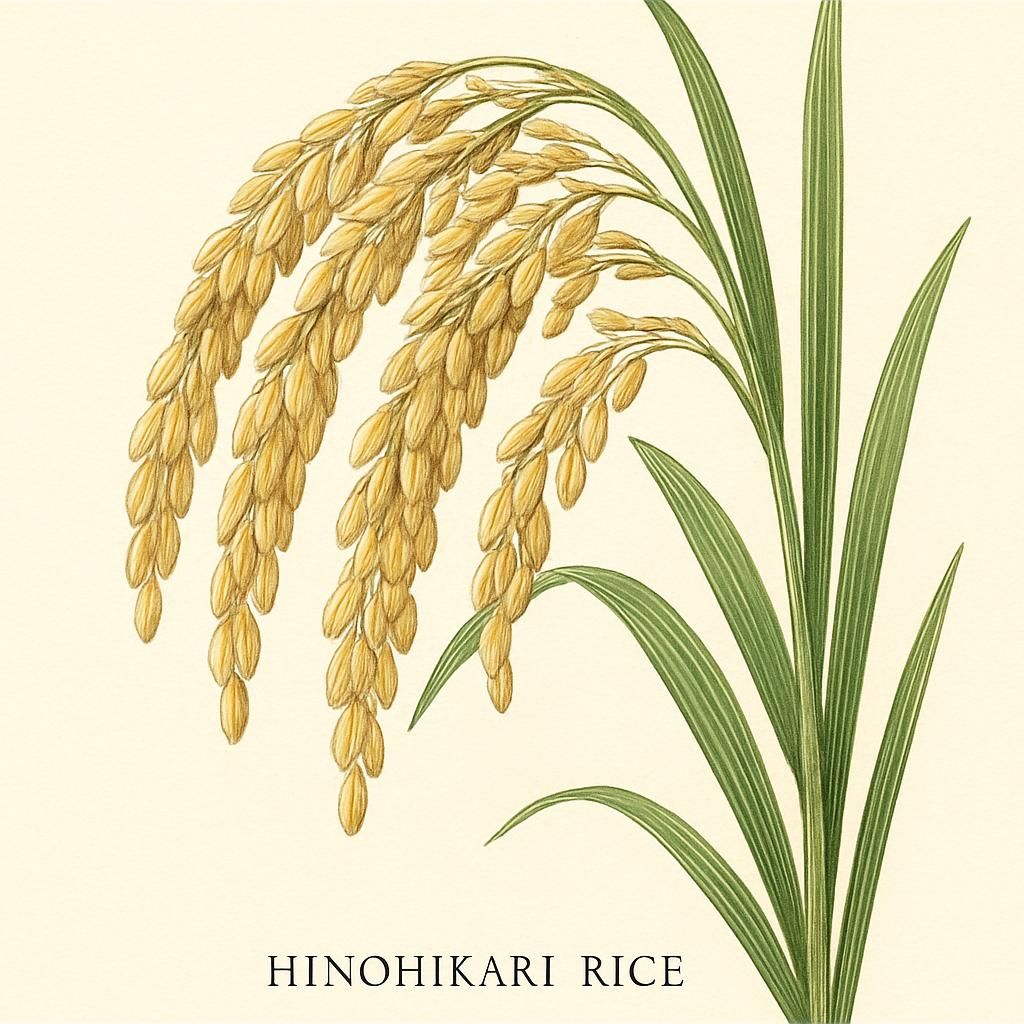
Introduction to Hinohikari Rice
Hinohikari Rice is a staple grain extensively cultivated in Japan, noted for its exquisite aroma and delightful flavor. Its short-grain nature and slight sweetness make it ideal for traditional dishes like sushi and onigiri. Farmers appreciate its adaptability and yield potential, although growing it demands specific climatic and soil conditions.
Botanical Profile of Hinohikari Rice
Hinohikari Rice (Oryza sativa) is a member of the Poaceae family. This short-grain rice features a translucent appearance and becomes notably sticky when cooked, thanks to its high starch content. Originating from Asia, it has become emblematic of Japanese agriculture and cuisine.
Soil, pH, and Climate Requirements for Hinohikari Rice
Hinohikari Rice grows best in warm, humid environments with abundant rainfall or controlled irrigation. Optimal growth requires careful monitoring of soil conditions.
| Requirement | Ideal Conditions |
|---|---|
| Temperature | 20-35°C |
| Soil Type | Loamy, well-drained |
| Soil pH | 5.5-6.5 |
| Rainfall/Irrigation | 1500-2000 mm/year |
Step-by-Step Planting & Propagation
- Select Seeds: Choose certified Hinohikari seeds for assured quality and disease resistance.
- Prepare Soil: Ensure loamy soil is well-drained and enriched with organic matter. Test pH levels and adjust as necessary using lime or sulfur.
- Sowing: Sow seeds in nurseries or directly in water-flooded fields depending on local conditions. Maintain water depth at about 5-10 cm.
- Transplanting: After 20-30 days, transplant seedlings at intervals of 20 cm, ensuring proper spacing for aeration and growth.
- Water Management: Maintain water depth consistently to support growth phases, reducing it during maturation to prevent lodging.
Care & Maintenance Regimes for Hinohikari Rice
Regular attention to water, nutrients, and pest management is crucial for healthy crops.
| Aspect | Schedule |
|---|---|
| Watering | Keep fields flooded; reduce toward maturity. |
| Fertilization | Apply nitrogen, phosphorus, and potassium based on soil tests; key stages include pre-planting and tillering stages. |
| Pruning | Not applicable |
Pests, Diseases & Organic Management
Hinohikari Rice can encounter challenges from Spider Mites, bacterial blight, and various fungi. Organic control measures include:
- Neem Oil: Use as a foliar spray against mites and blight.
- Companion Planting: Integrate plants like marigold to deter pests.
- Polyhouse Cultivation: Control environmental conditions to minimize fungal infections. For more support on dealing with diseases, explore Crop Diseases Under the Microscope: 9 Organic Fixes for Small Farm Resilience.
Harvesting, Curing & Optimal Storage
- Harvesting: When grains turn golden and moisture content is around 20%, manually or mechanically harvest the rice.
- Curing: Dry grains under the sun for a few days or use artificial dryers to reach a safe moisture level of 12-14%.
- Storage: Store in cool, dry conditions in airtight containers to prevent pests and maintain freshness.
Companion Planting for Hinohikari Rice
- Clover and Beans: Enhance nitrogen levels in soil.
- Marigold: Natural pest deterrent.
- Lychee: Like Hinohikari, lychee thrives in humid climates, offering a possibility of shared land use (Lychee). Furthermore, exploring Summer Companion Planting: 10 Organic Pairings to Boost Small Farm Resilience can enhance yields.
Explore more about the general aspects of rice cultivation on Rice.