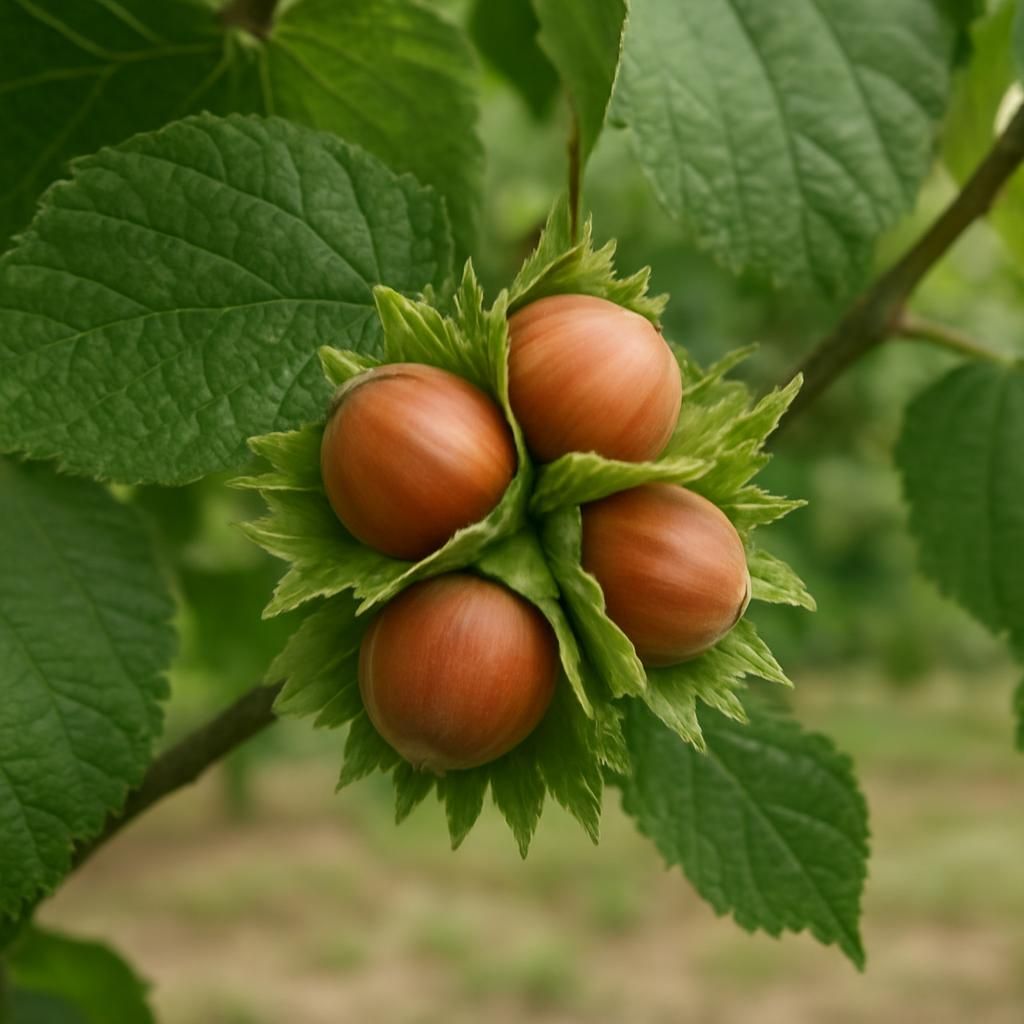
Introduction to Hazelnut (Barcelona)
The Barcelona hazelnut cultivar (Corylus avellana 'Barcelona') is one of the most widely planted European hazelnuts in commercial orchards worldwide. It produces large, round kernels with excellent flavor and high oil content, making it ideal for fresh markets, confectionery, and oil extraction. The variety is known for strong tree vigor, consistent yields, and good kernel fill even under variable weather conditions.
Botanical Profile of Hazelnut (Barcelona)
Barcelona is a deciduous shrub or small tree reaching 4–6 meters in height with a spreading canopy. It produces separate male catkins and female flowers on the same plant, relying primarily on wind pollination. The nuts are enclosed in a leafy involucre that splits at maturity, releasing the round, medium-thick-shelled kernels. Hazelnut genetics show moderate self-incompatibility, so cross-pollinators such as Ennis or Butler are recommended for optimal set.
Soil, pH, and Climate Requirements for Hazelnut (Barcelona)
Barcelona performs best on deep, well-drained loamy soils with good organic matter. It tolerates a range of textures provided drainage is excellent; heavy clays or waterlogged sites quickly lead to root decline.
| Parameter | Ideal Range | Notes |
|---|---|---|
| Soil Type | Loam to sandy loam | Avoid heavy clay without amendment |
| Soil pH | 6.0–7.0 | Slightly acidic to neutral |
| Drainage | Excellent | Raised beds or tile drainage on marginal sites |
| Annual Rainfall | 750–1200 mm | Supplemental irrigation in dry summers |
| Temperature Range | -15 °C to 30 °C | Requires 800–1200 chilling hours |
| USDA Zones | 5–8 | Best in maritime or cool temperate climates |
Step-by-Step Planting & Propagation
- Site selection: Choose a sheltered location with full sun and protection from strong winds.
- Soil preparation: Conduct a soil test and incorporate well-rotted compost or aged manure to reach 3–5 % organic matter.
- Spacing: Plant trees 4–5 m apart in rows 5–6 m wide to allow mechanical access.
- Planting time: Install bare-root or potted stock in late autumn or early spring when soils are workable.
- Pollination layout: Include at least one compatible pollinizer every 8–10 trees (e.g., Hazelnut (Ennis)).
- Initial watering: Provide 20–30 L per tree at planting and maintain consistent moisture for the first two seasons.
Care & Maintenance regimes for Hazelnut (Barcelona)
Consistent irrigation, balanced nutrition, and annual pruning are essential for sustained productivity.
| Task | Schedule | Details |
|---|---|---|
| Watering | Weekly 25–40 mm during active growth | Drip irrigation preferred; reduce in dormancy |
| Fertilizer | Early spring and post-harvest | 50–80 kg N/ha split; maintain leaf K and B |
| Pruning | Late winter dormant season | Remove suckers, open canopy, thin crossing wood |
| Mulching | 10–15 cm organic mulch renewed yearly | Suppress weeds and conserve soil moisture |
| Weed Control | Monthly during growing season | Maintain 1 m weed-free strip around trunk |
Pests, Diseases & Organic Management
Major threats include Eastern Filbert Blight caused by Anisogramma anomala, filbertworm, and aphids. Regular scouting, removal of infected wood, and use of resistant rootstocks or cultivars reduce incidence. Organic options include neem-based sprays for aphids, pheromone traps for filbertworm, and copper applications timed to bud break for blight suppression. Maintaining orchard sanitation and diverse understory plantings further limits pest pressure.
Harvesting, Curing & Optimal Storage
Barcelona nuts ripen in late summer to early autumn when the involucre begins to brown and nuts drop naturally. Collect daily or use mechanical sweepers to minimize mold risk. Cure nuts at 20–25 °C with good airflow for 2–3 weeks until kernel moisture reaches 8–10 %. Store in cool (0–5 °C), low-humidity conditions; vacuum-sealed bags extend shelf life up to 18 months. Monitor regularly for rancidity and insect damage.
Companion Planting for Hazelnut (Barcelona)
Compatible understory species include Clover, Thyme, and Yarrow to attract beneficial insects and improve soil nitrogen. Avoid planting shallow-rooted crops such as Strawberry directly under the dripline to prevent competition. Diverse hedgerows of native shrubs provide habitat for predatory insects and birds that help control filbertworm populations.