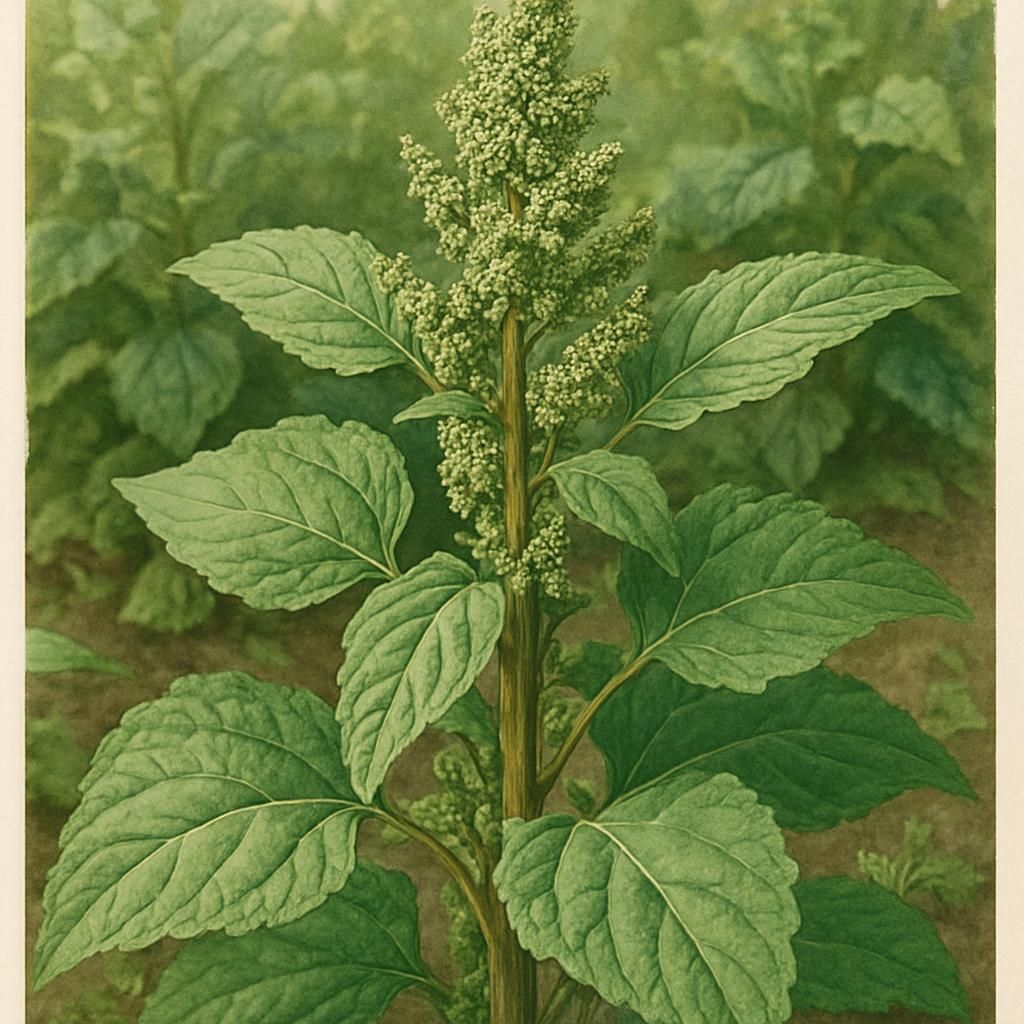
Introduction to Good King Henry
Good King Henry, known scientifically as Blitum bonus-henricus, is a traditional European perennial green highly valued for its nutritious leaves and shoots. Often compared with spinach, it is a member of the Chenopodiaceae family. This hardy plant has been cultivated for centuries and is making a comeback in sustainable gardening circles due to its durability and minimal care requirements.
Botanical Profile of Good King Henry
Good King Henry is a robust plant with spinach-like leaves and edible shoots. It reaches a height of approximately 45-60 cm (18-24 inches). The dark green leaves can be harvested multiple times throughout the growing season, while the shoots provide a delicious asparagus-like treat.
Soil, pH, and Climate Requirements for Good King Henry
Good King Henry thrives in well-drained, fertile soils and prefers full sun to partial shade. It’s well-suited for cooler climates and can tolerate light frost, making it ideal for northern gardens.
| Parameter | Ideal Conditions |
|---|---|
| Soil Type | Loamy, Well-drained |
| Soil pH | 6.0 to 7.5 |
| Climate | Cool, Temperate |
| Sun Exposure | Full Sun, Partial Shade |
Step-by-Step Planting & Propagation
Planting
- Choosing a Location: Select a site with rich, loamy soil and good drainage. Incorporate organic matter to improve soil fertility.
- Sowing Seeds: Direct sow seeds in the garden in early spring, as soon as the soil can be worked. Seeds should be placed about 0.5 cm deep, spaced 15-20 cm apart.
- Transplanting: If starting indoors, plant seeds 6-8 weeks before the last frost date and transplant seedlings outdoors after all danger of frost has passed.
Propagation via Division
Older plants can be propagated through division. In early spring, dig up the root clump and cut sections with roots and shoots. Replant these divisions at the same depth in prepared soil.
Care & Maintenance regimes for Good King Henry
Good King Henry is a low-maintenance crop but benefits from regular water and occasional feeding with compost.
| Activity | Description |
|---|---|
| Watering | Moderate; ensure soil is consistently moist but not waterlogged. |
| Fertilizing | Apply compost or a balanced organic fertilizer in spring. |
| Pruning | Trim flower spikes to encourage leaf growth. |
Pests, Diseases & Organic Management
Good King Henry is relatively pest-free but can occasionally suffer from Aphids or [Spider Mites]. Use insecticidal soap or neem oil for organic pest control. Deer and Rabbits might browse on young plants, so protective netting may be required.
Diseases are rare, but ensuring good air circulation helps prevent issues such as powdery mildew, a common problem in damp conditions.
For more on pest management, see 7 Summer Pest Traps That Sabotage Small Farm Harvests.
Harvesting, Curing & Optimal Storage
Harvesting
Leaves can be picked throughout the growing season. For the best quality shoots, harvest in early spring when shoots are about 8-10 cm tall. Use a sharp knife or garden shears to cut them at the base.
Curing & Storage
Wash leaves and shoots thoroughly. Leaves can be stored in the refrigerator for up to a week. They can also be blanched and frozen for longer storage periods.
Companion Planting for Good King Henry
Good King Henry benefits from companionship with plants such as Lettuce and Onion, which help deter pests and can improve soil conditions through diverse root interactions. Avoid planting near Tomatoes due to potential competition for nutrients.
For more information on effective companion planting, visit Summer Companion Planting: 10 Organic Pairings to Boost Small Farm Resilience.