Introduction to Fusarium oxysporum f. sp. asparagi
Fusarium oxysporum f. sp. asparagi is a highly destructive soilborne fungus that specifically targets asparagus plants, causing Fusarium crown and root rot. This pathogen is one of the most significant threats to commercial asparagus production worldwide, leading to substantial economic losses through reduced yields and shortened plantation lifespans. Asparagus, a perennial crop harvested for 10-20 years, becomes increasingly susceptible as the Fusarium pathogen builds up in the soil over time.
The disease manifests as a progressive rot of the roots and crowns, eventually killing the entire plant. Infected fields can see up to 50-100% plant mortality within 5-10 years without intervention. Understanding this pathogen's biology is crucial for growers, as chemical controls are limited, and integrated management strategies are essential. This guide provides comprehensive diagnostic criteria, lifecycle details, and proven organic management plans to help asparagus producers maintain healthy crops and maximize profitability.
Identifying Symptoms & Damage
Early detection of Fusarium oxysporum f. sp. asparagi is vital for limiting spread. Symptoms typically appear 2-4 years after planting, though infection can occur immediately. Initial signs include sparse emergence in spring, with fewer spears breaking the soil surface. Affected spears are thin, stunted, and may have a hooked or crooked appearance.
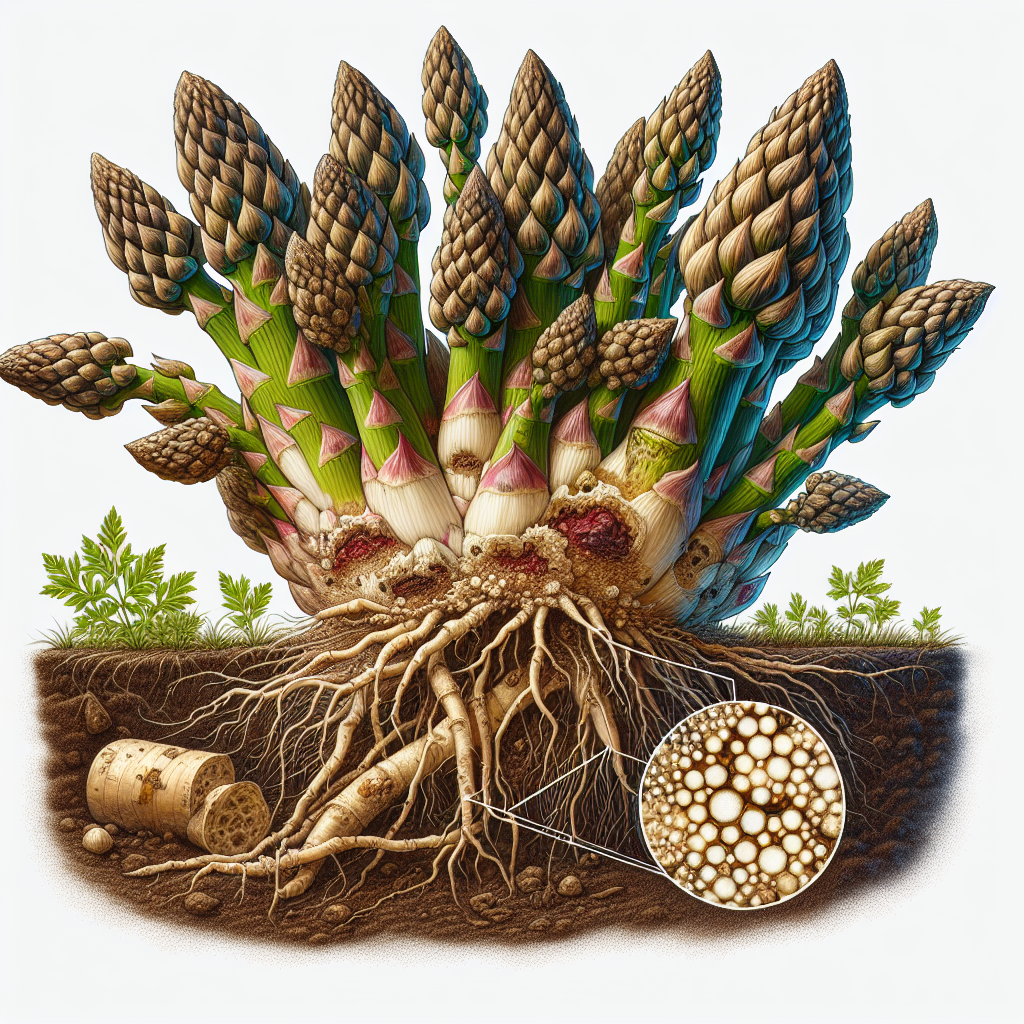
As the disease progresses, foliage yellows starting from the lower leaves, progressing upward. Plants exhibit wilting during the day, particularly under heat stress, resembling Fusarium wilt but localized to individual plants or patches. In severe cases, entire rows show thinning. Excavating crowns reveals the diagnostic symptoms: dark brown to black discoloration of roots and crowns, with roots appearing shriveled and brittle.
Cross-sections of infected crowns show a reddish-brown rot in the vascular tissue, often with white fungal mycelium visible under moist conditions. Advanced rot leads to hollowing of the crown center. Yield losses can reach 30-50% in the third year and 80-100% by year 8-10 in unmanaged fields. Differentiate from Phytophthora root rot by the absence of white, cottony oomycete growth and the presence of microsclerotia (small, dark survival structures) in Fusarium-infected tissue.
Field diagnosis involves checking for patches of poor growth following old asparagus plantings or areas with heavy weed pressure. Laboratory confirmation uses selective media to culture the pathogen or PCR testing for species-specific identification. Regular scouting during the first three years post-planting is critical, as symptoms intensify with plant age.
Lifecycle and Progression of Fusarium oxysporum f. sp. asparagi
Fusarium oxysporum f. sp. asparagi survives primarily as chlamydospores and microsclerotia in soil and plant debris for 10+ years. These hardy structures germinate when stimulated by asparagus root exudates, producing hyphae that penetrate root tips and wounds. The fungus colonizes the vascular system, producing toxins that block water conduction and cause tissue necrosis.
Infection peaks during warm, wet conditions (25-30°C, high soil moisture), with spores spreading via irrigation water, tools, and contaminated transplants. Once established, the pathogen spreads systemically from roots to crowns, forming extensive rot networks. Sporulation occurs on decaying tissue, releasing macroconidia that disseminate short distances via splashing rain or wind.
Disease progression follows a predictable pattern: Year 1-2 shows minimal symptoms as plants establish; Year 3-5 sees 20-40% stand loss with yellowing and thinning; Years 6+ result in collapse of entire fields. Perennial nature of asparagus exacerbates buildup, as annual reinfection compounds damage. Understanding this soil persistence drives prevention-focused management over curative attempts.
Environmental Triggers & Risk Factors
Optimal conditions for Fusarium oxysporum f. sp. asparagi include soil temperatures of 24-30°C, neutral to alkaline pH (6.5-8.0), and excessive moisture from poor drainage or over-irrigation. Warm summers followed by wet springs accelerate symptom expression. Sandy loam soils with low organic matter favor rapid pathogen spread due to poor water retention and increased root susceptibility.
Key risk factors include continuous asparagus culture, planting in fields with prior asparagus history, and use of susceptible varieties like older UC157. Weed hosts such as pigweed and nightshade harbor the pathogen, while compacted soils stress roots, creating entry points. High nitrogen fertilization promotes lush growth vulnerable to infection, and mechanical injury from cultivation spreads inoculum.
Climate change exacerbates risks through warmer soils and erratic rainfall. Fields near rivers or with high water tables face elevated threats. Crop rotation less than 10 years fails to reduce inoculum below infection thresholds, making site selection paramount for new plantings.
Organic Control & Treatment Plans
No curative organic treatments exist for established infections, emphasizing prevention. For active management, integrate multiple strategies:
Resistant Varieties: Plant certified disease-free crowns of resistant hybrids like 'Jersey Giant' or 'Atlas'. These show 50-70% less severity. Source from reputable nurseries with hot-water treatment protocols.
Biological Controls: Apply Trichoderma harzianum or Gliocladium virens at planting (10^9 CFU/g rates). These mycoparasites compete for space and produce antifungal compounds. Bacillus subtilis seed treatments reduce root infections by 40%.
Soil Amendments: Incorporate brassicas (mustard biofumigants) pre-planting to release isothiocyanates toxic to Fusarium. High rates (20 tons/acre green manure) suppress populations by 60-80%. Compost teas with actinomycetes provide additional biocontrol.
Sanitation: Remove and destroy infected plants immediately, avoiding composting. Disinfest tools with 10% bleach. Solarization (6-week clear plastic in summer) reduces inoculum by 70-90% in top 6 inches.
Cultural Practices: Maintain wide row spacing (6-8 ft) for air circulation. Avoid summer flooding irrigation; use drip systems. Fertilize based on soil tests to prevent luxury N uptake.
For read our comprehensive guide on soil health mastery. Integrated plans combining these yield 2-3x plantation lifespan extension.
Preventing Fusarium oxysporum f. sp. asparagi in the Future
Prevention centers on site selection and long-term rotation. Avoid planting asparagus in fields with prior history for 15-20 years. Pre-plant soil bioassays confirm pathogen absence. Use fumigation alternatives like anaerobic soil disinfestation (carbon amendments under plastic) achieving 90% control.
Plant into raised beds (12-18 inches) with tile drainage to minimize wetness. Mulch with straw (4-6 inches) to moderate soil temperature swings. Scout annually using a 1-10 severity scale, removing plants scoring >5. Monitor irrigation to keep soil moisture at 60-70% field capacity.
Crop rotation with non-hosts like onion or grains breaks the cycle. Cover crops such as sudangrass produce dhurrin, suppressing Fusarium. Annual applications of compost (10 tons/acre) build microbial diversity outcompeting the pathogen. Resistant rootstocks grafted to susceptible scions show promise in trials. Long-term success requires farm-wide integration. Learn more about asparagus cultivation.
Crops Most Affected by Fusarium oxysporum f. sp. asparagi
This forma specialis exhibits extreme host specificity to Asparagus officinalis, with no significant impact on other crops. All asparagus cultivars succumb eventually, though hybrids vary in tolerance. Male plants often show higher resistance than females.
Related Fusarium formae speciales attack other crops—like tomato (f. sp. lycopersici) or banana (f. sp. cubense)—but cross-infection does not occur. Weed hosts like Amaranthus spp. maintain soil inoculum without symptoms. Focus management solely on asparagus fields, using rotation crops freely without risk.