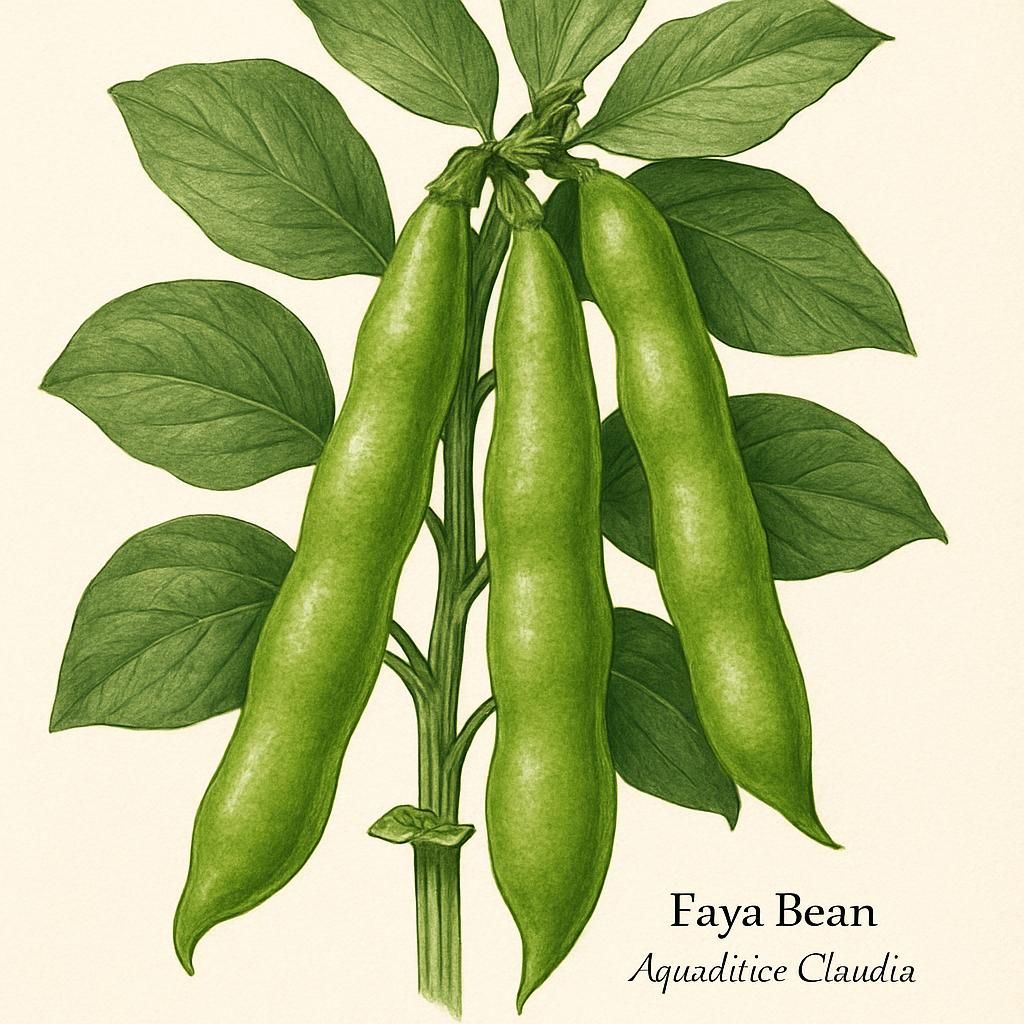
Introduction to Fava Bean (Aquadulce Claudia)
Fava Bean (Aquadulce Claudia) is an esteemed variety of broad bean cherished for its large, juicy beans that are perfect for a wide range of culinary uses. This variety is especially favored in cooler climates, thriving where other bean varieties might falter. Originating from the Mediterranean region, fava beans are an ancient crop with a rich history, finding a place in numerous traditional dishes.
Botanical Profile of Fava Bean (Aquadulce Claudia)
Fava beans belong to the Fabaceae family and are known scientifically as Vicia faba. Aquadulce Claudia, a specific cultivar, is distinguished by its superior beans, which are larger and fleshier than those of many other varieties. These beans grow on hardy, upright plants that can reach up to 1.5 meters in height, featuring silvery-green leaves and clusters of white flowers with black spots that bloom early in the growing season.
Soil, pH, and Climate Requirements for Fava Bean (Aquadulce Claudia)
The success of growing Fava Bean (Aquadulce Claudia) hinges on choosing the right soil conditions and climate. These plants prefer cool temperatures and well-drained soil with a neutral to slightly alkaline pH level. Below is a table detailing ideal growing conditions:
| Factor | Ideal Condition |
|---|---|
| Soil Type | Well-drained, loamy soil |
| Soil pH | 6.5 - 7.0 |
| Temperature | 10°C - 20°C (50°F - 68°F) |
| Sun Exposure | Full sun |
| Rainfall | 600-1000 mm annually |
Step-by-Step Planting & Propagation
- Site Selection and Soil Preparation: Choose a location with full sunlight and well-draining soil. Amend heavy clay soils with organic matter to improve its structure.
- Sowing Seeds: Plant seeds directly in the ground in early spring as soon as soil can be worked, or in late summer for a fall harvest in warmer climates. Sow seeds 2-3 inches apart in rows, covering them with about 2-3 inches of soil.
- Spacing: Maintain a spacing of about 18-24 inches between rows to facilitate air circulation and ease of maintenance.
- Watering: Water the seeds immediately after planting and maintain consistent moisture levels throughout the growing season.
Care & Maintenance regimes for Fava Bean (Aquadulce Claudia)
Once established, Aquadulce Claudia requires relatively low maintenance. The following table outlines a care schedule:
| Task | Frequency |
|---|---|
| Watering | Moderate, weekly |
| Fertilizing | Once at planting, then monthly |
| Pruning | Remove damaged/dead leaves as necessary |
Pests, Diseases & Organic Management
Fava Beans are relatively resilient but can be susceptible to a few pests and diseases. Common issues include Aphids and Bean Aphid, as well as diseases like Chocolate spot. Organic strategies such as neem oil or planting companion plants that deter pests can be effective.
For more information on organic disease management, explore this blog post on crop diseases.
Harvesting, Curing & Optimal Storage
Fava beans are ready to harvest when the pods are well-filled, but not bulging—typically 4 months after planting. Pods should be picked when still young and tender. After harvesting, beans can be dried for storage, or blanched and frozen to preserve freshness. Store dried beans in airtight containers in a cool, dark place to maximize shelf life.
Companion Planting for Fava Bean (Aquadulce Claudia)
Companion planting enhances growth conditions by attracting beneficial insects and repelling pests. Suitable companions for Fava Beans include Nasturtium which helps repel aphids, and Clover which improves soil nitrogen levels.