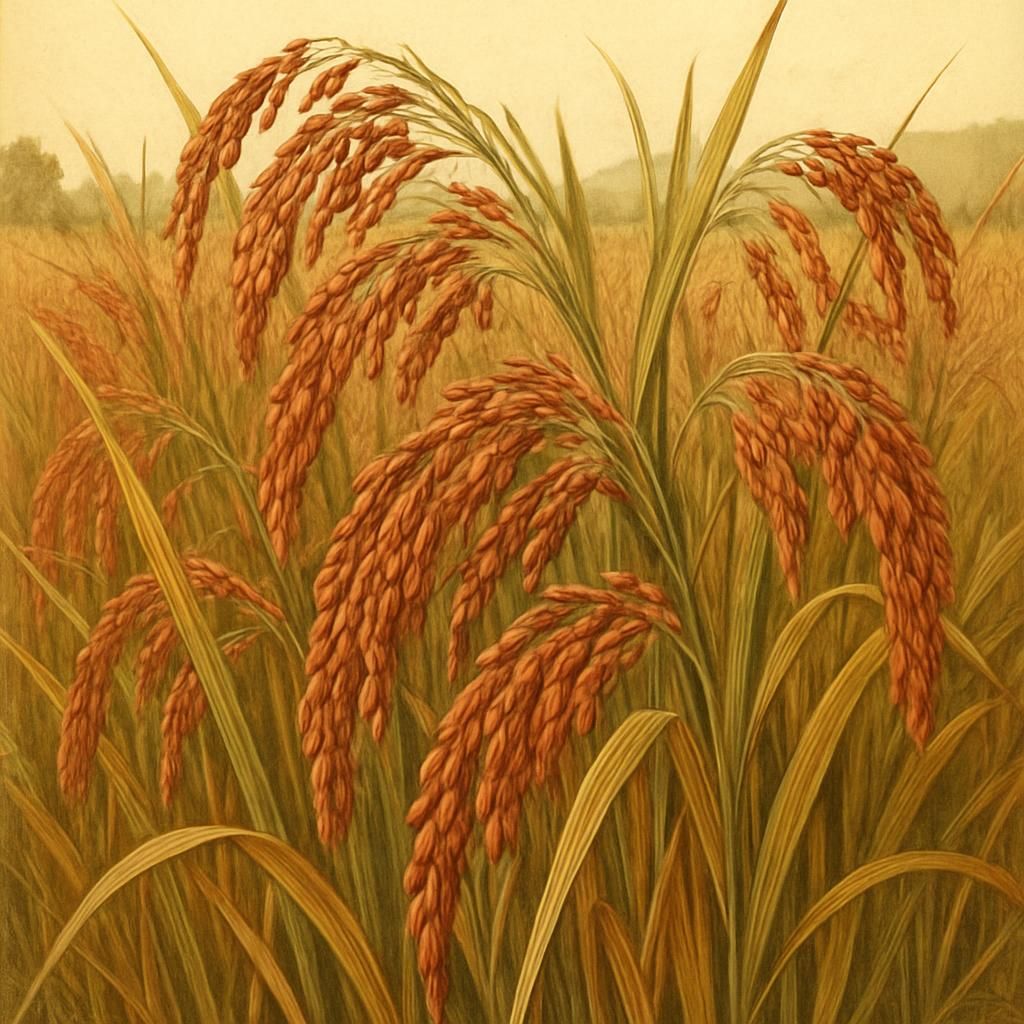
Introduction to Ermes Rice (Italian Red)
Ermes Rice, also known as Italian Red Rice, is a unique and nutritious variety of rice originating from Italy. Recognized for its appealing red hue, Ermes Rice is popular in gourmet cuisines due to its nutty flavor and chewy texture. Beyond its taste, this rice variety is celebrated for its rich nutritional profile, boasting higher fiber and antioxidant levels compared to its white counterparts.
Botanical Profile of Ermes Rice (Italian Red)
Ermes Rice belongs to the species Oryza sativa, a member of the Poaceae family. It is a medium-grain variety that adapts well to the Italian climate, especially in regions with a Mediterranean influence. The plants typically reach heights of up to 1 meter, featuring slender stalks and distinct, dark-green leaves. The grains themselves, once matured, attain a deep red color due to the presence of anthocyanins, powerful antioxidants contributing to their health benefits.
Soil, pH, and Climate Requirements for Ermes Rice (Italian Red)
Growing Ermes Rice demands specific environmental conditions to thrive efficiently. The table below summarizes the ideal conditions for cultivating this exotic rice variety:
| Condition | Ideal Range |
|---|---|
| Soil Type | Loamy, well-drained soils |
| pH Level | 5.5 - 6.5 |
| Temperature | 20°C - 30°C |
| Rainfall | 1500 mm - 2500 mm per year |
Ermes Rice is best grown in regions experiencing warm temperatures, consistent rainfall, and occasional flooding, as these factors facilitate optimal plant growth and development.
Step-by-Step Planting & Propagation
Site Selection and Preparation: Choose a location that receives full sunlight and has good water retention properties. Prepare the field by plowing and leveling to ensure uniform water distribution.
Seed Selection and Treatment: Use certified seeds to avoid diseases. Before planting, treat the seeds with a fungicide to protect against any seed-borne fungal pathogens.
Sowing: Direct sowing is common for Ermes Rice. Sow the seeds about 2-3 cm deep in rows spaced 20 cm apart, ensuring even spacing to promote adequate air circulation and sunlight penetration.
Water Management: Ensure fields are flooded with about 5 cm of water during germination and early growth stages. Adjust water levels as plants mature, taking care to avoid water stress.
Care & Maintenance Regimes for Ermes Rice (Italian Red)
Effective care and maintenance are crucial for maximizing the yield of Ermes Rice. The table below outlines the recommended schedule for watering, fertilizing, and pruning:
| Activity | Frequency | Description |
|---|---|---|
| Watering | Weekly | Maintain 5 cm water depth, adjust during rainfall |
| Fertilization | At planting, mid-season | Use nitrogen-rich fertilizers at key growth stages |
| Pruning | Not required for rice | Monitor and manage weeds regularly |
Ermes Rice requires careful monitoring for nutrient deficiencies and consistent weed control to prevent competition for resources.
Pests, Diseases & Organic Management
Several pests and diseases can impact Ermes Rice, including Spider Mites and fungal infections. To manage these organically:
- Cultural Control: Implement crop rotation with legumes to break pest cycles.
- Biological Control: Introduce beneficial insects such as ladybugs to control mite populations.
- Organic Sprays: Use neem oil or garlic sprays as natural deterrents for pests.
For more detailed strategies on disease management, consider reading Crop Diseases Under the Microscope: 9 Organic Fixes for Small Farm Resilience.
Harvesting, Curing & Optimal Storage
Ermes Rice reaches maturity approximately 120 days after planting. Harvest when grains display a consistent red color and the plant exhibits signs of drying. Carefully cut the stalks, avoiding damage to grains. Cure in a dry, shaded area to reduce moisture content.
For storage, maintain a cool, dry environment to preserve quality and extend shelf life. Utilizing airtight containers can further protect against pests and humidity.
Companion Planting for Ermes Rice (Italian Red)
Companion planting can significantly benefit rice cultivation by enhancing soil health, deterring pests, and improving yields. Consider pairing Ermes Rice with compatible plants like clover and marigold to promote a robust growing environment. Explore additional companion planting tips in our blog post, Summer Companion Planting: 10 Organic Pairings to Boost Small Farm Resilience.