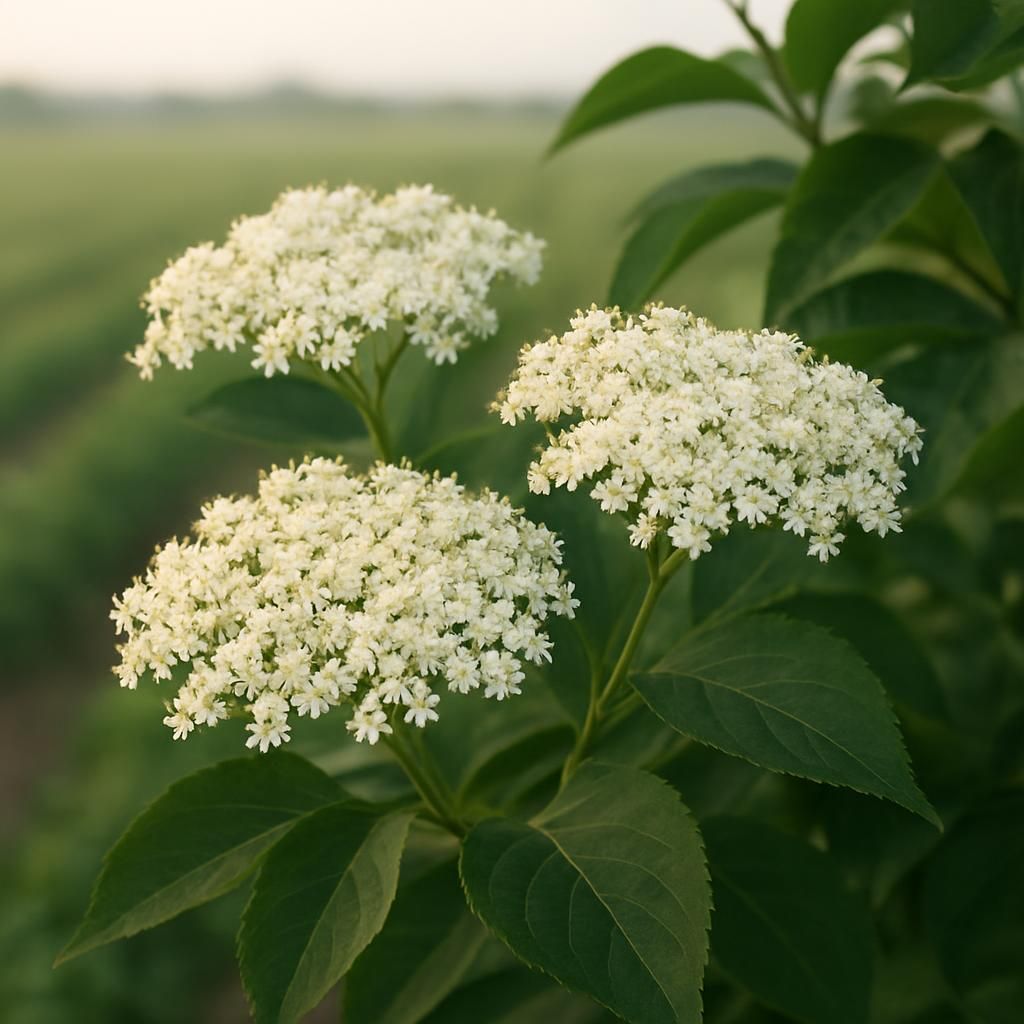
Introduction to Elderberry (Flower)
Elderberry (Flower) cultivation focuses on the fragrant white blossoms of the elderberry shrub, which are harvested for teas, cordials, syrups, and natural remedies. The flowers are prized for their immune-supporting properties and delicate flavor. Professional growers target consistent bloom quality and high yields of clean, pesticide-free blossoms suitable for both fresh and dried markets.
Botanical Profile of Elderberry (Flower)
Elderberry (Flower) is produced by Sambucus nigra subsp. canadensis, a fast-growing deciduous shrub reaching 2–4 m in height. The plant forms multiple stems from a woody base and produces flat-topped cymes of tiny white flowers in late spring to early summer. Each flower cluster can contain hundreds of individual blooms rich in antioxidants and volatile oils. The shrub is self-fertile but benefits from cross-pollination with additional cultivars for heavier flower set.
Soil, pH, and Climate Requirements for Elderberry (Flower)
Elderberry (Flower) thrives in fertile, moisture-retentive soils with excellent drainage. The species tolerates a wide range of textures but performs best in loamy soils rich in organic matter. Avoid heavy clay without amendment.
| Parameter | Ideal Range | Notes |
|---|---|---|
| Soil Type | Loam to sandy loam | High organic matter content preferred |
| Soil pH | 5.5–6.5 | Slightly acidic to neutral |
| USDA Hardiness Zones | 3–9 | Cold hardy; flowers best in zones 4–8 |
| Temperature Range | -30 °C to 30 °C | Requires 800–1200 chill hours for bloom |
| Annual Rainfall | 600–1200 mm | Supplemental irrigation in dry periods |
| Sun Exposure | Full sun to partial shade | Minimum 6 hours direct sun for optimal bloom |
Step-by-Step Planting & Propagation
- Select healthy, disease-free nursery stock or take 15–20 cm hardwood cuttings in late winter.
- Prepare beds by incorporating 5–8 cm of well-rotted compost and correcting pH if needed.
- Space plants 1.5–2 m apart in rows 3 m wide to allow air circulation and machinery access.
- Plant cuttings or bare-root stock in early spring, setting crowns at soil level.
- Water thoroughly after planting and apply 5–8 cm of organic mulch to conserve moisture and suppress weeds.
- Install drip irrigation lines at planting for consistent moisture during establishment.
Care & Maintenance regimes for Elderberry (Flower)
Consistent moisture, balanced fertility, and timely pruning are essential for sustained flower production. Monitor soil moisture weekly during the growing season and adjust irrigation accordingly.
| Task | Schedule | Details |
|---|---|---|
| Watering | 25–40 mm/week during active growth | Deep soak once or twice weekly; reduce after bloom |
| Fertilizer | Early spring and post-harvest | Apply 10-10-10 or well-aged compost at 50–75 g/m²; avoid excess nitrogen |
| Pruning | Late winter dormant season | Remove 1/3 oldest stems annually; thin weak wood to encourage new bloom shoots |
Pests, Diseases & Organic Management
Elderberry (Flower) is generally resilient but can be affected by aphids, spider mites, and powdery mildew under humid conditions. Regular scouting and cultural practices form the first line of defense.
- Monitor for aphids on new growth; release lady beetles or apply insecticidal soap as needed.
- Maintain good airflow to reduce powdery mildew incidence.
- Remove and destroy infected canes promptly to limit spread of fungal pathogens.
- Use floating row covers during early season to protect against cutworms.
Harvesting, Curing & Optimal Storage
Harvest flower clusters when 80–90 % of buds are open but before petals begin to brown. Pick in early morning when volatile oils are highest. Remove large stems and spread clusters in single layers on drying screens in a shaded, well-ventilated area at 25–30 °C. Dried flowers should be stored in airtight glass containers away from light and moisture for up to 12 months. Fresh flowers can be refrigerated for 3–5 days or frozen in ice cubes for culinary use.
Companion Planting for Elderberry (Flower)
Elderberry (Flower) benefits from strategic companions that improve pollination, deter pests, and enhance soil health. Interplant with Nasturtium to attract beneficial insects and repel aphids. Clover sown between rows fixes nitrogen and suppresses weeds. Avoid planting near Walnut trees, as juglone can inhibit elderberry growth. Yarrow and Marigold increase biodiversity and support predatory insects around the shrub rows.