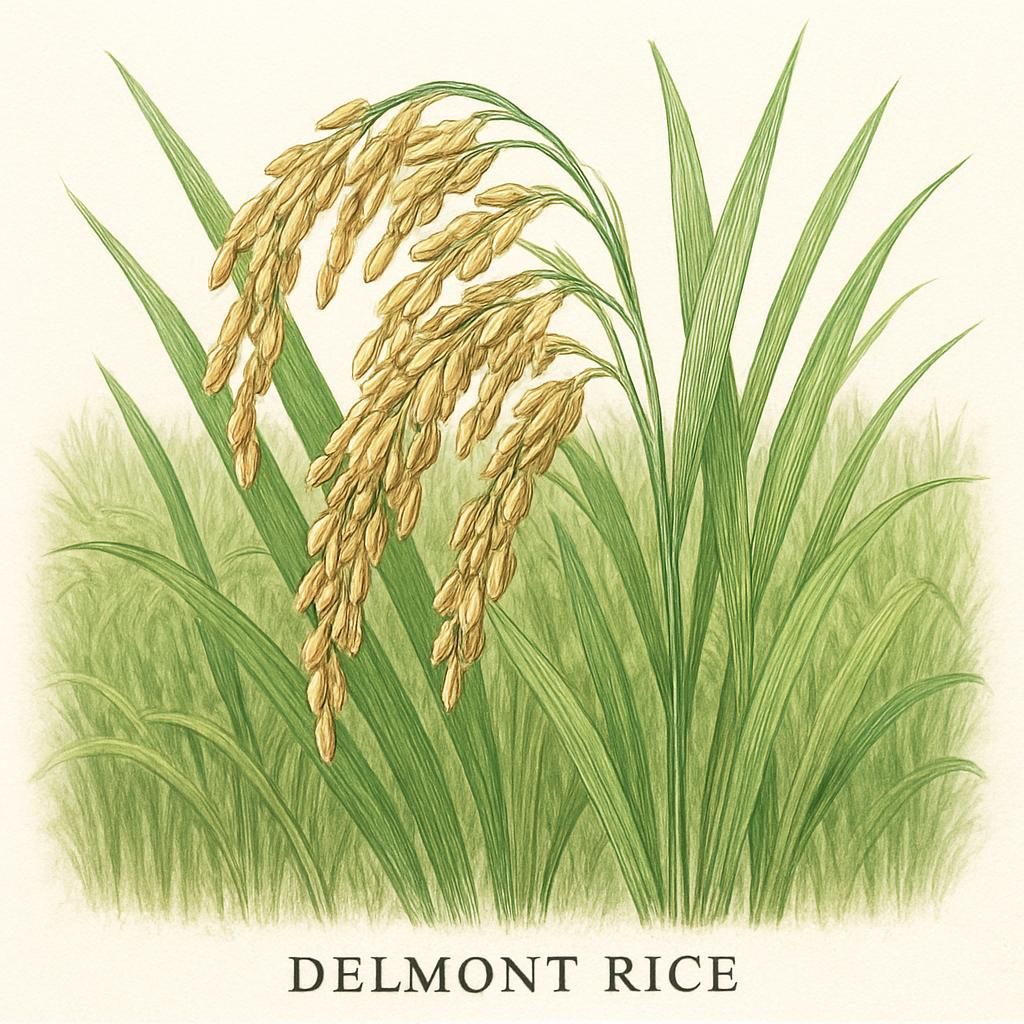
Introduction to Delmont Rice
Delmont Rice is a prominent rice variety known for its high yield and adaptability. Its popularity among farmers stems from its robustness and the superior quality of the grains it produces. Cultivated extensively in diverse climates, Delmont Rice offers flexibility in planting and maintenance, making it a preferred choice for both small and large agricultural enterprises. For those keen on enhancing their rice production, integrating Delmont Rice into their crop rotation can prove beneficial.
Botanical Profile of Delmont Rice
Belonging to the species Oryza sativa, Delmont Rice is a medium-grain variety. It stands out for its high resistance to common rice diseases and pests, which ensures a stable yield. Typically, this variety exhibits a distinctive tillering pattern, contributing to its high biomass and grain production.
Soil, pH, and Climate Requirements for Delmont Rice
Delmont Rice thrives best under specific soil, pH, and climate conditions, which are crucial for maximizing its yield potential.
| Factor | Ideal Condition |
|---|---|
| Soil Type | Loamy, well-drained soils |
| pH Level | 5.5 - 6.5 |
| Temperature | 20°C - 35°C |
| Rainfall | 1000mm annually |
Step-by-Step Planting & Propagation
- Site Preparation: Choose a field with good irrigation and drainage. Level the field to prevent water logging.
- Seed Selection: Use certified seeds to ensure purity and vigor.
- Sowing: Direct sowing or transplanting can be used. Direct sow in rows 20 cm apart, or transplant seedlings aged 20-25 days.
- Plant Spacing: Maintain a spacing of 20 cm x 15 cm for optimal growth.
Care & Maintenance regimes for Delmont Rice
Water and Nutrient Management
Ensuring the right care and maintenance of Delmont Rice involves a meticulous watering and nutrition regimen.
| Activity | Schedule |
|---|---|
| Watering | Regular flooding, maintain 5 cm |
| Fertilization | NPK during tillering phase |
| Weeding | Every 3 weeks up to panicle stage |
Pests, Diseases & Organic Management
Delmont Rice is susceptible to pests like Brown Planthoppers and diseases such as Rice Blast. Organic management includes:
- Introducing natural predators like ladybugs to control pests.
- Using neem oil sprays to deter pest infestations.
- Rotating crops with Legumes to improve soil health and reduce pest buildup.
Harvesting, Curing & Optimal Storage
Harvesting
- Harvest when grains turn a golden-yellow hue to ensure maturity.
- Use mechanical harvesters for efficiency and reduced grain damage.
Post-Harvest Curing
- Dry grains to 14% moisture content to prevent mold.
- Store in cool, ventilated storage to maintain quality.
Companion Planting for Delmont Rice
Companion planting with crops such as Soybeans and Chickpeas can enhance soil fertility through nitrogen fixation, benefiting the Delmont Rice growth cycle. These combinations can also deter pests naturally and improve the ecosystem of the rice field.
For those seeking deeper insights into soil conditions and winter strategies, read Winter Nutrient Deficiencies: 8 Organic Fixes to Revive Small Farm Crops.
Explore More
For a broader overview of rice and its varieties, visit Rice.