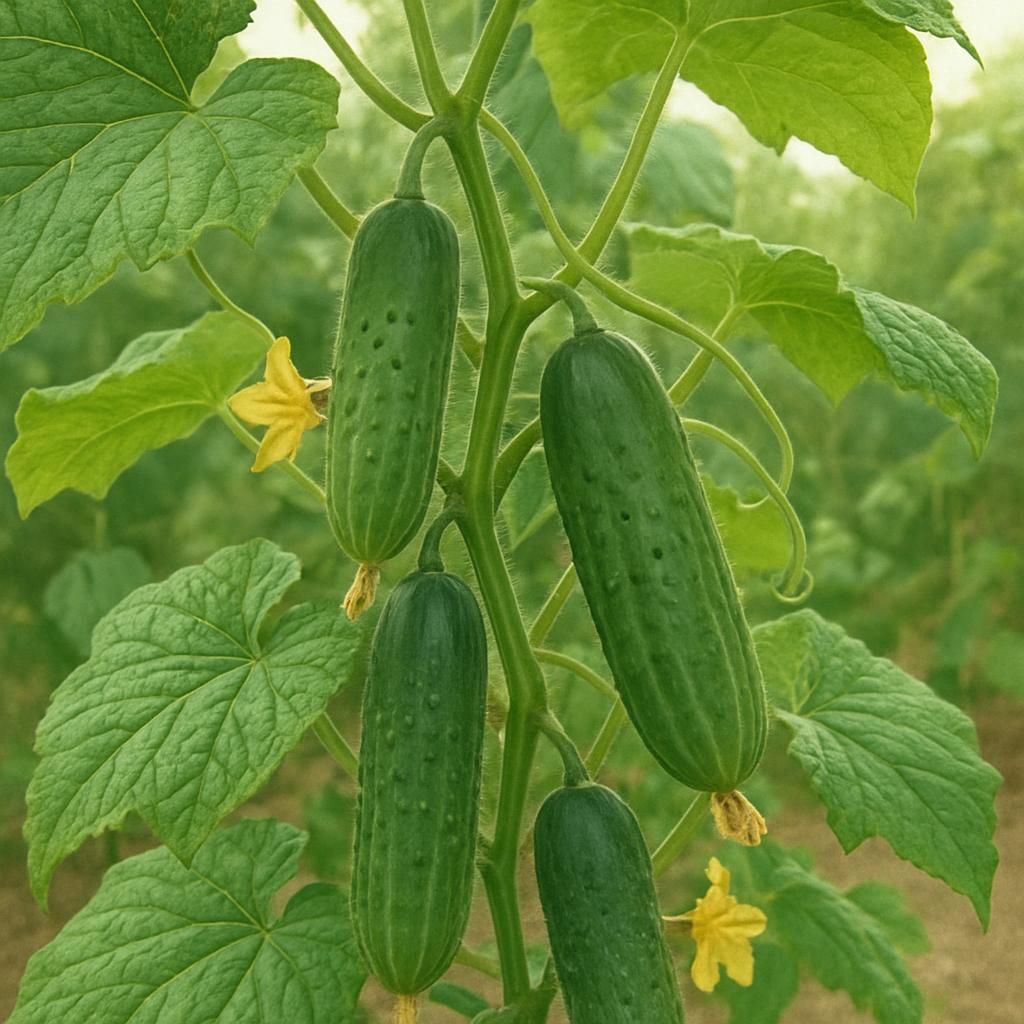
Introduction to Cucumber (National Pickling)
National Pickling cucumbers are a classic choice for enthusiasts of homemade pickles. Bred for their distinctive firm texture and uniform size, these cucumbers make excellent pickles, holding their crunch and flavor well during the pickling process. They are also quite versatile and can be consumed fresh, offering a mild and refreshing taste.
Farmers and gardeners favor this variety due to its reliable yield and hardiness. It's an ideal option for both small-scale home gardens and larger commercial farms. The variety adapts well to diverse climatic conditions, making it accessible to growers in many regions.
Botanical Profile of Cucumber (National Pickling)
National Pickling cucumbers belong to the species Cucumis sativus, which is part of the Cucurbitaceae family. As a warm-season crop, they require significantly warm weather and soil conditions for optimal growth. The plants exhibit a vining growth habit and are characterized by sprawling tendencies, producing medium-length vines that bear bright green, smooth-skinned cucumbers about 3 to 6 inches long.
Cucumbers are monoecious plants, bearing both male and female flowers on the same vine, which facilitates pollination. National Pickling cucumbers have been bred to yield highly uniform fruits, ensuring predictable sizes ideal for commercial applications and home pickling alike.
Soil, pH, and Climate Requirements for Cucumber (National Pickling)
Cucumber plants require a well-draining, fertile soil enriched with organic matter. A thorough understanding of soil preparation is crucial to provide the right conditions.
| Parameter | Ideal Range |
|---|---|
| Soil Type | Sandy-loam, loamy |
| Soil pH | 6.0 - 7.0 |
| Temperature | 70°F to 85°F (21°C to 29°C) |
| Rainfall | 1-1.5 inches/week |
Moderately humid climates with consistent temperatures produce the best growth, while fluctuating or extremely high temperatures can hinder plant development.
Step-by-Step Planting & Propagation
Soil Preparation: Begin with well-drained soil, augmented with rich organic compost. Ensure that the site receives at least 6 to 8 hours of sunlight daily.
Seed Sowing: Plant seeds directly in the garden after the last threat of frost. Space seeds about 3 to 4 inches apart in rows that are 3 feet apart to accommodate sprawling vines.
Germination: Maintain consistent moisture after planting; seeds typically germinate within 7-10 days.
Transplanting: Thin seedlings to 1 plant every 12 inches once they reach about 4 inches tall or when true leaves appear.
Support: Use trellises or a similar support system to encourage vertical growth, reducing susceptibility to pests and disease and improving airflow between vines.
Care & Maintenance Regimes for Cucumber (National Pickling)
Implementing a maintenance plan throughout the growing season ensures healthy plants and a bountiful harvest.
| Schedule | Watering | Fertilization | Pruning |
|---|---|---|---|
| Weekly | 1-1.5 inches, deep soak | Balanced liquid 10-10-10 every 3 weeks | Remove yellow leaves routinely |
Watering: Use drip irrigation or soaker hoses to water deeply weekly, which encourages deep root growth. Avoid watering overhead to reduce the risk of foliar diseases.
Fertilization: Apply a balanced fertilizer every few weeks. Early growth benefits from nitrogen-rich feeds, while phosphorus and potassium boost flower and fruit development.
Pruning: Prune excess foliage for air circulation, which diminishes fungal disease risks.
Pests, Diseases & Organic Management
National Pickling cucumbers can be susceptible to several pests and diseases which can be organically managed:
- Cucumber Beetles: These pests can be managed using floating row covers and neem oil applications.
- Powdery Mildew: Cultural practices like crop rotation and sufficient plant spacing can effectively control this fungus. Use sulfur-based organic fungicides preventively.
- Spider Mites: Introduce beneficial insects or use insecticidal soap for effective control.
For broader pest management strategies, check our blog on Fall Pest Siege: 9 Organic Defenses to Shield Small Farms from Invading Armies.
Harvesting, Curing & Optimal Storage
Harvest National Pickling cucumbers before they grow too large. Typically, the best time to harvest is when they reach about 3 to 5 inches long. Consistently harvesting encourages higher yields as the plant redirects energy to newer fruits instead of overripe ones.
After harvesting, place cucumbers in a cool place to maintain freshness. For optimal storage, ensure the cucumbers are kept dry and store at temperatures between 50°F to 55°F in a high-humidity environment.
Companion Planting for Cucumber (National Pickling)
Companion planting can improve yields and reduce pest pressures. Consider planting cucumbers with:
- Nasturtiums: Repel insects like aphids and cucumber beetles.
- Corn (crop): Shared mutual benefits in growth and improved pest resistance.
For more on utilizing companion planting, see the article on Summer Companion Planting: 10 Organic Pairings to Boost Small Farm Resilience.