Introduction to Cronartium quercuum f. sp. fusiforme
Cronartium quercuum f. sp. fusiforme is an obligate parasitic rust fungus that causes fusiform rust, one of the most economically important diseases of southern pine species in the southeastern United States. The pathogen alternates between two unrelated hosts: pines (primarily loblolly and slash pine) and various oak species. Infection leads to the formation of spindle-shaped galls on pine stems and branches that weaken structural integrity and can cause breakage or mortality. On oaks, the fungus produces orange uredinia and telia on leaf undersides, serving as the source of inoculum for pine infections. The disease has caused billions of dollars in losses to timber, pulp, and Christmas tree industries since the mid-20th century.
Identifying Symptoms & Damage
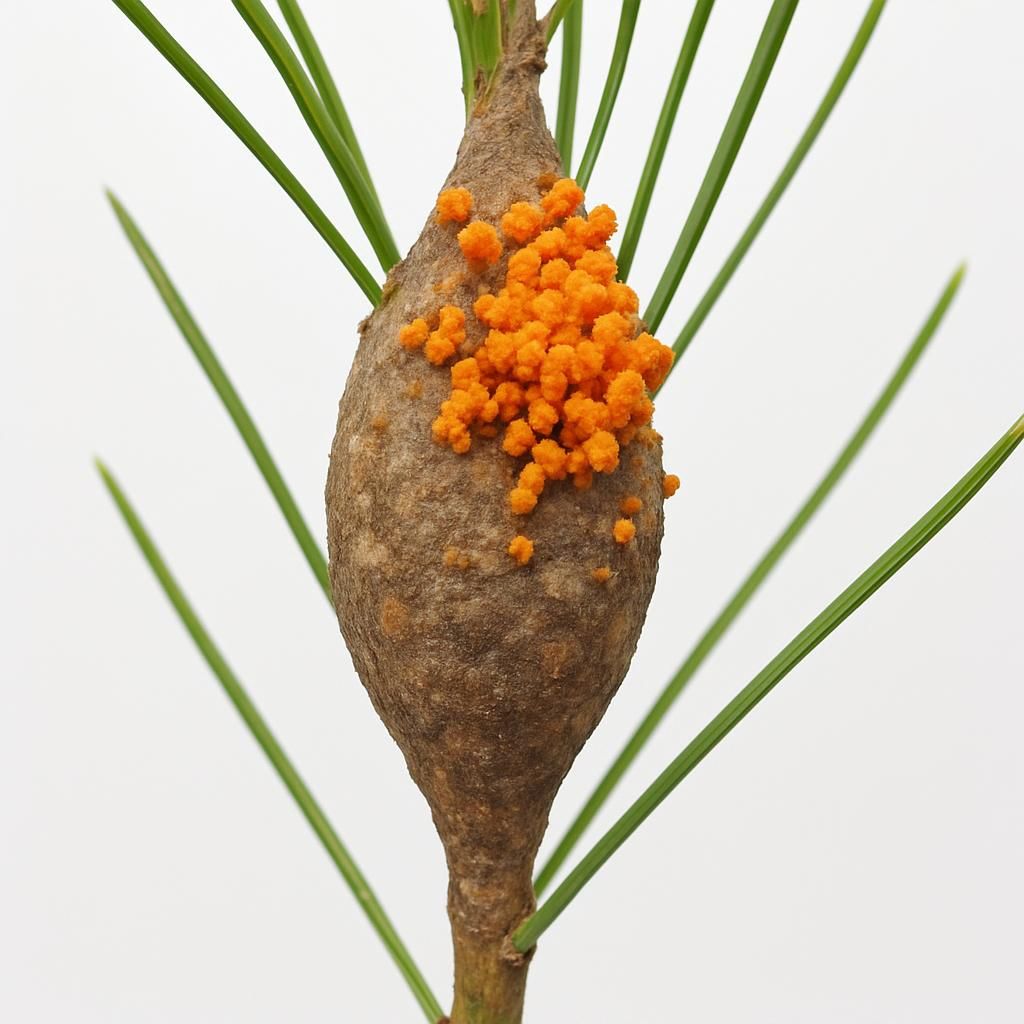
On pine hosts, early symptoms appear as slight swelling at infection sites within months of spore deposition. Within one to two years, characteristic spindle-shaped galls develop, often several times the diameter of the stem. These galls exude resin and become covered with orange aecia in spring. Severely infected trees exhibit reduced growth, multiple leaders, and increased susceptibility to wind breakage. On oak leaves, small yellow-orange spots appear on the upper surface while powdery orange uredinia and later dark telia develop on the lower surface. Heavy oak infections can cause premature leaf drop but rarely kill mature trees.
Lifecycle and Progression of Cronartium quercuum f. sp. fusiforme
The fungus requires both pine and oak hosts to complete its macrocyclic heteroecious lifecycle. Aeciospores produced on pine galls infect oak foliage in spring, followed by uredinial and telial stages on oak leaves. Teliospores germinate to produce basidiospores that infect pine needles and succulent shoots in early summer.
| Stage | Host | Timing | Description |
|---|---|---|---|
| Aecial | Pine | Spring | Orange aecia rupture from galls releasing aeciospores |
| Uredinial | Oak | Late Spring–Summer | Powdery orange pustules on leaf undersides produce repeating urediniospores |
| Telial | Oak | Summer–Fall | Dark telia form; teliospores overwinter on fallen leaves |
| Basidial | Pine | Early Summer | Basidiospores infect pine needles and young shoots |
Environmental Triggers & Risk Factors
High humidity (>80%) and moderate temperatures (15–25 °C) during basidiospore release dramatically increase infection efficiency. Prolonged leaf wetness on oak foliage favors uredinial development, while frequent spring rains promote aeciospore dispersal. Young pine plantations (ages 1–10 years) are most susceptible due to abundant succulent tissue. Sites with dense oak understory within 1 km of pine stands experience elevated disease pressure. Poorly drained soils and nutrient imbalances that stress pines further increase susceptibility.
Organic Control & Treatment Plans
Organic management emphasizes cultural practices and limited approved products. Remove and destroy galled branches on young pines before aecia form. Maintain wide spacing and prune lower branches to reduce microclimate humidity. Eliminate or reduce oak understory within 500 m of susceptible pine stands. Apply approved copper-based fungicides or neem oil formulations during peak basidiospore release periods.
| Treatment Option | Frequency | Application Window | Notes |
|---|---|---|---|
| Copper hydroxide (organic formulation) | Every 10–14 days | April–June during basidiospore release | Rotate with other allowed products to reduce resistance risk |
| Neem oil (1–2% emulsion) | Every 7–10 days | Late spring through early summer | Avoid application during peak pollinator activity |
| Cultural sanitation (gall removal) | Once per season | Late winter before bud break | Burn or chip removed material off-site |
| Oak understory reduction | Annual | Dormant season | Mechanical or targeted herbicide on non-pine areas |
Preventing Cronartium quercuum f. sp. fusiforme in the Future
Plant only rust-resistant pine genotypes developed by university and USDA breeding programs. Use wider initial spacing (3 m × 3 m minimum) to improve air circulation. Establish buffer zones of at least 300 m between new pine plantings and mature oak stands. Monitor plantations annually for early gall formation and remove infected trees promptly. Maintain soil fertility and drainage to reduce tree stress. Rust fungi management principles also apply to related Cronartium species on other conifers.
Crops Most Affected by Cronartium quercuum f. sp. fusiforme
The primary economic hosts are loblolly pine and slash pine used for timber, pulpwood, and Christmas trees. Longleaf pine shows moderate susceptibility while shortleaf pine is rarely affected. Among oak species, water oak, laurel oak, and southern red oak serve as the most common alternate hosts. The disease has negligible impact on fruit, vegetable, or grain crops listed in available resources such as Corn, Wheat, or Tomato.