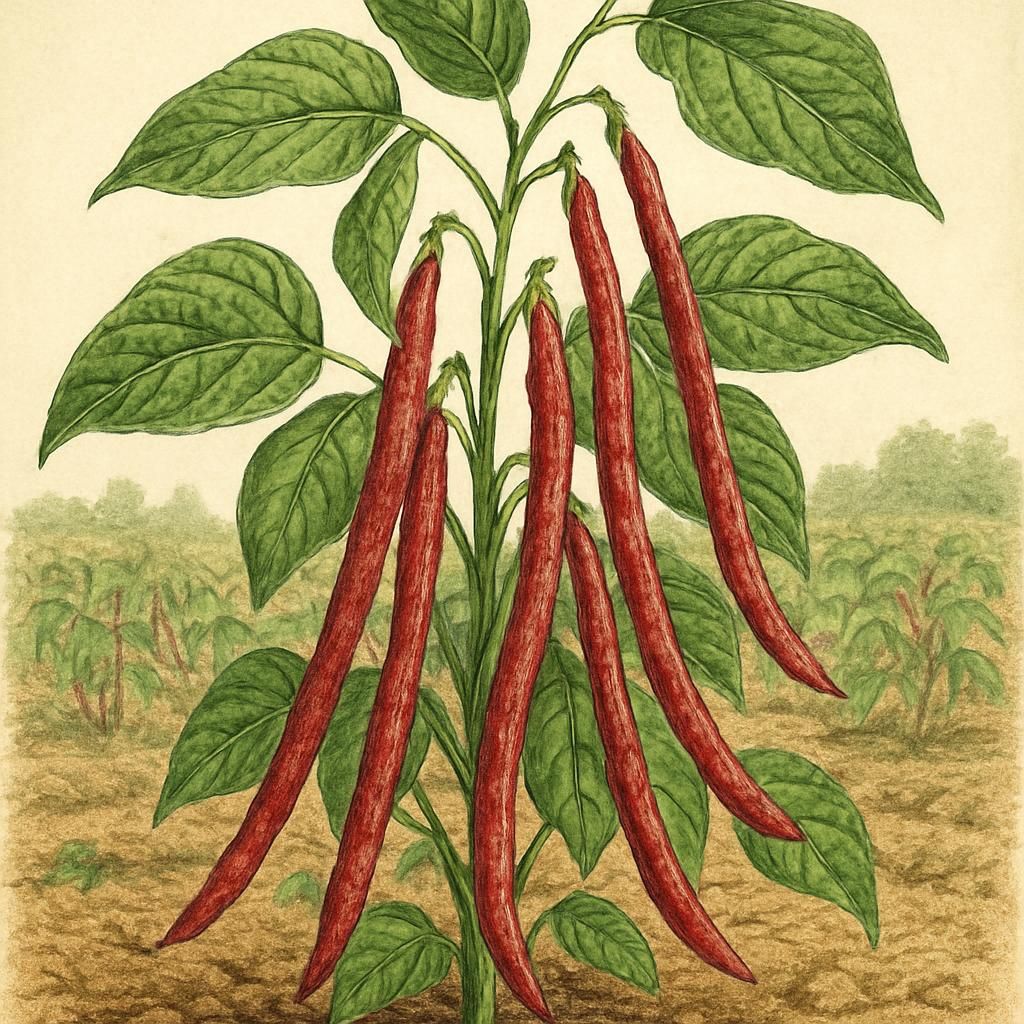
Introduction to Cowpea (Red Ripper)
Cowpea, commonly known as 'Red Ripper', is an annual herbaceous legume cultivated extensively in tropical and subtropical regions for its edible beans and as a cover crop. It is valued for its adaptability to various climatic conditions, nutritional benefits, and its role in sustainable agriculture due to its nitrogen-fixing ability.
Botanical Profile of Cowpea (Red Ripper)
Cowpea (Vigna unguiculata) belongs to the family Fabaceae. It features trifoliate leaves, long creeping stems, and produces pods containing protein-rich seeds. It is highly adaptable and can tolerate drought and poor soil conditions, making it an excellent choice for marginal lands.
Soil, pH, and Climate Requirements for Cowpea (Red Ripper)
Cowpea thrives best in well-draining, sandy-loam soils and can tolerate a wide pH range. The table below lists the ideal conditions for optimal growth:
| Parameter | Ideal Range |
|---|---|
| Soil Type | Sandy-loam |
| Soil pH | 5.5 - 6.5 |
| Temperature | 20°C - 35°C |
| Rainfall | 500mm - 1200mm annually |
Cowpea is heat resilient and can be grown in areas experiencing extreme heat, although consistent soil moisture during the early stages is crucial.
Step-by-Step Planting & Propagation
- Seed Selection: Choose high-quality, disease-free seeds.
- Land Preparation: Till the soil to a depth of 15-20 cm to ensure good root development.
- Sowing: Sow seeds 2-3 cm deep in rows spaced 60-75 cm apart.
- Timing: For optimal yields, plant cowpeas at the onset of the rainy season.
- Spacing: Maintain plant spacing of 20-30 cm to ensure adequate sunlight and airflow.
Care & Maintenance regimes for Cowpea (Red Ripper)
Cowpea requires regular attention to ensure maximum yield. Below is a care schedule:
| Care Aspect | Frequency | Notes |
|---|---|---|
| Watering | Once a week (more in dry periods) | Ensure well-drained soil |
| Fertilizing | Once at planting, once mid-growth | Use balanced NPK fertilizer or manure |
| Pruning | As needed | Remove dead or diseased foliage |
Ensure that the plants are not waterlogged and monitor for signs of nutrient deficiency.
Pests, Diseases & Organic Management
Cowpea is susceptible to several pests and diseases including Aphids, Root-knot nematodes, and Powdery mildew. Integrated Pest Management (IPM) strategies or organic solutions like neem oil may be employed for control. For a deep dive on managing pests organically, reference this blog post.
Harvesting, Curing & Optimal Storage
Cowpea can be harvested at two stages: the green pod stage for fresh consumption, or when fully mature for dry seed. After harvesting, dry the pods in a sunny, well-ventilated area. Store the cowpeas in a cool, dry place to prevent spoilage.
Companion Planting for Cowpea (Red Ripper)
Cowpea can benefit from companion planting with crops such as maize and Sorghum which can provide shade and reduce weeds. Avoid planting cowpeas with onions or garlic as they may hinder growth. For additional insights on companion planting strategies, see this blog post.