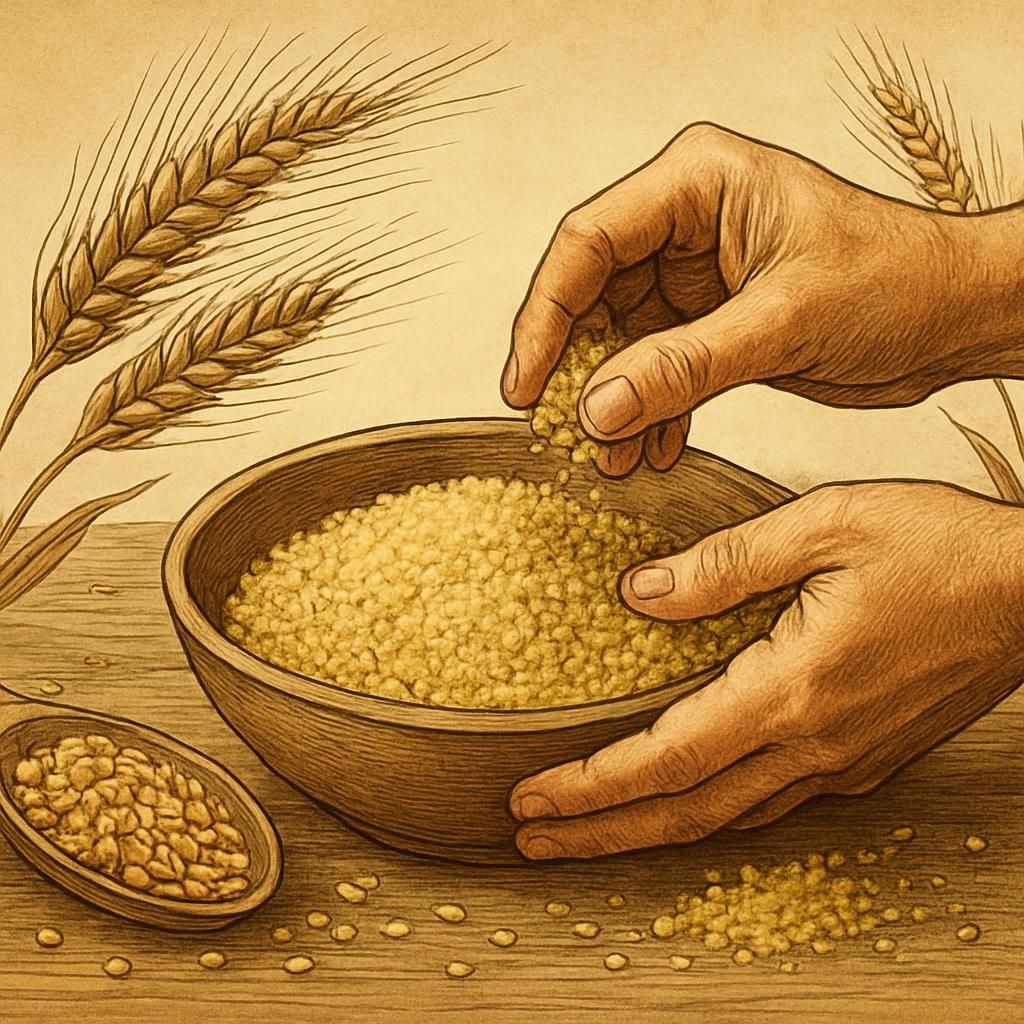
Introduction to Couscous (Hand-rolled Berbere)
Couscous, with its origins deeply rooted in North African culinary traditions, remains a staple in many households globally. The hand-rolled Berbere variety honors traditional methods, providing a distinct texture and flavor profile that is highly appreciated among gastronomes. This guide outlines the necessary steps and considerations to cultivate the vital components of couscous in a home or professional setting.
Botanical Profile of Couscous (Hand-rolled Berbere)
Couscous is primarily made from semolina, a derivative of durum wheat (Triticum durum). Durum wheat is a species of hard wheat and is adaptable to a variety of climatic conditions, known for its high protein content and strong gluten network, essential for making pasta and couscous.
Soil, pH, and Climate Requirements for Couscous (Hand-rolled Berbere)
Durum wheat requires specific conditions to thrive and produce high-quality semolina for couscous.
| Factor | Ideal Condition |
|---|---|
| Soil Type | Well-drained loamy soil |
| Soil pH | 6.0 to 7.5 |
| Temperature Range | 15°C to 25°C |
| Rainfall Requirement | 300 to 600 mm annually |
Step-by-Step Planting & Propagation
- Preparation of Soil: Before planting, prepare the seedbed by tilling the soil to an adequate depth, ensuring that it is well-aerated and free of debris.
- Seed Selection: Choose high-quality durum wheat seeds known for their disease resistance and high yield.
- Sowing: Plant seeds at a depth of 2-3 cm with a spacing of 15-20 cm apart to ensure ample room for growth. Sowing should take place in early spring or late summer for optimal results.
- Germination: Seeds typically germinate within 7-10 days given adequate moisture levels.
- Thinning: Thin the plants to a spacing of 30 cm once they reach 10 cm in height, allowing for robust growth.
Care & Maintenance Regimes for Couscous (Hand-rolled Berbere)
Consistent care is crucial to achieving a productive harvest.
| Activity | Schedule |
|---|---|
| Watering | Once a week; increase to twice during dry spells |
| Fertilizing | Apply nitrogen-rich fertilizer at the start of growth and phosphorous-rich fertilizer during heading |
| Pruning | Remove dead leaves and stalks to prevent diseases |
Pests, Diseases & Organic Management
Durum wheat can be susceptible to specific pests and diseases.
- Pests: Aphids, Spider Mites
- Diseases: Powdery Mildew, Rusts
Organic Management
- Neem Oil: Effective against aphids and mites.
- Companion Planting: Use supportive plants like Marigold to repel pests.
- Crop Rotation: Implement to prevent soil-borne diseases.
Harvesting, Curing & Optimal Storage
- Harvesting: Once the wheat reaches maturity, with golden-brown heads and dry stalks, it is ready for harvest.
- Curing: Allow harvested wheat to dry in a dry, shaded area to reduce moisture content, preventing mold.
- Storage: Store in airtight containers in a cool, dry place to maintain freshness.
Companion Planting for Couscous (Hand-rolled Berbere)
Companion planting can improve the growth environment for durum wheat.
- Good Companions: Clover, Marigold, Yarrow
- Incompatible Plants: Avoid planting with species that have dense foliage and can harbor pests.
Enhance your farming practices by staying informed and experimenting with different companion plants. Companion planting is especially effective in organic farming systems. For more insights on effective strategies, refer to "Spring Companion Planting: 8 Organic Pairings to Maximize Small Farm Yields" here.
For more insights, consider reading the blog post on "Crop Diseases Under the Microscope: 9 Organic Fixes for Small Farm Resilience" here.