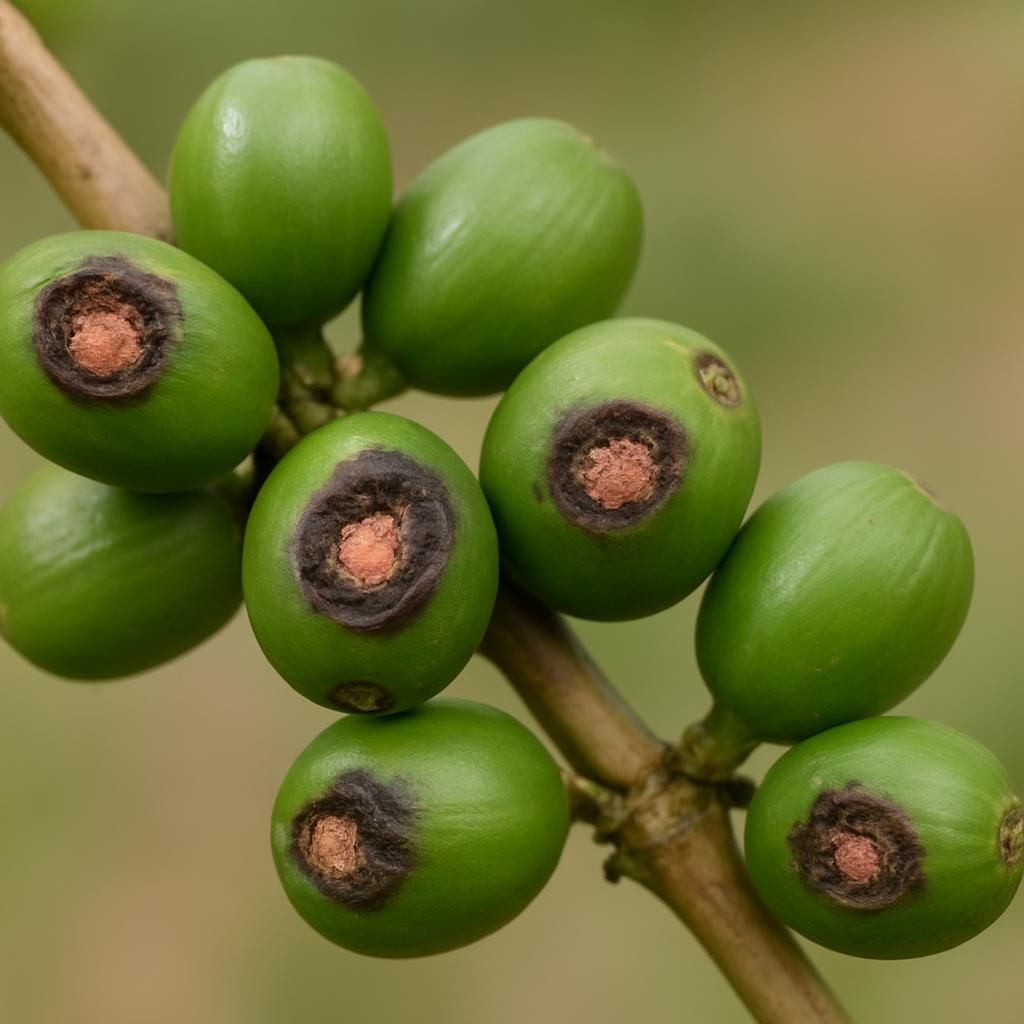
Introduction to Colletotrichum kahawae
Colletotrichum kahawae is the causal agent of coffee berry disease (CBD), a devastating fungal infection that primarily affects Coffee production in East and Central Africa. First identified in Kenya in the 1920s, the pathogen has since spread across high-altitude coffee-growing zones where cool, wet conditions prevail. Unlike many Colletotrichum species that act as secondary invaders, C. kahawae is a primary pathogen capable of infecting healthy green berries, leading to rapid tissue necrosis and premature fruit drop. Economic losses can exceed 50% in susceptible plantations during epidemic years, threatening both smallholder livelihoods and national export revenues.
The fungus belongs to the Ascomycota phylum and produces acervuli that release conidia in gelatinous masses during periods of high humidity. These spores are splash-dispersed by rain and require free water on berry surfaces for germination and penetration. Because the disease cycle is tightly linked to rainfall patterns, outbreaks are highly seasonal and predictable in many regions. Understanding the biology of C. kahawae is essential for developing integrated management strategies that protect yield without excessive reliance on synthetic chemicals.
Identifying Symptoms & Damage
Early symptoms appear as small, water-soaked spots on green berries approximately 4–8 weeks after flowering. These lesions rapidly enlarge into sunken, dark-brown to black necrotic areas that may be surrounded by a narrow chlorotic halo. In advanced stages, pinkish spore masses become visible within the lesion centers under humid conditions. Infected berries often abscise prematurely, resulting in significant yield reduction before harvest.
On leaves and twigs, C. kahawae may cause minor anthracnose-like symptoms, but these are rarely economically important. The most critical damage occurs on berries between the pinhead and expansion stages, when the pathogen can penetrate the cuticle directly. Post-harvest, infected berries that remain on the tree can serve as inoculum sources for the next season. Accurate diagnosis requires laboratory confirmation because symptoms overlap with those caused by other Colletotrichum species and physiological disorders.
Lifecycle and Progression of Colletotrichum kahawae
The pathogen completes its life cycle on living coffee tissues and crop debris. Conidia produced in acervuli on infected berries are the primary inoculum. Under optimal temperatures (18–24 °C) and prolonged leaf wetness (>6 hours), spores germinate and form appressoria that penetrate the berry epidermis. The fungus then colonizes the mesocarp, producing secondary conidia that perpetuate the epidemic.
| Lifecycle Stage | Duration | Key Conditions | Visible Signs |
|---|---|---|---|
| Spore Germination & Appressorium Formation | 6–12 hours | 18–24 °C, free water on berry | Microscopic appressoria on berry surface |
| Penetration & Latent Period | 3–7 days | Cool, humid weather | No external symptoms yet |
| Necrotic Lesion Development | 7–14 days | Continued moisture | Sunken dark lesions with pink spore masses |
| Spore Production & Dispersal | Ongoing during rain events | High humidity, rain splash | Conidial ooze visible in lesion centers |
| Overwintering on Mummies & Twigs | 4–8 months | Dry season survival | Dormant mycelium in mummified berries |
Environmental Triggers & Risk Factors
Disease severity is strongly influenced by altitude, rainfall, and temperature. Plantations located between 1,500 and 2,100 m above sea level experience the highest incidence because cool nights and frequent morning mists extend leaf wetness duration. Heavy rainfall events during flowering and early berry development create ideal splash-dispersal conditions. Prolonged dry periods followed by sudden rains can trigger explosive epidemics by synchronizing spore release with susceptible berry stages.
High planting density, poor air circulation, and excessive nitrogen fertilization increase canopy humidity and favor infection. Varieties with compact growth habits or thin berry cuticles are more susceptible. Poor weed control and retention of mummified berries on trees further elevate inoculum levels. Monitoring weather data and maintaining orchard sanitation are therefore critical components of risk assessment.
Organic Control & Treatment Plans
Organic management of coffee berry disease integrates cultural, biological, and permitted organic inputs. Regular removal of mummified berries and pruning to improve airflow reduce inoculum and humidity within the canopy. Mulching and cover crops help stabilize soil moisture and limit rain splash. Copper-based fungicides approved for organic use remain the mainstay during high-risk periods, while plant extracts and microbial antagonists show promise in research trials.
| Treatment Option | Active Ingredient / Method | Application Frequency | Notes |
|---|---|---|---|
| Copper Hydroxide | 2–3 kg/ha metallic copper | Every 14–21 days during rainy season | Rotate with other products to reduce resistance risk |
| Bordeaux Mixture | 1% solution | 3–4 applications from flowering to berry expansion | Traditional organic fungicide; avoid phytotoxicity on young leaves |
| Neem Oil Extract | 0.5–1% emulsion | Weekly during wet periods | Limited curative action; best used preventively |
| Bacillus subtilis-based Biofungicide | 2–4 L/ha | Every 7–10 days | Compatible with copper; enhances plant defense |
| Cultural Sanitation | Manual removal of mummies | Monthly during dry season | Reduces overwintering inoculum significantly |
Preventing Colletotrichum kahawae in the Future
Long-term prevention centers on resistant varieties, strategic planting, and rigorous sanitation. Breeding programs have released several CBD-resistant Arabica Coffee lines that maintain acceptable cup quality. Farmers should source certified disease-free seedlings and avoid introducing planting material from epidemic zones. Establishing windbreaks and spacing trees appropriately improves ventilation and shortens leaf wetness periods.
Implementing a closed pruning cycle that removes all infected twigs and berries before the rainy season begins is highly effective. Intercropping with non-host species such as Banana can reduce splash dispersal while providing additional income. Regular scouting combined with weather-based spray advisories allows growers to apply interventions only when infection risk is elevated, minimizing costs and environmental impact.
Crops Most Affected by Colletotrichum kahawae
Although C. kahawae is highly specialized, it occasionally causes minor symptoms on related Rubiaceae species. The primary economic host remains Arabica coffee, particularly cultivars lacking major resistance genes. Other coffee species such as Robusta Coffee show lower susceptibility but are not immune under extreme disease pressure. No significant infections have been reported on unrelated crops such as Tomato or Mango under field conditions.