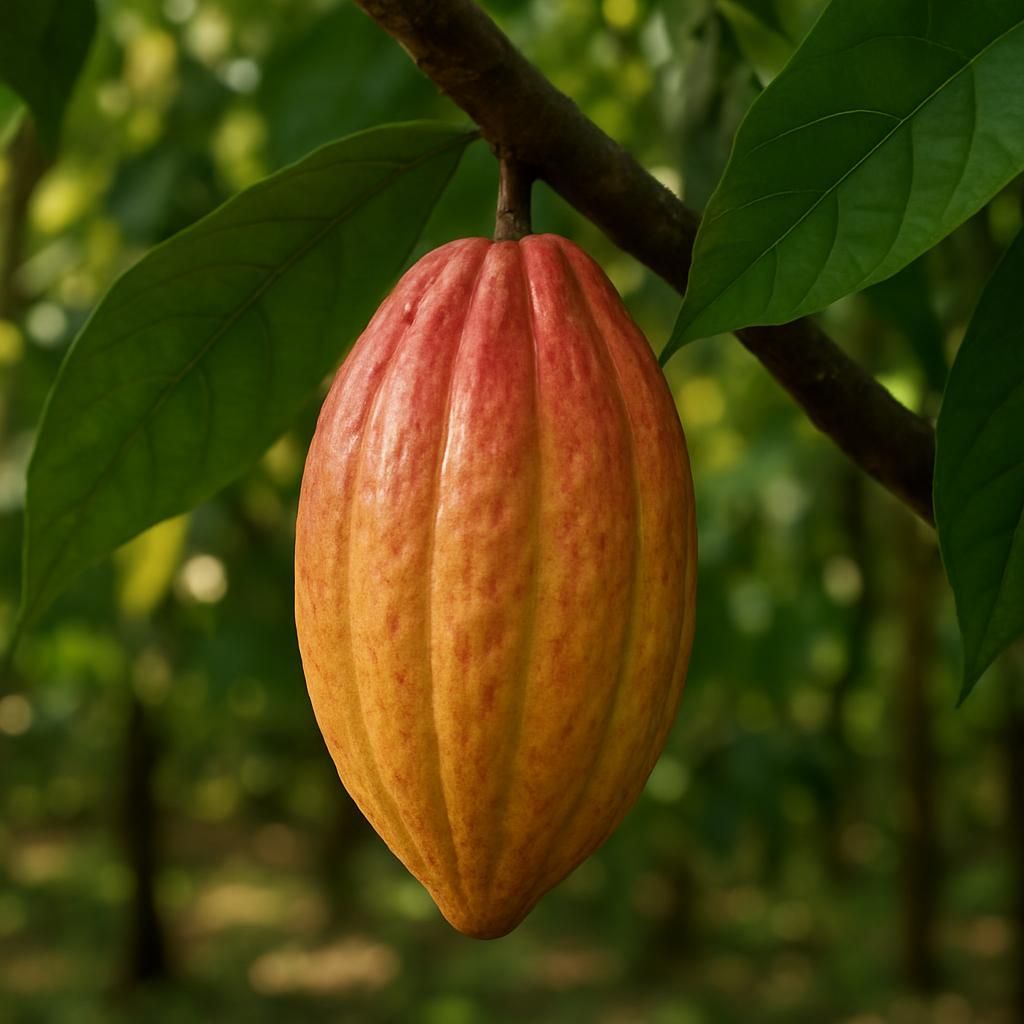
Introduction to Cocoa (Criollo)
Criollo cocoa represents the pinnacle of fine-flavor cacao, historically cultivated by the ancient Maya and Aztecs for ceremonial and culinary use. Today it accounts for less than 5% of global production yet commands premium prices due to its complex flavor profile, floral notes, and minimal bitterness. This guide delivers professional-grade, actionable advice for growers seeking to establish or optimize Criollo plantations.
Botanical Profile of Cocoa (Criollo)
Criollo trees are smaller and more delicate than Forastero or Trinitario types, typically reaching 4–8 meters in height with slender trunks and pale green, elongated leaves. Pods are thin-walled, deeply ridged, and range from yellow to red when ripe, containing 20–40 large, white or pale purple seeds. The variety is highly susceptible to environmental stress and pests, making careful site selection and management essential.
Soil, pH, and Climate Requirements for Cocoa (Criollo)
Criollo thrives in deep, well-drained, fertile soils rich in organic matter. The following table outlines ideal conditions:
| Parameter | Ideal Range | Notes |
|---|---|---|
| Soil Type | Loamy to sandy loam | Avoid heavy clay; ensure good drainage |
| Soil pH | 6.0 – 7.0 | Slightly acidic to neutral |
| Temperature | 21–32 °C (70–90 °F) | Daytime highs; protect from extremes |
| Annual Rainfall | 1,500–2,500 mm, evenly distributed | Supplemental irrigation in dry spells |
| Relative Humidity | 70–90% | Maintain via shade and mulching |
| Elevation | 0–600 m (up to 1,000 m in some regions) | Lower elevations preferred for Criollo |
| Shade Requirement | 30–50% canopy cover | Use shade trees such as Banana or Coconut |
Step-by-Step Planting & Propagation
- Select healthy, disease-free pods from high-yielding mother trees.
- Extract seeds immediately and ferment for 5–7 days to break dormancy.
- Sow in nursery beds or polybags with a 1:1:1 mix of topsoil, compost, and sand.
- Maintain 50% shade and consistent moisture; germination occurs in 7–14 days.
- Transplant seedlings at 4–6 months when they reach 30–40 cm height.
- Field spacing: 3 m × 3 m (1,111 trees/ha) under permanent shade.
Care & Maintenance regimes for Cocoa (Criollo)
Consistent care is critical for this sensitive variety. The table below provides a practical schedule:
| Activity | Frequency | Details |
|---|---|---|
| Watering | 2–3 times/week in dry season | 20–30 L per tree; mulch to retain moisture |
| Fertilizer | Every 3 months | 200 g NPK 15-15-15 + 100 g compost per tree; split applications |
| Pruning | Twice yearly | Remove suckers, diseased branches, and maintain 3–4 main stems |
| Weeding | Monthly | Hand-weed or use cover crops; avoid herbicides near trunks |
| Mulching | Renew every 6 months | 10–15 cm layer of organic mulch around drip line |
Pests, Diseases & Organic Management
Criollo is particularly vulnerable to Phytophthora palmivora (black pod), witches’ broom, and Cocoa pod borer. Implement integrated pest management: remove infected pods weekly, apply copper-based sprays sparingly, introduce Trichoderma and Bacillus thuringiensis, and maintain strict sanitation. Regular monitoring and early intervention are essential.
Harvesting, Curing & Optimal Storage
Harvest pods when fully colored and beginning to yellow. Open pods within 24 hours and ferment seeds 5–7 days in wooden boxes, turning twice daily. Dry beans on raised racks to 6–7% moisture over 7–10 days. Store in breathable jute bags at 18–22 °C and 60–70% RH; cure for 30–60 days before export to develop flavor.
Companion Planting for Cocoa (Criollo)
Interplant with nitrogen-fixing Gliricidia and fruit trees such as Banana or Coconut to provide shade and improve soil fertility. Aromatic herbs like Thai Basil deter pests, while Marigold suppresses nematodes. Avoid heavy feeders that compete for nutrients.