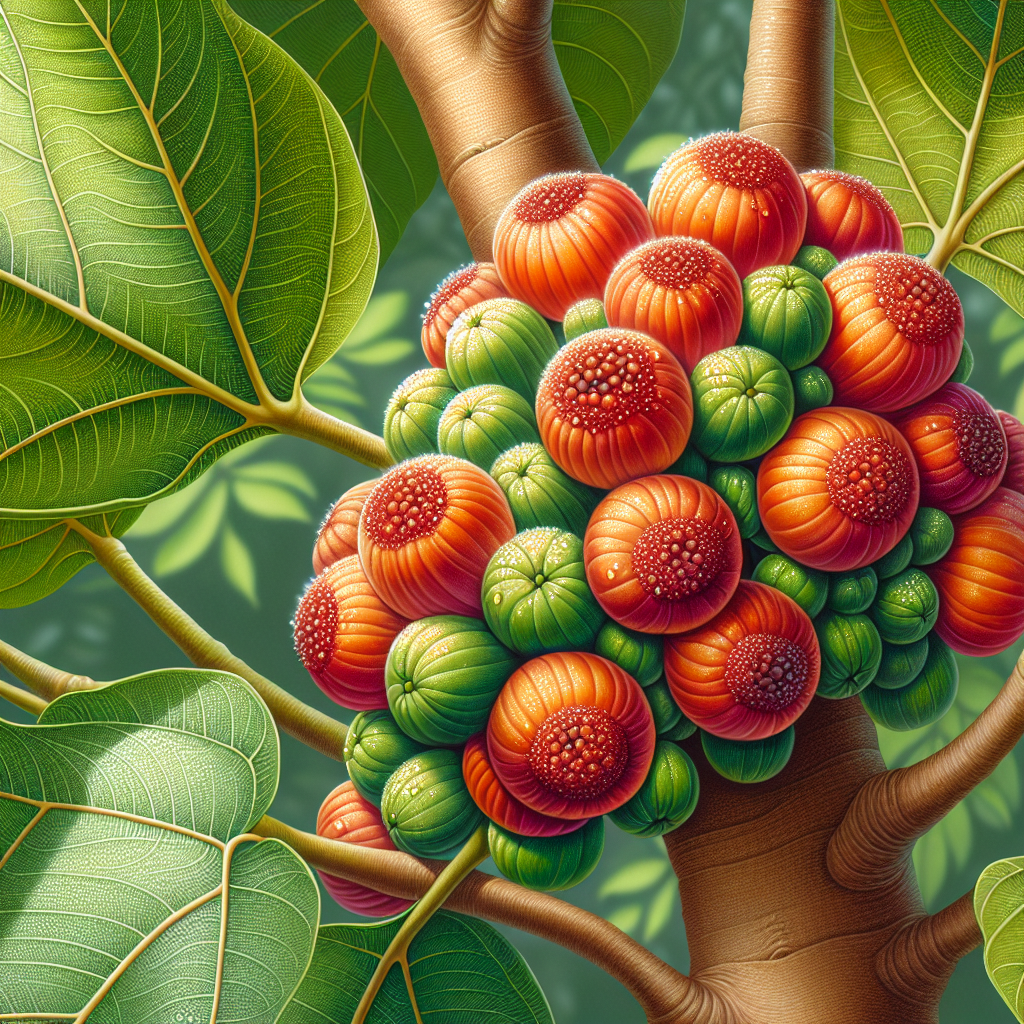
Introduction to Cluster Fig (Ficus racemosa)
Cluster Fig, scientifically known as Ficus racemosa, is a remarkable tropical tree native to the Indian subcontinent, Southeast Asia, and parts of Australia. Revered in traditional Ayurvedic medicine for centuries, its clustered, pear-shaped syconia (commonly called figs) are not only edible but also packed with antioxidants, fiber, and bioactive compounds. Unlike common Fig varieties like Brown Turkey or Mission, Cluster Fig produces fruits in dense clusters directly on its trunk and older branches—a phenomenon known as cauliflory—making it a visually striking addition to any landscape.
This tree is exceptionally resilient, capable of reaching heights of 20-30 meters in natural settings, though it can be pruned to 10-15 meters for cultivation. It's widely used in agroforestry for shade, soil stabilization, and as a fodder source for livestock. Fruits ripen year-round in tropical regions, providing a reliable harvest. With proper care, Cluster Fig yields 50-100 kg of fruit per mature tree annually, making it ideal for small farms seeking low-maintenance, high-value crops. Its deep roots help prevent soil erosion, and it thrives in challenging conditions where other fruit trees falter. Whether for fresh eating, drying, or processing into jams and powders, Cluster Fig offers versatile commercial potential.
Botanical Profile of Cluster Fig (Ficus racemosa)
Ficus racemosa belongs to the Moraceae family, characterized by its evergreen to semi-deciduous canopy depending on climate. Leaves are elliptic to ovate, 10-17 cm long, glossy green above and slightly pubescent below, arranged alternately on branches. The tree's most distinctive feature is its syconia: multiple, fleshy, inverted flowers borne in clusters on the main trunk and branches. These 'figs' measure 2-5 cm in diameter, ripening from green to reddish-orange or yellow, with a sweet, slightly acidic flavor reminiscent of strawberries.
Pollination is unique, relying on specific fig wasps (Blastophaga species) that enter through a tiny ostiole to lay eggs and pollinate. In non-native areas, parthenocarpic (seedless) fruits develop naturally without wasps. The tree exhibits rapid juvenile growth, reaching fruiting size in 3-5 years from seed or cuttings. Bark is smooth, light gray, often with aerial roots in humid environments. Nutritionally, fruits contain 60-70% moisture, 15-20% sugars, vitamins A and C, and minerals like calcium and iron. Leaves serve as nutritious fodder, high in protein (12-18%). Read our blog on companion planting strategies to integrate Cluster Fig effectively.
Root system is extensive and buttressed, aiding drought tolerance. Flowering occurs continuously, with peak fruiting in monsoon and post-monsoon seasons. Genetic diversity is high, with cultivars varying in fruit size, color, and sweetness.
Soil, pH, and Climate Requirements for Cluster Fig (Ficus racemosa)
Cluster Fig is remarkably adaptable, thriving in a wide range of soils from sandy loams to heavy clays, provided drainage is adequate. Optimal soil is fertile, well-drained alluvial or lateritic with 20-30% organic matter. Avoid waterlogged sites to prevent root rot. pH tolerance spans 5.5-8.0, with neutral 6.5-7.5 ideal for nutrient uptake. Incorporate compost or aged manure at planting to boost microbial activity.
Climatically, it demands tropical to subtropical conditions: USDA zones 10-12, temperatures 20-40°C (68-104°F). It withstands brief dips to 10°C but suffers frost damage below 5°C. High humidity (60-90%) promotes fruit clustering and quality; annual rainfall of 1000-2500 mm is perfect, supplemented by irrigation in dry spells. Full sun (6-8 hours daily) is essential for fruit sweetness; partial shade reduces yields by 30-40%.
In marginal areas, mulching with organic matter conserves moisture and suppresses weeds. Windbreaks protect young trees from strong gales, as the broad canopy is prone to tearing. Soil testing every 2 years ensures balanced nutrition—nitrogen for foliage, phosphorus for roots, potassium for fruit.
Step-by-Step Planting & Propagation
Propagation Methods
- Seeds: Collect ripe syconia, extract seeds, and sow in seed trays with 1:1:1 sand-compost-vermicompost mix. Germination occurs in 10-20 days at 25-30°C. Transplant seedlings at 15-20 cm height.
- Stem Cuttings: 20-30 cm semi-hardwood cuttings root in 4-6 weeks under mist propagation. Dip in 0.1% IBA rooting hormone.
- Air Layering: Ideal for mature trees; girdle branch, apply rooting hormone, wrap in moist sphagnum moss. Roots form in 2-3 months.
- Suckers: Remove basal shoots from mature trees for quick establishment.
Planting Guide
- Timing: Plant at monsoon onset for root establishment.
- Site Prep: Dig 1x1x1 m pits, fill with topsoil + 10 kg FYM + 500g SSP.
- Spacing: 10-12 m apart for trees, 6-8 m for hedgerows.
- Planting: Place graft union 10 cm above soil, stake for support, water thoroughly.
- Initial Care: Mulch 10 cm thick, irrigate weekly until established (6 months).
Success rate exceeds 90% with air layering. Prune at planting to encourage bushy growth.
Care & Maintenance regimes for Cluster Fig (Ficus racemosa)
Water young trees weekly (50-100 L/tree), reducing to bi-weekly for matures; drought-tolerant once established. Fertilize annually: 1 kg NPK 10-20-10 per year of age, split into 3 applications. Foliar spray micronutrients (Zn, Fe) during fruiting.
Prune post-harvest to remove deadwood, open canopy for light penetration, and shape for harvest access. Thin clusters to 4-6 figs per stem for larger fruits. Intercrop with legumes like pigeon pea in early years.
Weed control via mulching; avoid tillage near roots. Monitor for nutrient deficiencies: yellow leaves indicate iron chlorosis. In high-rain areas, elevate planting mounds to prevent waterlogging.
Pests, Diseases & Organic Management
Common pests include mealybugs, scale insects, and fig wasps (beneficial). Spray neem oil (5 ml/L) weekly; introduce ladybugs. Aphids controlled with insecticidal soap.
Diseases: Anthracnose causes fruit rot—remove infected parts, apply copper fungicide. Powdery mildew treated with sulfur sprays. Prevent root rot with good drainage.
Organic IPM: Companion plant marigold for nematodes; trap crops for borers. Biologicals like Trichoderma for soil pathogens. Check Why 90% of Small Farms Fail at Pest Management for advanced tips.
Harvesting, Curing & Optimal Storage
Harvest when figs soften, color changes, and emit sweet aroma—typically 3-4 months post-pollination. Pick clusters by hand, avoiding trunk damage. Yields peak in years 5-15.
Curing: Dry in shade at 40-50°C for 2-3 days to 15% moisture for longer shelf life. Fresh fruits store at 10-13°C, 85-90% RH for 2-3 weeks.
Process into powder, jams, or leather. Market fresh or value-added.
Companion Planting for Cluster Fig (Ficus racemosa)
Pair with nitrogen-fixers like gliricidia or clover for soil enrichment. Underplant with ginger, turmeric, or shade-tolerant greens. Avoid water-hungry crops. Benefits pollinators and deters pests. See fall guide for seasonal plans.