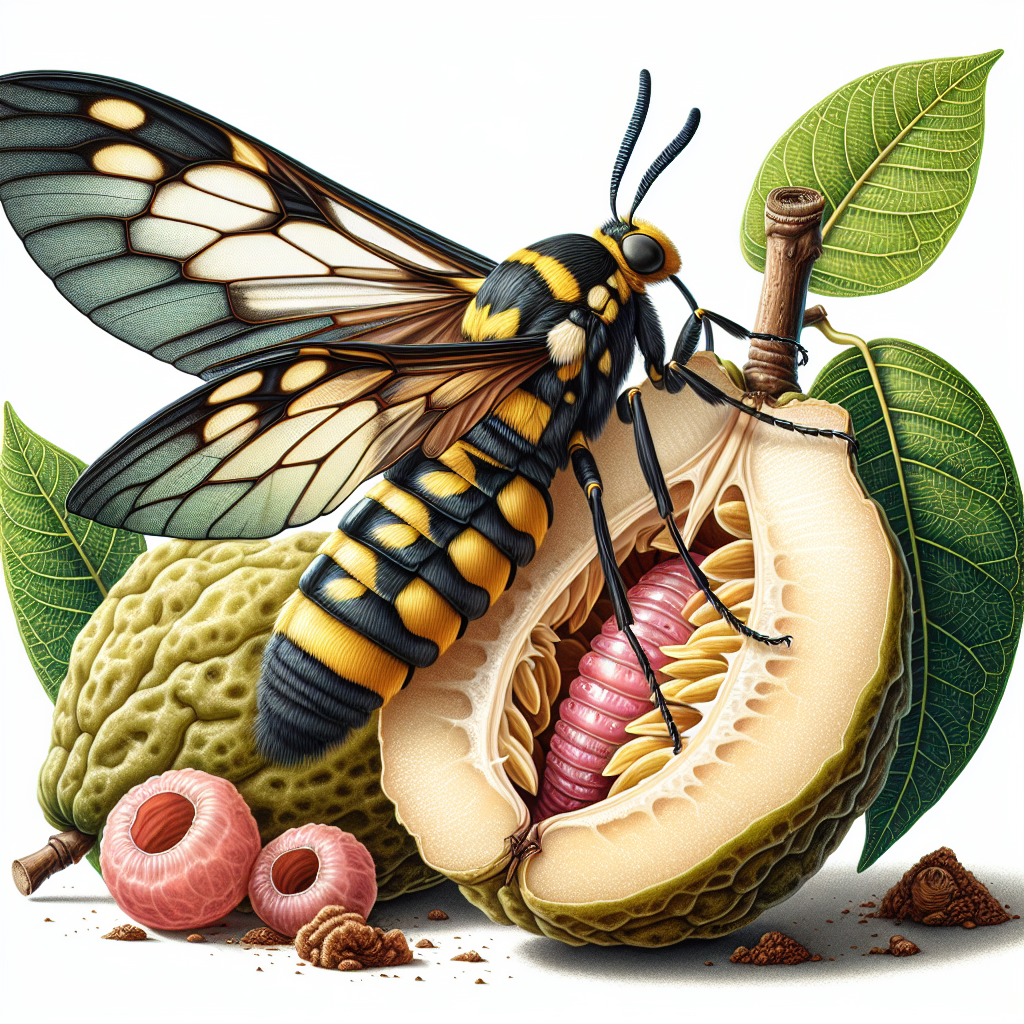
Definitive Diagnostic and Management Guide for the Cherimoya Fruit Moth
Introduction to cherimoya
Cherimoya (Annona cherimola), known for its creamy, custard-like flesh and subtropical appeal, is a high-value crop grown in regions like California, South America, and Australia. However, it faces severe threats from the Cherimoya Fruit Moth (Vitacea polistiformis), a clearwing moth whose larvae devastate fruits and shoots. This pest, often mistaken for a wasp due to its appearance, can reduce yields by up to 70% in unmanaged orchards. Understanding its behavior is crucial for sustainable cherimoya production. Native to Central America, it has spread to major growing areas, making vigilant monitoring essential for commercial and home growers alike. For more on companion planting strategies, see Why Companion Planting Feels Like Guesswork for Small Farms - And How AI Makes It Foolproof.
Cherimoya thrives in mild climates with well-drained soils, producing heart-shaped fruits weighing 0.5-3 kg. The pest's impact is exacerbated in humid conditions, where rapid population buildup occurs. Integrated Pest Management (IPM) focusing on organic methods is recommended to preserve the crop's premium market value, which can fetch $10-20 per fruit retail.
Identifying Symptoms & Damage
Early detection of Cherimoya Fruit Moth damage is key to limiting spread. Look for entry holes (2-4 mm diameter) on young fruits, often frass-filled (sawdust-like excrement). Larvae tunnel internally, causing fruit rot and premature drop. Affected fruits show brown, mushy interiors with silky webbing.
On leaves and stems, chewed margins or bore holes indicate larval feeding. Wilting shoots with sawdust at the base signal stem boring, potentially girdling plants. Severe infestations lead to deformed fruits, reducing marketability by 50-80%. Differentiate from scale insects by the presence of live larvae and webbing, not sticky honeydew.
Use a hand lens to spot eggs (tiny, white, ribbed) under leaves or near fruit stems. Adult moths, resembling wasps with clear wings and yellow-black bands, are active at dusk. Damage peaks during fruit set (spring-summer), with larvae (pinkish, up to 25 mm) visible upon dissection. Monitor weekly using pheromone traps for accurate diagnosis.
Lifecycle and Progression of cherimoya
The Cherimoya Fruit Moth completes 2-3 generations annually, depending on climate. Adults emerge in late spring, mating at dusk. Females lay 100-200 eggs singly on tender shoots or fruits over 7-10 days. Eggs hatch in 7-14 days into larvae that immediately bore into plant tissue.
Larval stage lasts 4-6 weeks, with five instars. Young larvae feed on surface tissues before tunneling deeper. Mature larvae pupate in cocoons within galleries, emerging as adults after 10-20 days. Overwintering occurs as pupae in soil or plant debris. Full cycle: 60-90 days.
Progression aligns with cherimoya phenology: first generation targets flowers/young fruits, second hits developing fruits, third affects ripening ones. High humidity accelerates development, increasing overlap generations. Pheromone traps track adult flights, peaking every 45 days.
Environmental Triggers & Risk Factors
Warm temperatures (25-32°C) and humidity >70% trigger rapid population growth, ideal for cherimoya's subtropical needs but risky for pests. Poor air circulation in dense canopies fosters egg-laying. Over-fertilization with nitrogen promotes succulent growth, attracting females.
Infested plant debris or nearby Annonaceae crops (e.g., custard apple) serve as reservoirs. Drought-stressed trees are more susceptible, as larvae thrive in weakened tissues. Regions like coastal California see outbreaks post-rainy seasons. Proximity to wild hosts amplifies risk; scout borders regularly.
Soil type matters—poor drainage retains pupae moisture, extending survival. For heatwave impacts worsening pest pressure, refer to Why Summer Heatwaves Are Silently Killing Small Farm Yields - And 7 Organic Strategies to Fight Back. Climate change extends growing seasons, potentially adding generations.
Organic Control & Treatment Plans
Organic management emphasizes prevention and biological controls. Deploy delta traps with commercial pheromones (e.g., (Z)-3-tridecenyl acetate) at 4-6 per hectare, replacing lures biweekly. Trap 2-5 moths/trap/week signals action threshold.
Biological Controls: Release Trichogramma wasps (500-1000/ha weekly) to parasitize eggs. Encourage predators like birds and [spiders](/wiki/spiders—not listed, omit) via hedgerows. Bacillus thuringiensis (Bt) kurstaki sprays target larvae (apply evenings, 2-3 g/L, 7-10 day intervals).
Cultural Practices: Prune for canopy openness, removing infested parts and destroying via burial or burning. Wrap young fruits with fine mesh bags at petal fall. Mulch to disrupt soil pupation.
Organic Sprays: Neem oil (2-5 ml/L) or spinosad (0.5 ml/L) on young fruits/ shoots, rotating to prevent resistance. Kaolin clay barriers deter egg-laying. Scout and treat small larvae <10 mm for 90% efficacy.
IPM Plan: Week 1: Monitor traps. Week 2: Bt + neem if >5 larvae/10 fruits. Week 4: Trichogramma release. Reassess monthly. Yields recover 60-80% with timely action.
Preventing cherimoya in the Future
Prevention starts with clean stock—inspect nursery plants for signs. Plant resistant rootstocks if available and space trees 6-8 m for airflow. Destroy volunteer Annonaceae weeds.
Sanitation: Remove fallen fruits/debris post-harvest, till soil lightly to expose pupae. Use reflective mulches early season to repel adults. Companion plant with marigolds or thyme to mask scents.
Monitor year-round with traps; remove >2 moths/trap promptly. Cover crops like clover suppress soil stages. Annual pruning reduces overwintering sites by 70%. Rotate IPM tactics; avoid broad-spectrum sprays preserving beneficials like [ladybugs](/wiki/aphids-related, use Aphids link). Long-term: Scout adjacent avocado groves, common co-hosts. Consistent prevention sustains organic certification and profitability.
Crops Most Affected by cherimoya
Primarily cherimoya (Annona cherimola), with larval boring ruining 50-90% fruits in outbreaks. Related crops include custard apple (Annona reticulata), soursop (Annona muricata), and atemoya hybrids, sharing susceptibility. Avocado faces occasional damage from wandering larvae.
Commercial cherimoya orchards suffer most, but backyard trees in humid tropics/subtropics are vulnerable. Wild Annona species act as reservoirs. No major field crops affected, but proximity to mango groves increases spillover risk via shared pollinators. Focus protection on high-value fruit trees.