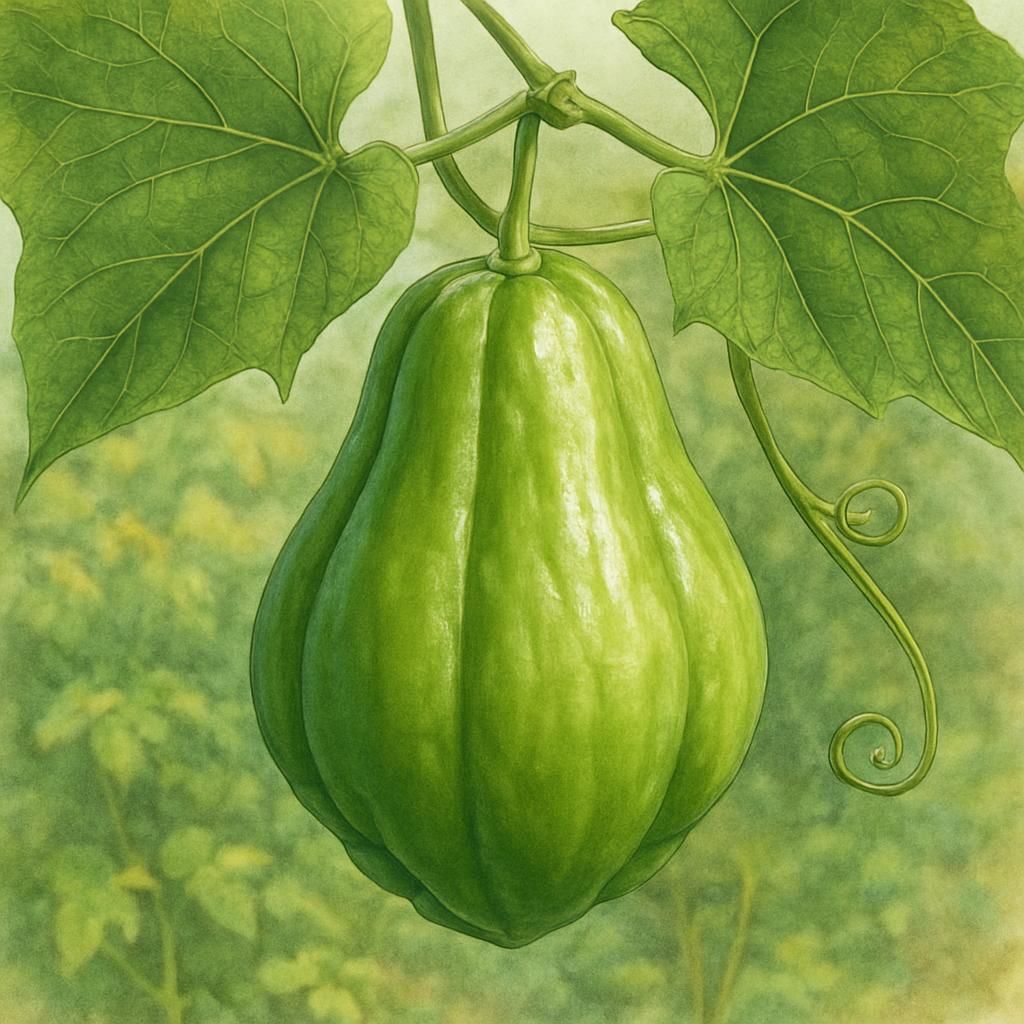
Introduction to Chayote (Smooth Green)
Chayote (Smooth Green) is a versatile and unique vegetable known for its mild flavor and crisp texture. Originally from Mexico and Central America, this perennial vine has gained popularity worldwide for its culinary uses. Its high water content and low calorie make it an excellent addition to any healthy diet. Whether grown in home gardens or on larger farms, chayote thrives in warm climates and is relatively easy to maintain.
Botanical Profile of Chayote (Smooth Green)
Scientifically known as Sechium edule, chayote belongs to the Cucurbitaceae family, which includes cucumbers, squashes, and zucchini. The plant features slender, climbing vines that can stretch over several meters, often requiring support structures. Its fruits are pear-shaped, typically light green with a smooth surface, and contain a single, large, inedible seed.
Soil, pH, and Climate Requirements for Chayote (Smooth Green)
Chayote prefers well-draining soil rich in organic matter. Ideal growing conditions involve a tropical or subtropical climate with consistent temperatures and humidity. Here's a detailed table of its optimal growing conditions:
| Factor | Optimal Conditions |
|---|---|
| Soil Type | Loamy, well-draining |
| Soil pH | 5.5-6.5 |
| Temperature | 70-85°F (21-29°C) |
| Sunlight | Full sun (6-8 hours/day) |
| Humidity | Moderate to high |
Step-by-Step Planting & Propagation
- Selection of Seeds or Fruits: For propagation, mature chayote fruits can be used. Select fruits with a hard, unblemished exterior.
- Germination: Allow the fruit to germinate in a well-lit area. It naturally begins sprouting from the seed inside.
- Soil Preparation: Prepare the planting site by enriching the soil with organic compost.
- Planting: Plant the sprouted fruit at a 45-degree angle, ensuring only half the fruit is buried.
- Spacing: Ensure ample space, at least 4-5 feet between plantings, to accommodate the vine's growth.
- Support Structure: Provide trellises or similar support structures for vines to climb.
Care & Maintenance regimes for Chayote (Smooth Green)
Chayote requires regular maintenance for optimal growth. The table below outlines care instructions:
| Care Activity | Schedule |
|---|---|
| Watering | 1-2 inches per week |
| Fertilizing | Every 6-8 weeks during growth |
| Pruning | Pinch tips to control spread |
Pests, Diseases & Organic Management
Chayote is susceptible to common pests like spider mites, slugs, and aphids. To manage these, employ organic strategies such as neem oil applications and introducing beneficial insects. Diseases like powdery mildew can be controlled by ensuring proper airflow through strategic pruning and using organic fungicides.
Harvesting, Curing & Optimal Storage
Harvesting chayote typically begins 4-6 months post-planting. Fruits should be picked when they are firm and of light green color. Post-harvest, store them in cool, humid conditions to prolong freshness. Chayote can remain fresh for up to a month if stored properly.
Companion Planting for Chayote (Smooth Green)
Chayote benefits from companion planting with crops like corn, beans, and lychee. These combinations improve soil fertility and help in pest management by providing natural deterrents.
For more insights on strategic planting systems, consider reading Spring Companion Planting: 8 Organic Pairings to Maximize Small Farm Yields.